Your friend just texted “ISTG if you’re late again” and you’re staring at those four letters like they’re a secret code. You’ve seen ISTG pop up everywhere lately. TikTok comments. Snapchat stories. Group chats where everyone seems to already know what it means.
Here’s the thing. ISTG isn’t complicated at all. It’s one of those acronyms that sounds intense but is actually pretty simple once you know it.
People use ISTG dozens of times a day online. It shows up when someone’s frustrated, excited, or just really wants you to believe them. The tone shifts depending on context. Sometimes it’s dramatic. Sometimes it’s dead serious. Sometimes it’s just… emphasis.
You probably already use the full phrase in real life. You just haven’t connected it to these four letters yet. Similar to how SMH expresses disappointment, ISTG adds emotional weight to whatever comes next.
The meaning is about to click. And once it does, you’ll notice ISTG absolutely everywhere.
What Does ISTG Mean?
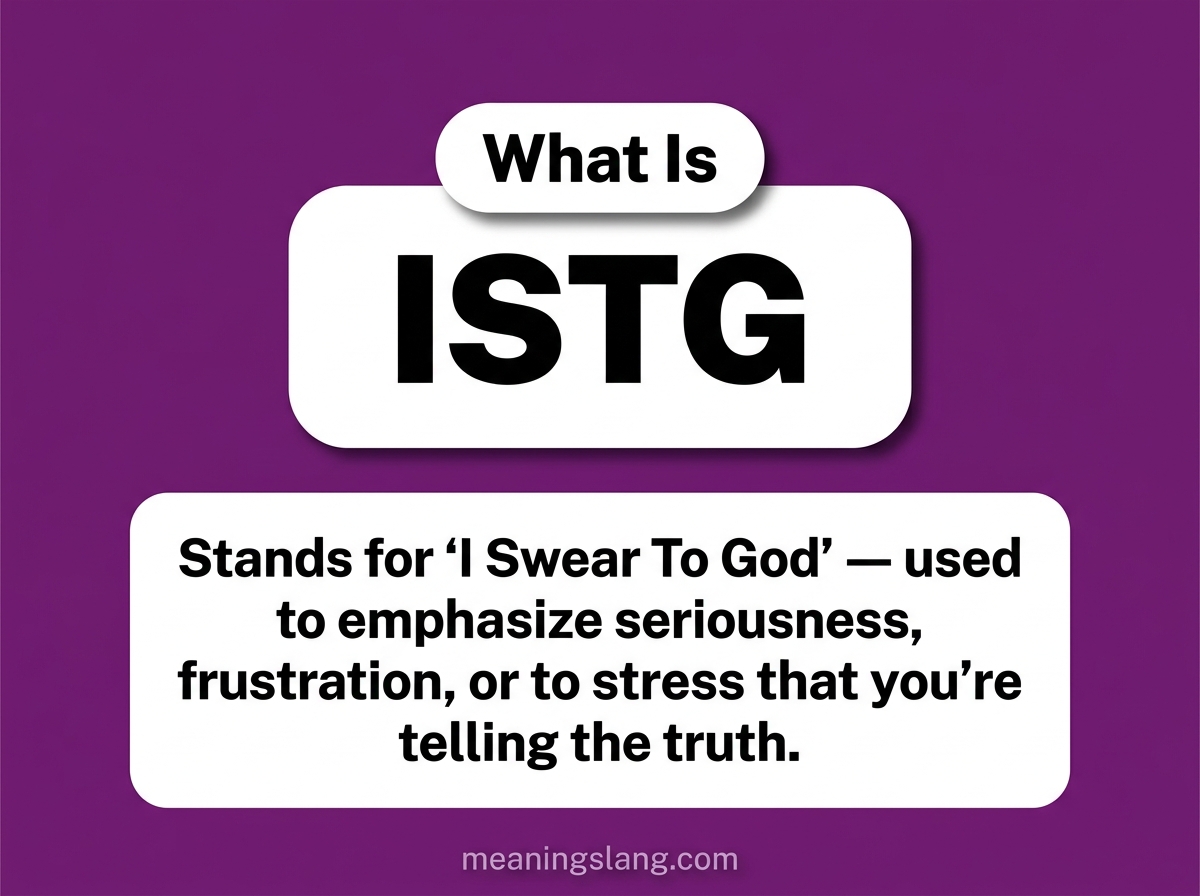
QUICK ANSWER: ISTG stands for “I swear to God.” People use it to emphasize they’re being serious, honest, or extremely frustrated. It’s basically the texting version of raising your voice or putting your hand on your heart.
Now let’s break this down further. ISTG works as a digital exclamation point on steroids. When someone types “ISTG this movie is so good,” they’re not just recommending it. They’re vouching for it with everything they’ve got.
The emotional tone varies a lot. You might see “ISTG I didn’t take your charger” — that’s defensive, proving innocence. Or “ISTG she’s so annoying” — that’s pure frustration boiling over. Context changes everything.
Who says it matters too. Close friends use ISTG casually, like verbal punctuation. But if your boss or teacher dropped an ISTG in a message, it would feel strange. This is casual digital talk between people who are comfortable with each other.
The phrase carries a slight religious reference, but most people using ISTG aren’t thinking about that at all. It’s become so common that the “God” part has basically faded into background noise. Similar to NGL meaning “not gonna lie”, ISTG just signals “I’m being real with you right now.”
[DEFINITION GRAPHIC HERE — term on left, arrow, plain definition on right, white card background]
Origin and History of “ISTG”
ISTG didn’t appear out of nowhere. The phrase “I swear to God” has been around forever. People have said it for centuries to emphasize truth or express frustration.
The acronym version started showing up in early internet chat rooms and text messages during the 2000s. Character limits mattered back then. Typing four letters instead of fifteen saved time and thumb energy.
But ISTG really exploded with smartphone texting culture. As texting became the main way young people communicated, acronyms like this spread fast. By the mid-2010s, it was standard vocabulary in group chats everywhere.
Social media accelerated things even more. Twitter’s character limits made short acronyms valuable. TikTok comments made them viral. Now ISTG sits comfortably alongside classics like LOL and OMG.
The meaning hasn’t shifted much over time. It still means exactly what the expanded phrase means. What changed is how casually people drop it. It used to feel emphatic. Now it’s almost ordinary.
How “ISTG” Is Used on Different Platforms
TikTok
ISTG dominates TikTok comments. People use it to react to wild stories, relatable content, or anything that triggers strong feelings. “ISTG this is literally me” appears under thousands of videos daily.
Example: “ISTG if I see one more video about this trend 😭”
On Instagram, ISTG shows up in DMs and story replies. It’s more personal here. Friends use it to emphasize points in private conversations or react to someone’s posts.
Example: “ISTG you look amazing in this pic”
Twitter/X
Twitter loves ISTG for venting. The platform’s culture rewards quick, punchy emotional takes. ISTG fits perfectly when someone needs to complain or make a strong statement.
Example: “ISTG public transit is testing me today”
Snapchat
Snapchat sees tons of ISTG usage. Quick snaps with captions like “ISTG I’m so tired” are everywhere. The casual, disappearing nature of Snaps makes emphatic language feel natural.
Example: “ISTG if you screenshot this 💀”
Discord/Gaming Chats
Gamers use ISTG when frustrated or hyped. Losing a match? “ISTG this team is throwing.” Just won? “ISTG that was insane.” The intensity fits gaming energy perfectly.
Example: “ISTG that headshot was pure luck”
| Platform | Common Use | Tone | Example |
|---|---|---|---|
| TikTok | Comments, reactions | Dramatic, relatable | “ISTG this is so true” |
| DMs, story replies | Personal, supportive | “ISTG you’re glowing” | |
| Twitter/X | Venting, hot takes | Frustrated, emphatic | “ISTG this week needs to end” |
| Snapchat | Captions, quick replies | Casual, playful | “ISTG don’t tell anyone” |
| Discord | Gaming reactions | Intense, frustrated | “ISTG that lag killed me” |
ISTG in Texting vs. Real Life
Here’s an interesting split. ISTG exists almost entirely in typed form.
In real life, people just say “I swear to God.” The full phrase rolls off the tongue naturally. But nobody walks around saying “eye-ess-tee-gee” out loud. That would sound bizarre.
Texting flattens the phrase into pure function. You get the meaning without the drama of hearing someone’s voice rise. The acronym does the work of tone.
When you read ISTG, your brain fills in the emphasis. You imagine someone saying it with conviction or frustration. But typing it feels way more casual than actually swearing out loud in front of someone.
This is texting slang through and through. It lives on screens. Speaking it would break the spell.
Examples of “ISTG” in Sentences
GROUP 1 — Friendly/Casual
“ISTG you have to watch this show, it changed my life.”
“I’m running five minutes late ISTG I’m almost there.”
“ISTG this coffee is the only thing keeping me alive today.”
GROUP 2 — Romantic/Flirty
“ISTG you’re the cutest person I’ve ever met.”
“ISTG I can’t stop thinking about last night.”
GROUP 3 — Sarcastic/Humorous
“ISTG if my roommate eats my leftovers one more time, it’s over.”
“ISTG my WiFi hates me personally.”
GROUP 4 — Online/Caption Use
“ISTG Monday mornings should be illegal 😩”
“ISTG this filter makes everyone look good 💀”
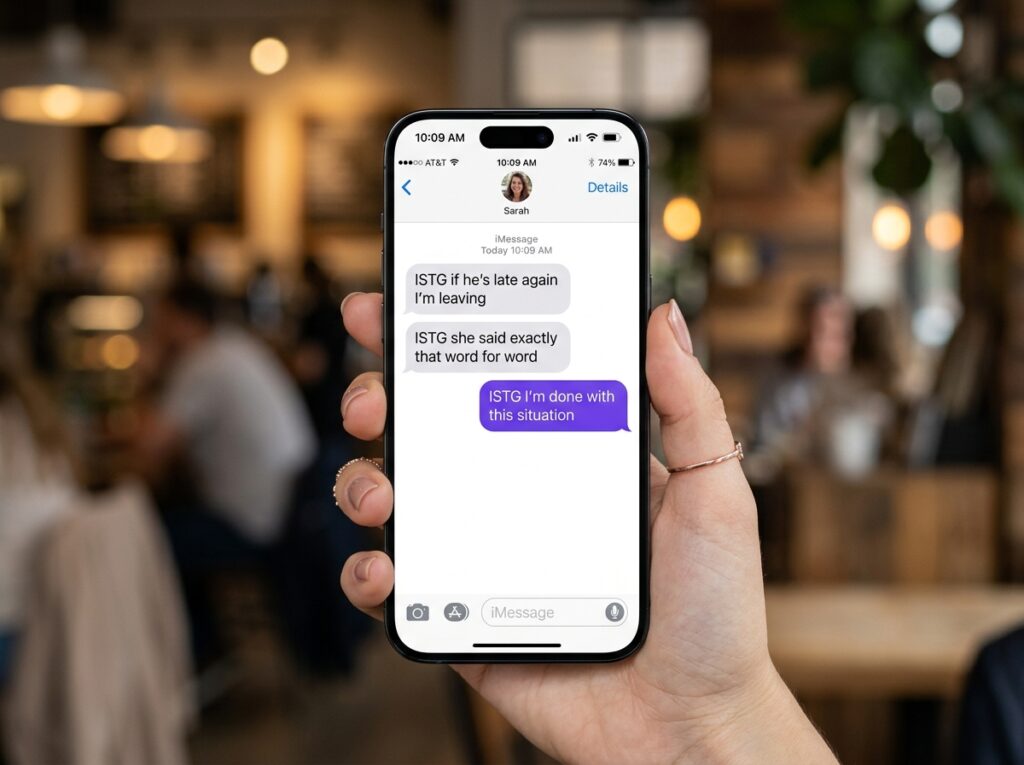
[EXAMPLE CHAT SCREENSHOT MOCKUP — fake phone chat bubbles, iMessage or WhatsApp style]
Variations and Related Slang
ISTG has a few common spelling variations. Some people type “istg” in all lowercase for a more casual vibe. Others might use “ISTFG” — adding an F-word in the middle for extra emphasis. That version is obviously stronger and more adult.
Related slang covers similar emotional territory. OFC means “of course” and adds casual confirmation. These phrases all serve the purpose of emphasizing honesty or emotion in quick digital form.
Here are the closest relatives:
FR — “For real.” Similar emphasis on truth, slightly less intense than ISTG.
NGL — “Not gonna lie.” Signals honesty before a statement.
ONG — “On God.” Almost identical to ISTG, popular in AAVE-influenced spaces.
TBH — “To be honest.” Softer version of honest emphasis.
FRFR — “For real, for real.” Double emphasis, very Gen Z.
| Term | Meaning | Similar/Different? |
|---|---|---|
| ISTG | I swear to God | — |
| ONG | On God | Nearly identical meaning |
| FR | For real | Similar but lighter |
| NGL | Not gonna lie | Focuses on honesty |
| FRFR | For real for real | Stronger emphasis |
| TBH | To be honest | Softer, more reflective |
Is “ISTG” Safe for Kids?
The short answer: mostly yes, with a small asterisk.
ISTG references God, which might concern some parents. But in practice, kids using this aren’t being religious or irreligious. They’re just emphasizing their texts. The phrase has lost most of its sacred weight through everyday use.
The bigger question is context. ISTG itself is pretty harmless. But it often appears alongside stronger emotions — frustration, anger, or intense feelings. If your kid texts “ISTG I hate this teacher,” the concern isn’t the acronym. It’s what they’re expressing.
Schools generally won’t flag ISTG specifically. It’s not profanity. It’s not explicitly inappropriate. Teachers might see it as casual language, similar to “seriously” or “honestly.”
Parents shouldn’t panic about ISTG. It’s standard texting vocabulary for anyone under 25. The phrase reflects how this generation emphasizes points. Understanding it helps you stay connected to how your kids actually communicate.
[PARENT SAFETY ICON — shield/safety graphic, 300x200px, “Parent Guide” label]
When to Use (and Avoid) “ISTG”
USE IT WHEN:
- You’re texting friends and want to emphasize something strongly
- You’re frustrated and need to vent in a group chat
- You’re being playfully dramatic about something minor
- You want someone to know you’re being completely honest
AVOID IT WHEN:
- You’re texting a boss, teacher, or professional contact
- You’re in formal group chats like work Slack channels
- You’re talking to someone who might find religious references uncomfortable
- You’re writing anything that needs to sound mature or serious
Conclusion
ISTG means “I swear to God” — a quick way to add emphasis, frustration, or honesty to any message. It’s become standard vocabulary in texting culture. Understanding it helps you keep up with how people actually communicate today.
Slang like ISTG shows how language adapts to technology. We need faster ways to convey tone when we can’t use our voices. Four letters can carry the weight of a raised voice or a hand on the heart.
Next time ISTG pops up in your texts, you’ll know exactly what’s happening. Someone’s being emphatic. That’s really all it is. If you want to explore more texting slang, check out what IMO means — another phrase that signals honesty in casual conversation.
FAQ
What does ISTG mean in texting?
ISTG stands for “I swear to God” in texting. People use it to emphasize they’re being serious, honest, or frustrated. It’s a quick way to add emotional weight to a message without typing the full phrase out.
Is ISTG a bad word?
ISTG isn’t considered a bad word. It references God, which some might find mildly inappropriate, but it’s not profanity. Most people use it casually without religious intent. It’s widely accepted in everyday texting among all ages.
Can I use ISTG at work?
You should avoid ISTG in professional settings. It’s too casual for work emails, Slack messages, or texts with colleagues. Save it for friends and personal conversations. Using it professionally might make you seem unprofessional or immature.
What’s the difference between ISTG and ONG?
ISTG and ONG mean almost the same thing. ISTG is “I swear to God” while ONG is “On God.” Both emphasize truth or strong feelings. ONG tends to be more popular in certain communities, especially those influenced by AAVE.
Why do people say ISTG so much?
People use ISTG frequently because texting lacks tone. Without voice inflection, it’s hard to show emphasis. ISTG instantly signals “I really mean this” or “I’m frustrated.” It fills the gap that facial expressions and voice normally cover.