You’re scrolling through Instagram comments. Someone writes, “NGL, that fit goes hard.” You pause. NGL? Is that a typo? An acronym? Some new brand?
Then you see it again in your group chat. Your cousin texts, “NGL, I’m kind of nervous about tomorrow.” Now you’re definitely curious.
This three-letter combo shows up everywhere. TikTok captions. Snapchat stories. Random tweets. It feels like everyone got the memo except you.
Here’s the thing. NGL is one of those phrases that sounds intimidating until you realize how simple it is. People use it to signal honesty. It’s a tiny confession before they say something real.
The phrase works a lot like SMH meaning — short, punchy, and packed with attitude. Once you understand it, you’ll notice it constantly.
You probably already sense what it means from context. But knowing exactly how and when to use it? That’s where things get interesting.
What Does NGL Mean?
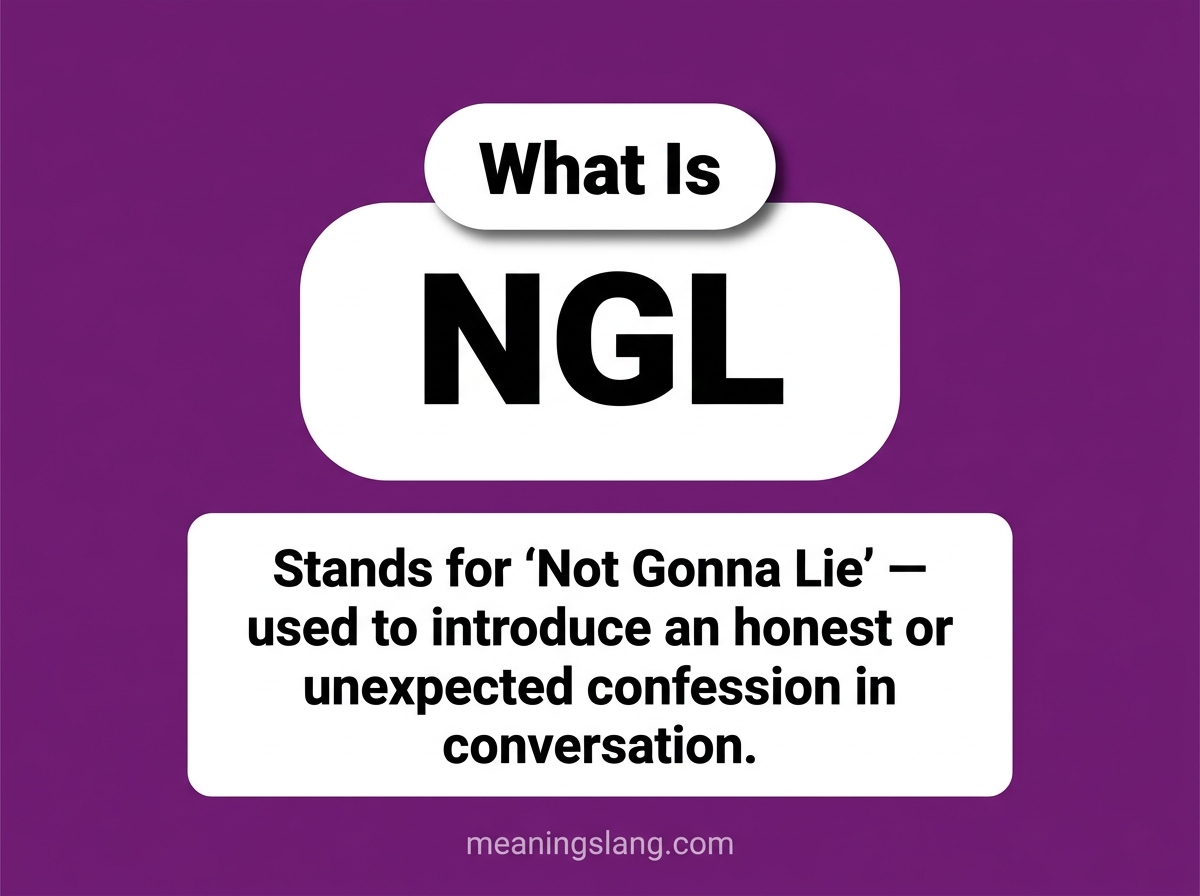
QUICK ANSWER: NGL stands for “not gonna lie.” People use it before sharing an honest opinion, confession, or reaction. It signals that what comes next is the real truth.
That’s it. Three letters. One meaning. No hidden code.
When someone types NGL, they’re basically saying, “I’m about to be real with you.” It adds weight to whatever follows. The phrase creates a moment of honesty in casual conversation.
The emotional tone shifts based on context. Sometimes NGL introduces something positive. “NGL, you look amazing today.” Other times it softens criticism. “NGL, that movie was kind of boring.”
It can also introduce vulnerability. Imagine someone texting, “NGL, I’ve been struggling lately.” That NGL signals they’re dropping their guard.
The phrase works like a verbal heads-up. You know something genuine is coming. Whether it’s a compliment, critique, or confession, NGL prepares you for honesty.
Anyone can use it. Teens text it constantly. Adults have picked it up too. It crosses age groups because everyone appreciates a moment of realness.
Think of it as the text version of taking a breath before saying something important. NGL creates that pause.
[DEFINITION GRAPHIC HERE — term on left, arrow, plain definition on right, white card background]
Origin and History of “NGL”
NGL didn’t appear out of nowhere. Like most text slang, it evolved from people wanting to type faster.
The acronym first gained traction in early internet chat rooms and forums. People abbreviated common phrases to save time. “Not gonna lie” became NGL sometime in the mid-2000s.
Twitter helped spread it further. Character limits forced creative shortening. NGL fit perfectly into tight tweet spaces.
By the early 2010s, NGL was standard vocabulary in text conversations. Millennials typed it casually. Gen Z inherited it and made it even more popular.
The phrase exploded on TikTok around 2019-2020. Creators used it in captions and voiceovers. “NGL, this trend is everything.” The more people saw it, the more they used it.
There’s no single viral moment that launched NGL. It grew gradually through everyday use. That’s actually why it stuck around. Organic adoption beats forced trends every time.
Today, NGL feels permanent. It’s embedded in how people communicate online. New slang comes and goes, but NGL has staying power.
How “NGL” Is Used on Different Platforms
Every platform has its own flavor. NGL adapts to each one.
TikTok
Creators drop NGL into captions and video text. It usually introduces a hot take or personal confession. “NGL, I finally understand why people love this song.” The phrase adds authenticity to content.
In DMs, NGL works just like texting. Casual and direct. In Stories, people use it for quick polls or honest reactions. Captions might include something like, “NGL, best vacation ever.”
Twitter/X
Short tweets love NGL. It fits the vibe perfectly. People share opinions, reactions, and confessions. “NGL, that game was disappointing” feels right on Twitter.
Snapchat
Snaps and chat messages use NGL constantly. The platform’s casual tone matches the phrase well. “NGL, I miss you” hits harder on Snap.
Discord/Gaming Chats
Gamers use NGL for quick reactions. “NGL, that play was insane.” It works during fast-paced conversations where honesty matters but time doesn’t allow long explanations.
Redditors use NGL in comments when sharing genuine opinions. “NGL, I thought the movie was overrated.” The phrase signals they’re speaking freely.
| Platform | Common Use | Tone | Example |
|---|---|---|---|
| TikTok | Captions, voiceovers | Casual, confessional | “NGL, this recipe changed my life” |
| DMs, Stories, captions | Personal, honest | “NGL, I needed this trip” | |
| Twitter/X | Hot takes, reactions | Direct, opinionated | “NGL, that album was mid” |
| Snapchat | Chats, Snaps | Intimate, casual | “NGL, I can’t stop thinking about it” |
| Discord | Gaming chat, servers | Quick, reactive | “NGL, you carried that match” |
NGL in Texting vs. Real Life
In texting, NGL flows naturally. It looks normal. People type it without thinking.
But speaking it out loud? That’s different.
Some people do say “NGL” verbally. They pronounce each letter: “en-gee-ell.” It works in casual friend groups. Teens especially say it aloud without awkwardness.
Others just say the full phrase: “not gonna lie.” That sounds more natural to older speakers.
The meaning stays identical either way. Only the delivery changes. Written NGL feels efficient. Spoken NGL can sound intentional — like you’re really emphasizing your honesty.
If you’re unsure, just say “honestly” instead. Same effect, zero confusion.
Examples of “NGL” in Sentences
GROUP 1 — Friendly/Casual
“NGL, that pizza place was actually really good.”
“I didn’t expect to like the show, but NGL, I’m hooked now.”
“NGL, your advice helped me a lot last week.”
GROUP 2 — Romantic/Flirty
“NGL, I’ve been thinking about you all day.”
“NGL, you looked really cute in that photo.”
GROUP 3 — Sarcastic/Humorous
“NGL, I thought about skipping the gym, but then I skipped the gym.”
“NGL, my cooking skills are still questionable at best.”
GROUP 4 — Online/Caption Use
“NGL, best concert of my life 🎤”
“NGL, this sunset is doing things to me right now.”
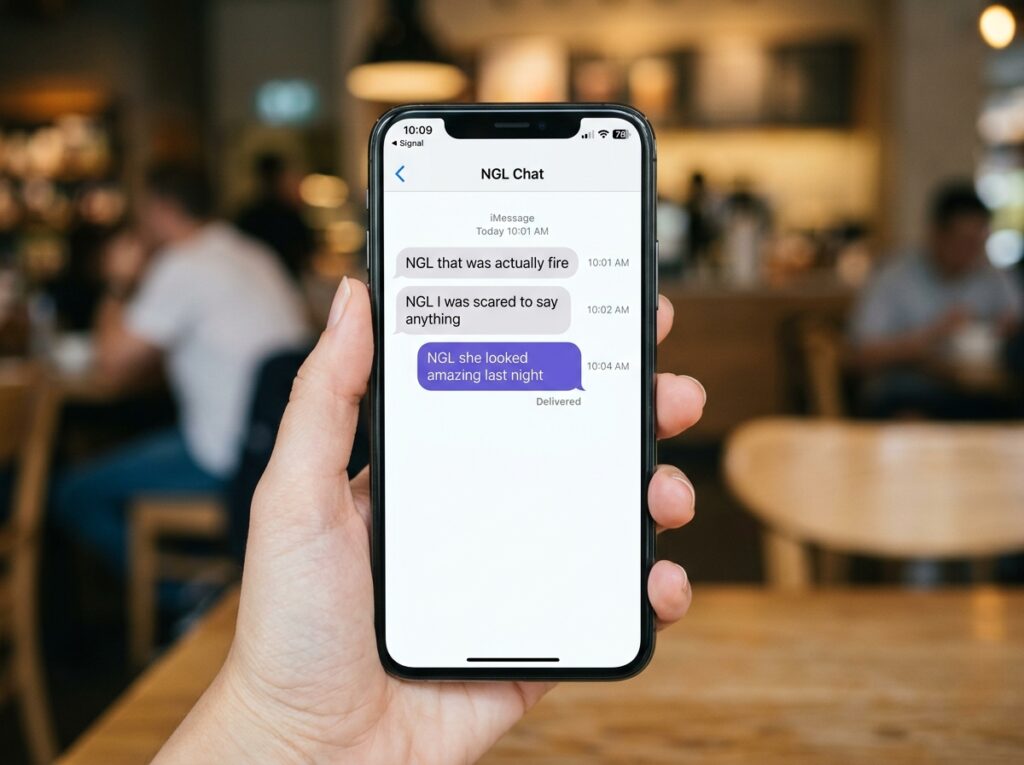
[EXAMPLE CHAT SCREENSHOT MOCKUP — fake phone chat bubbles, iMessage or WhatsApp style]
Variations and Related Slang
NGL has a few cousins in the slang family.
Spelling Variations
Most people type “ngl” in lowercase. Sometimes you’ll see “Ngl” at the start of sentences. “NGL” in all caps works for emphasis. All versions mean the same thing.
Related Terms
People often use IMO meaning for opinions too. IMO means “in my opinion.” It’s similar but less about confession and more about perspective.
TBH is another close relative. TBH means “to be honest.” NGL and TBH overlap, but NGL feels slightly more casual.
ISTG means “I swear to God.” Check out ISTG meaning for details. It adds intensity to statements.
Lowkey is another honesty signal. “I lowkey love that song” works like NGL for softer admissions.
| Term | Meaning | Similar/Different? |
|---|---|---|
| NGL | Not gonna lie | — |
| TBH | To be honest | Very similar, slightly more formal |
| IMO | In my opinion | Opinion-based, less confessional |
| ISTG | I swear to God | Stronger emphasis |
| Lowkey | Secretly, kind of | Softer admission |
Is “NGL” Safe for Kids?
Direct answer: Yes. NGL itself is completely harmless.
The acronym has no inappropriate meaning. It simply signals honesty. Kids and teens use it constantly in everyday conversation.
However, context matters. What comes after NGL could be anything. “NGL, that was boring” is innocent. But the phrase could introduce more mature topics depending on the conversation.
Parents don’t need to worry about NGL alone. It’s like the word “honestly” — neutral by itself.
Teachers probably won’t flag it. It’s too common and too harmless to raise concerns.
If you see your child using NGL, that’s normal. It just means they’re speaking internet fluently. The bigger thing to watch is the full message, not the acronym.
[PARENT SAFETY ICON — shield/safety graphic, 300x200px, “Parent Guide” label]
When to Use (and Avoid) “NGL”
USE IT WHEN:
- Sharing a genuine opinion with friends
- Confessing something vulnerable in a casual way
- Adding authenticity to social media captions
- Softening honest feedback in texts
AVOID IT WHEN:
- Writing formal emails or work messages
- Speaking to people unfamiliar with slang
- Overusing it (saying NGL every sentence gets annoying)
- The situation requires professional language
Conclusion
NGL means “not gonna lie.” It’s a quick way to signal honesty before sharing something real.
This tiny phrase shows how internet language evolves. People create shortcuts that carry emotional weight. Three letters now communicate vulnerability, authenticity, and realness.
Slang like NGL connects people. It creates shared understanding across screens. Similar to understanding what “based” means, knowing NGL helps you decode modern conversation.
Next time someone texts you NGL, you’ll know exactly what’s coming — something honest.
FAQ
What does NGL mean in texting?
NGL stands for “not gonna lie.” People type it before sharing honest opinions, confessions, or reactions. It signals that whatever follows is genuine and unfiltered. The phrase is casual and works in almost any texting situation.
Is NGL rude or offensive?
No, NGL is neutral. It simply introduces honesty. The tone depends entirely on what someone says after NGL. The acronym itself carries no negative meaning and is appropriate for all ages.
Can I use NGL in professional settings?
Avoid it. NGL is casual slang meant for friends, social media, and texting. In work emails or formal conversations, saying “honestly” or “to be frank” sounds more appropriate and professional.
What’s the difference between NGL and TBH?
Both signal honesty, but they feel slightly different. NGL (“not gonna lie”) sounds more casual and confessional. TBH (“to be honest”) feels a touch more deliberate. They’re often interchangeable in everyday conversation.
Do people say NGL out loud?
Yes, some people pronounce each letter: “en-gee-ell.” Others just say the full phrase, “not gonna lie.” Both work fine. Saying it aloud is more common among Gen Z and in casual friend groups.