Someone just replied “u dig?” at the end of a long text. You read the message twice. You understood everything except those two words.
It feels like they’re asking you something. But asking what exactly? Are they checking if you agree? Testing if you’re paying attention? Or is it just… filler?
Here’s the thing. This phrase isn’t new. Your parents probably heard it decades ago. But it keeps showing up in texts, TikTok comments, and rap lyrics. Gen Z grabbed it and gave it new energy.
The confusion makes sense. “U dig” doesn’t look like a question. There’s no question mark half the time. It’s short, casual, and easy to skip over without really getting it.
If you’ve ever nodded along pretending you understood—or worse, replied “yeah” without knowing what you agreed to—you’re not alone. This phrase works differently than most slang. It’s less about being trendy and more about connection.
Similar to how people use IMO to share opinions, “u dig” is about checking in with someone. Let’s break down exactly what it means.
What Does U Dig Mean?
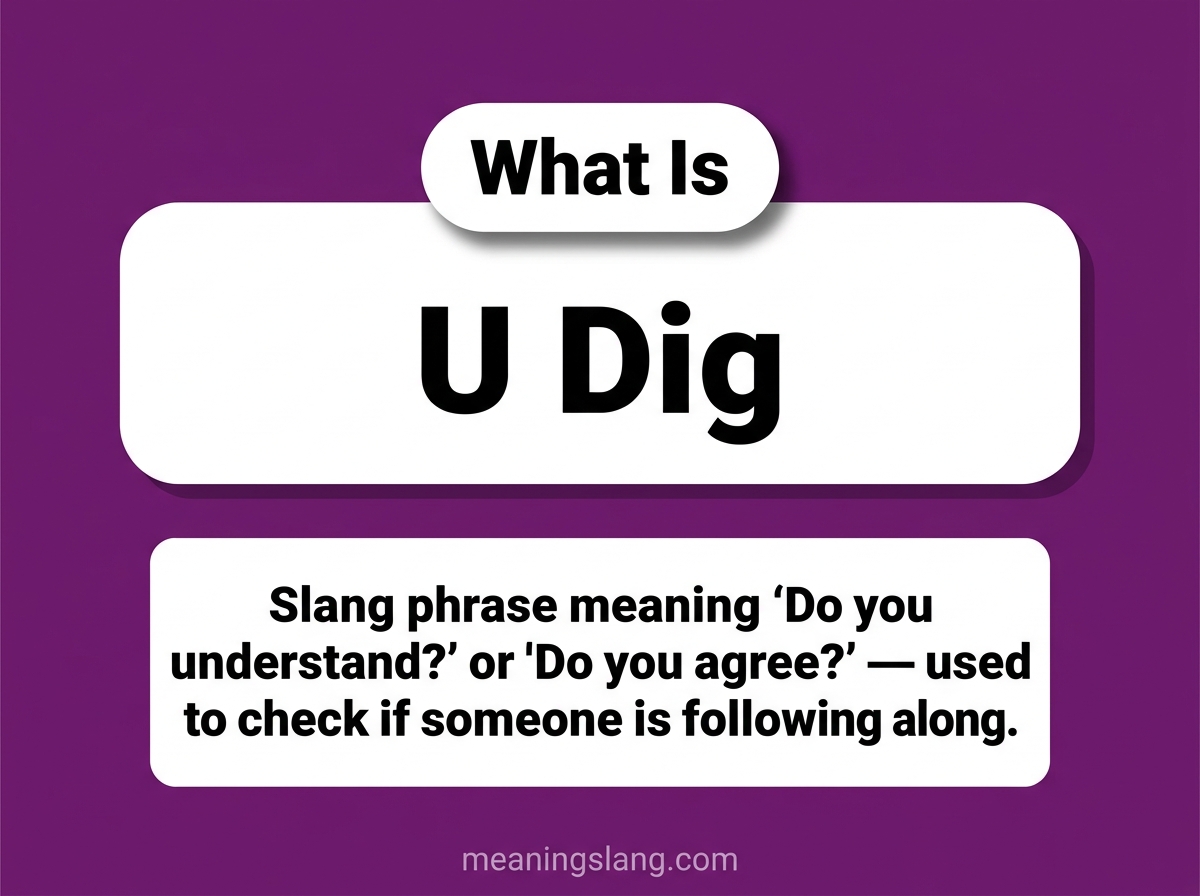
QUICK ANSWER: “U dig” means “do you understand?” or “you know what I mean?” It’s a casual way to check if someone follows what you’re saying. Think of it as a verbal head nod asking for agreement.
The full phrase is “you dig?” with “u” being the texting shorthand. When someone says “u dig,” they want confirmation. They’re making sure you’re on the same page.
It carries a relaxed, friendly tone. Nobody uses “u dig” in formal situations. It’s reserved for casual conversations with people you’re comfortable with.
The emotional vibe is chill. It’s not aggressive or demanding. It’s more like a soft check-in. “I just explained something—are we good?”
Context matters here. A friend might text: “I’m skipping the party because I need alone time, u dig?” They’re explaining themselves and hoping you get it.
Sometimes it works as emphasis. “This song hits different, u dig?” Here, they’re not really asking. They’re underlining their point.
Who says it changes the flavor slightly. Younger people often use it playfully. Older folks might use it more naturally since they grew up with it. Either way, the core meaning stays the same: do you understand me?
[DEFINITION GRAPHIC HERE — term on left, arrow, plain definition on right, white card background]
Origin and History of “U Dig”
“Dig” as slang for “understand” goes way back. Jazz musicians in the 1930s and 1940s started using it. The African American community shaped this term alongside other jazz-era slang.
Back then, “dig” meant to appreciate or understand something deeply. “I dig that music” meant you really felt it. The phrase carried respect and genuine comprehension.
By the 1950s and 1960s, beatniks and hippies adopted it. “You dig?” became common in counterculture conversations. It spread through music, poetry, and protest movements.
Hip-hop brought it back in the 1980s and 1990s. Rappers used “you dig” naturally in verses. It fit the rhythm and the vibe.
Today’s version—”u dig”—is just the texting evolution. Gen Z didn’t invent it. They inherited it. The internet spelling makes it faster to type while keeping the original meaning alive.
What’s interesting is how it survived. Many slang terms die within a decade. “U dig” has lasted nearly a century because it fills a real need. People always want to check if others understand them.
How “U Dig” Is Used on Different Platforms
TikTok
On TikTok, “u dig” appears in comments and video captions. Creators use it to connect with viewers after making a point. It feels conversational, like they’re talking directly to you.
Example: “POV: you finally set boundaries with toxic people, u dig?”
Instagram users drop “u dig” in DMs and story replies. It’s casual and fits the platform’s personal messaging style. Captions sometimes end with it for emphasis.
Example: “Self-care isn’t selfish, u dig? 💆♀️”
Twitter/X
Short-form posts love “u dig.” It fits the character limit and adds personality. People use it to emphasize opinions or hot takes.
Example: “Nobody owes you an explanation for protecting their peace, u dig”
Snapchat
In snaps and chats, “u dig” works as a quick check-in. It’s fast and doesn’t require a long response. Perfect for the platform’s quick-disappearing format.
Example: “I’m not mad just tired, u dig?”
Discord/Gaming Chats
Gamers use it when explaining strategies or situations. It’s a quick “you following me?” without breaking the flow of conversation.
Example: “We push left flank first, u dig?”
| Platform | Common Use | Tone | Example |
|---|---|---|---|
| TikTok | Video captions, comments | Casual, relatable | “Growth isn’t linear, u dig?” |
| DMs, story replies | Personal, friendly | “Taking a break from socials, u dig?” | |
| Twitter/X | Hot takes, opinions | Confident, direct | “Quality over quantity always, u dig” |
| Snapchat | Quick chats | Fast, informal | “Running late but omw, u dig?” |
| Discord | Explanations, team talk | Focused, casual | “Save your ult for the final push, u dig?” |
U Dig in Texting vs. Real Life
People definitely say “you dig” out loud. It doesn’t sound weird spoken. In fact, it probably sounds more natural spoken than typed.
When typed, “u dig” feels very casual. It’s texting shorthand. It fits quick conversations and social media posts.
Spoken out loud, the full “you dig?” carries more weight. It has rhythm. You can hear the inflection rise at the end, making it clearly a question.
The difference is subtle. Texting removes tone, so “u dig” sometimes reads flat. Spoken, it’s warmer. You can tell if someone’s being playful, serious, or just checking in.
Some people say “ya dig” out loud instead. Same meaning, just a slight pronunciation shift. Both work fine in casual conversations with friends.
Examples of “U Dig” in Sentences
GROUP 1 — Friendly/Casual
“I’m just trying to focus on myself right now, u dig?”
“We’re meeting at 7 but showing up at 8, u dig?”
“It’s not that deep, I just need space sometimes, u dig?”
GROUP 2 — Romantic/Flirty
“I’ve been thinking about you all day, u dig?”
“You’re different from everyone else, u dig?”
GROUP 3 — Sarcastic/Humorous
“Oh yeah, I totally studied for this exam… u dig? 😅”
“Just spent $200 on snacks. Self-care, u dig?”
GROUP 4 — Online/Caption Use
“Main character energy only, u dig? ✨”
“2026 is about peace and boundaries, u dig?”
“No more explaining myself to people who don’t matter, u dig”
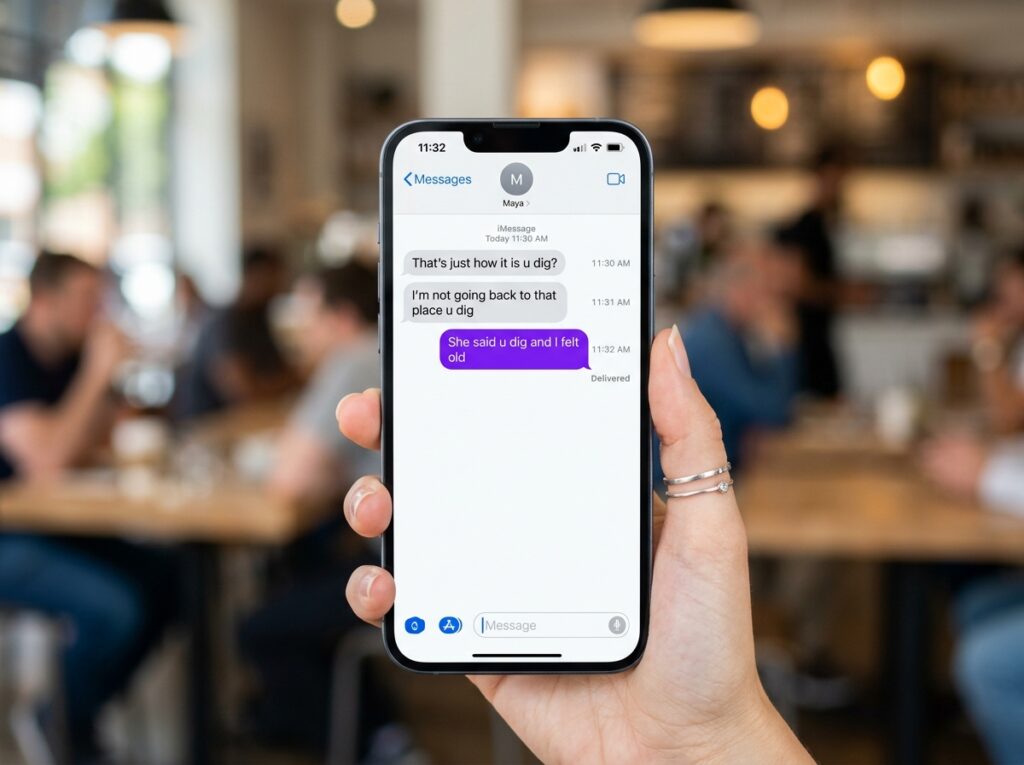
[EXAMPLE CHAT SCREENSHOT MOCKUP — fake phone chat bubbles, iMessage or WhatsApp style]
Variations and Related Slang
The main spelling is “u dig” but you’ll also see “ya dig” and “you dig.” They all mean the same thing. “Ya dig” is especially common in rap lyrics and spoken conversations.
Some people extend it to “u digg” or “u dig it.” The extra letters don’t change the meaning. They just add emphasis or personal style.
Related slang fills similar roles. When someone uses NGL before a statement, they’re being honest and direct. “U dig” serves a different purpose—it asks for understanding rather than stating honesty.
The phrase IYKYK captures insider knowledge. “U dig” is more inclusive. It invites everyone into the understanding rather than gatekeeping it.
| Term | Meaning | Similar/Different? |
|---|---|---|
| U dig | Do you understand? | — |
| Ya dig | Same as u dig, spoken form | Same meaning |
| Feel me | Do you understand my feelings? | Similar, more emotional |
| You know? | Quick agreement check | Similar, less stylized |
| SMH | Shaking my head (disappointment) | Different, expresses reaction |
Is “U Dig” Safe for Kids?
Yes, this phrase is completely safe for kids.
“U dig” has no inappropriate meaning. It simply asks if someone understands. There’s nothing hidden or coded about it.
Kids might pick it up from music, TikTok, or older siblings. It’s harmless slang that’s been around for decades. No school would flag this term.
The only thing to watch is context. Like any phrase, kids might use it when being dismissive. “Whatever, u dig?” could carry attitude depending on tone.
Parents don’t need to worry about this one. It’s not secret code for anything inappropriate. It’s just casual language asking for understanding.
If your kid starts saying “u dig,” they’re probably just absorbing normal slang. Consider it the same as “you know what I mean?”
[PARENT SAFETY ICON — shield/safety graphic, 300x200px, “Parent Guide” label]
When to Use (and Avoid) “U Dig”
USE IT WHEN:
- Texting friends in casual conversation
- Adding emphasis after explaining yourself
- Posting relatable social media content
- Checking if someone follows your point
AVOID IT WHEN:
- Writing professional emails or work messages
- Talking to someone unfamiliar with slang
- Communicating in formal settings
- Texting older family members who might be confused
Conclusion
“U dig” is a simple question asking if someone understands you. It’s friendly, casual, and carries decades of cultural history.
Slang like this connects generations. Your grandparents might recognize “you dig” from jazz clubs. Your little cousin knows it from TikTok. Same phrase, different eras.
Language keeps evolving, but the need to feel understood never changes. That’s why “u dig” has stayed relevant. Much like how people say “yuh” to show agreement, this phrase builds connection through simple confirmation.
Use it when the vibe is right. Skip it when clarity matters more than style.
FAQ
What does “u dig” mean in a text?
“U dig” means “do you understand?” or “you know what I mean?” It’s a casual way to check if someone follows what you’re saying. People use it to confirm understanding without asking a formal question.
Is “u dig” old slang?
Yes, it originated in the 1930s-1940s jazz scene. African American musicians used “dig” to mean understand or appreciate. The phrase has survived through hip-hop and now lives in modern texting as “u dig.”
Can I use “u dig” in professional settings?
No, avoid using “u dig” in professional communication. It’s very casual slang meant for friends and social media. In work emails or formal conversations, stick to standard phrases like “does that make sense?”
What’s the difference between “u dig” and “ya dig”?
They mean exactly the same thing. “Ya dig” is more common in spoken conversation and rap lyrics. “U dig” is the texting version. Both ask if someone understands what you’re saying.
Why do people say “u dig” at the end of sentences?
People add “u dig” to check in with listeners or readers. It’s like a verbal nod asking for agreement. It makes statements feel more conversational and invites the other person to confirm they understand.