You’re scrolling TikTok. A guy does a dramatic hair flip in the comments. Someone replies: “He’s so zesty 💅.” You pause.
Is that a compliment? An insult? Something about lemons?
If you’ve seen “zesty” pop up in comments, group chats, or captions, you’re not alone. This word has taken over Gen Z vocabulary. It shows up everywhere now. But here’s the thing — the meaning isn’t always clear.
Some people use it playfully. Others mean it as a dig. The tone shifts based on who’s talking and who’s listening. That makes it tricky to decode.
Whether someone called you zesty or you want to use it yourself, context matters a lot here. The word carries different weight depending on the situation. It’s similar to how sus has layers of meaning that depend on delivery.
You probably landed here because you need a straight answer. And that’s exactly what you’ll get. The full breakdown starts now.
What Does Zesty Mean?
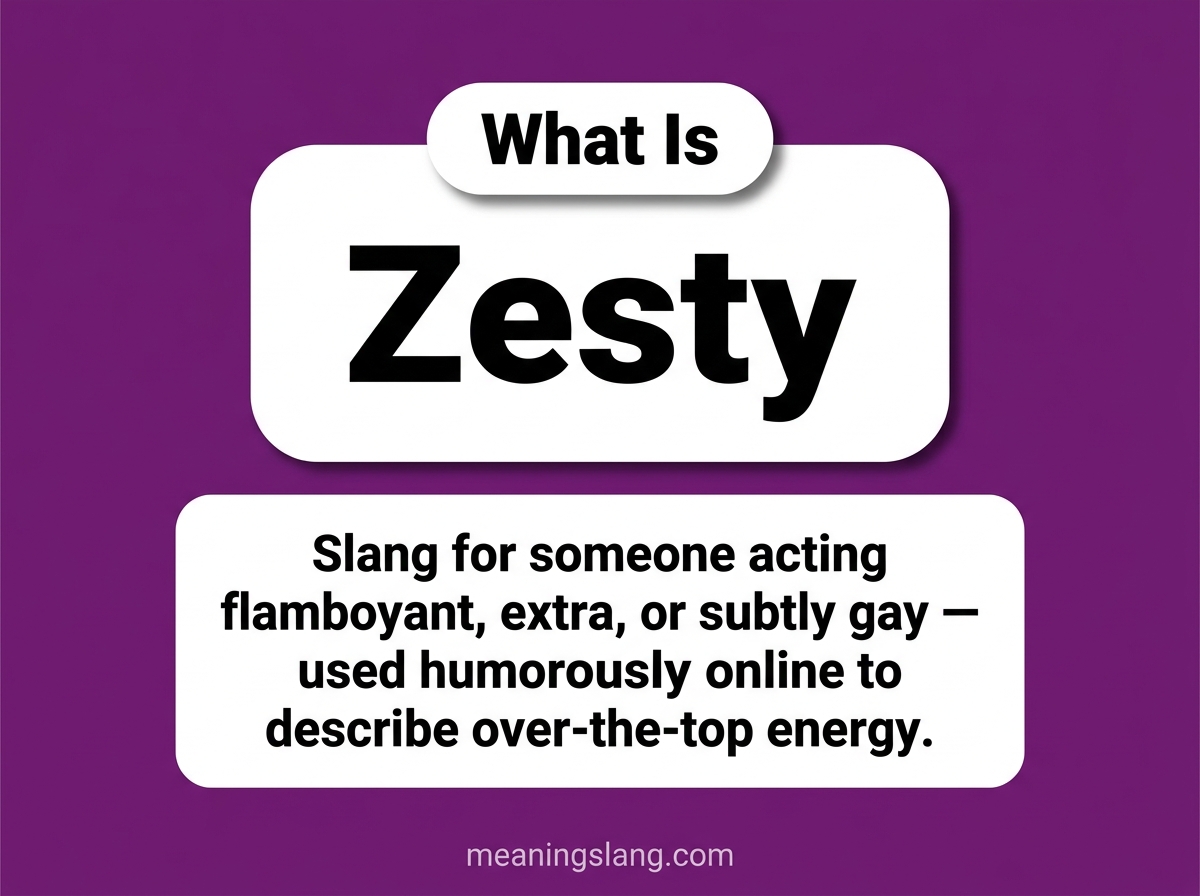
QUICK ANSWER: Zesty is slang that describes someone as flamboyant, extra, or having bold energy. It often refers to a guy acting in a way that some consider feminine or dramatic. The word can be playful or shady depending on context.
Now let’s dig deeper.
When someone calls a person zesty, they’re pointing out their expressive personality. Think dramatic hand gestures, bold fashion choices, or over-the-top reactions. A guy posting a selfie with perfect lighting and a pouty face? Someone might comment “zesty king.”
The emotional tone varies wildly. Friends might call each other zesty as a joke with no harm intended. But strangers online sometimes use it as a coded way to question someone’s masculinity. That second use carries judgment.
Who’s saying it matters. A close friend teasing you about your fancy coffee order hits different than a random commenter. The word “he’s acting zesty” could mean “he’s fun and confident” or “he seems gay” — depending on the speaker’s intent.
You’ll hear it most about men. Women rarely get called zesty in this slang sense. The word targets a specific kind of energy that breaks traditional masculine expectations.
Origin and History of “Zesty”
Zesty started as a normal English word. It meant lively, energetic, or having a sharp flavor. Think “zesty lemon dressing” or “zesty personality” in the old-school sense.
The slang shift happened in Black American communities first. AAVE speakers began using zesty to describe men who acted flamboyant. The word carried playful teasing energy in those spaces.
TikTok and Twitter accelerated everything around 2021-2022. Videos roasting “zesty” behavior went viral. Creators would point out specific mannerisms — the way someone walks, talks, or poses. The word spread fast.
By 2023, zesty was everywhere online. It crossed over from niche internet humor to mainstream Gen Z vocabulary. Now even people unfamiliar with its origins throw it around casually.
The meaning has softened for some users. Many people reclaimed it as a positive descriptor. They wear “zesty” as a badge of confidence rather than an insult.
How “Zesty” Is Used on Different Platforms
TikTok
This is zesty’s home base. Comment sections explode with it whenever a guy does anything remotely expressive. Dance videos, outfit checks, skincare routines — all zesty territory. Creators also make “zesty compilation” videos mocking or celebrating the vibe.
Example: “The way he walked into frame… ZESTY 😭”
Zesty appears in DM reactions and story replies. Friends tease each other after posting certain pics. Captions sometimes include self-deprecating zesty jokes.
Example: “Posted this fit and my boy said I’m giving zesty vibes 💀”
Twitter/X
Debates happen here about whether zesty is homophobic or harmless. The word trends whenever someone posts a “zesty or nah?” reaction clip. Hot takes fly constantly.
Example: “Y’all call everything zesty now. A man can’t even moisturize?”
Snapchat
Group chats use it to roast friends. Someone sends a selfie, responses roll in calling them zesty. It stays within friend circles mostly.
Example: “Bro that pose is CRAZY zesty delete that”
Discord/Gaming
Gamers use it when someone’s character skin or emote feels extra. Also applies to voice chat when someone’s energy hits different.
Example: “Why is your avatar so zesty lmaooo”
| Platform | Common Use | Tone | Example |
|---|---|---|---|
| TikTok | Comment sections, compilations | Playful/mocking | “He’s too zesty for this 💅” |
| DMs, story replies | Teasing | “Zesty king behavior” | |
| Twitter/X | Debates, reaction posts | Mixed | “This is the zestiest video I’ve seen” |
| Snapchat | Friend group roasts | Joking | “Delete this zesty pic bro” |
| Discord | Gaming/avatar jokes | Casual | “Your loadout is zesty” |
Zesty in Texting vs. Real Life
People definitely say zesty out loud. It works in conversation because it sounds natural. The word doesn’t feel awkward to speak like some internet slang does.
In texts, zesty often comes with emojis. The 💅 nail polish emoji is basically mandatory. It adds tone that spoken words don’t need.
Face-to-face, delivery matters more. Saying “you’re so zesty” to a friend while laughing reads as playful. Saying it flatly to a stranger sounds like shade. The written version hides your tone. That’s why text-based zesty causes more confusion and conflict.
Examples of “Zesty” in Sentences
GROUP 1 — Friendly/Casual
“My roommate bought a pink espresso machine and honestly? Zesty king behavior.”
“The way you walked in here was lowkey zesty and I respect it.”
“He’s been dressing zesty lately but it actually looks good.”
GROUP 2 — Flirty/Playful
“I like that you’re a little zesty. It’s cute.”
“Your energy is giving zesty and I’m here for it 😏”
GROUP 3 — Sarcastic/Humorous
“Bro really ordered a lavender latte with oat milk. Zesty behavior detected.”
“Me after spending 40 minutes on my hair for a grocery run: certified zesty.”
GROUP 4 — Online/Caption Use
“New fit check 📸 yes I know it’s zesty don’t @ me”
“POV: someone calls you zesty and you take it as a compliment”
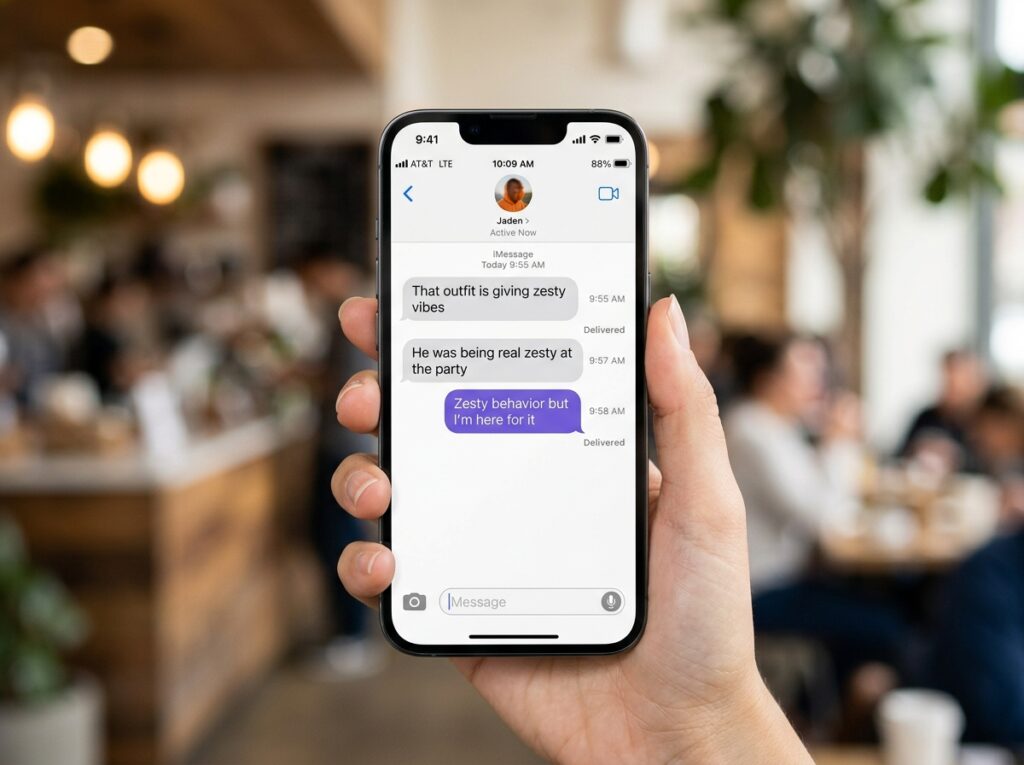
[EXAMPLE CHAT SCREENSHOT MOCKUP — fake phone chat bubbles, iMessage or WhatsApp style]
Variations and Related Slang
Zesty doesn’t have many spelling variations. People write it as “zestyyy” with extra letters for emphasis. Some add “zest” as a shortened form. “Zested” appears occasionally as a past tense version.
Related slang overlaps with zesty’s territory. Here are terms that live in the same space:
Sus — short for suspicious, often implies someone’s hiding something about their sexuality. You can learn more about what sus really means and how it connects.
Extra — being dramatic or over-the-top. Less loaded than zesty but similar energy.
Slay — doing something impressively, usually with confidence and style.
Fruity — another slang term suggesting someone seems gay. More direct than zesty.
Serving — giving a strong, confident vibe. Like “serving looks” or “serving energy.”
| Term | Meaning | Similar/Different? |
|---|---|---|
| Zesty | Flamboyant, extra, dramatic energy | — |
| Sus | Suspicious, possibly hiding something | More accusatory |
| Extra | Over-the-top dramatic | Less sexuality-coded |
| Fruity | Seeming gay | More direct |
| Slay | Doing something impressively | More positive |
Is “Zesty” Safe for Kids?
Direct answer: It depends on how they’re using it.
Zesty itself isn’t a curse word. Kids won’t get in trouble for saying it in most situations. The issue is what it implies. When kids use zesty to mock someone’s masculinity, that crosses into bullying territory.
Some kids genuinely use it as a fun compliment. Others weaponize it against boys who don’t act “masculine enough.” The second use can hurt.
Parents should ask their kids what zesty means to them. Listen to the context. If your child uses it to put others down, that’s a teaching moment. If they call their own outfit zesty as a joke, that’s probably fine.
Schools might flag it if it’s being used to harass students. The word sits in a gray zone. It’s not banned anywhere, but intent matters.
[PARENT SAFETY ICON — shield/safety graphic, 300x200px, “Parent Guide” label]
When to Use (and Avoid) “Zesty”
USE IT WHEN:
- You’re joking with close friends who understand your tone
- You’re describing yourself in a self-aware, playful way
- The vibe is clearly positive and celebratory
- Someone takes pride in being called zesty
AVOID IT WHEN:
- You’re talking to or about strangers
- The person might take it as questioning their sexuality
- You’re in professional or formal settings
- It could sound like you’re mocking someone’s identity
Conclusion
Zesty means flamboyant, dramatic, or boldly expressive — usually describing a guy’s energy. The word walks a fine line between playful compliment and subtle shade.
Slang like this shows how language keeps evolving. Words pick up new meanings based on who uses them and where. Understanding that helps you navigate conversations without confusion. It’s similar to knowing what “down bad” signals about someone’s emotional state.
Use zesty when the vibe fits. Skip it when it might sting. Simple as that.
FAQ
What does zesty mean when someone calls you that?
They’re saying you come across as flamboyant or extra. It might be playful teasing or subtle shade. Context and your relationship with them determine if it’s friendly or critical. Close friends usually mean it as a joke.
Is zesty an insult or compliment?
Both, depending on who says it. Friends often use it as a lighthearted tease. Strangers or critics might use it to question masculinity. Many people now embrace being called zesty and wear it proudly.
Why do people say zesty about guys specifically?
Zesty targets behavior that breaks traditional masculine expectations. Expressive gestures, bold fashion, or dramatic reactions get labeled zesty. Women rarely receive this label because the term specifically comments on male presentation.
Is calling someone zesty homophobic?
It can be when used to mock perceived gayness. The word itself isn’t inherently homophobic. But using it to shame someone’s expression or sexuality crosses that line. Intent and context reveal whether harm is meant.
What’s the difference between zesty and sus?
Zesty describes outward behavior — how someone acts, dresses, or presents themselves. Sus implies suspicion that someone is hiding something. Zesty is more about visible energy while sus suggests something unspoken underneath.