Someone just dropped “PSA: no one asked” in a comment section. You stare at it for a second. You know PSA stands for public service announcement. But this doesn’t feel like a government health warning.
It feels pointed. Maybe sarcastic. Definitely internet.
Here’s the thing. PSA has evolved way beyond its original meaning. On social media, it’s become a way to grab attention fast. People use it before hot takes, warnings, complaints, and even jokes. The tone shifts depending on who’s typing.
Sometimes it’s genuinely helpful. Sometimes it’s pure attitude. And sometimes? It’s both at once.
You’ve probably seen PSA tweets go viral. Or watched TikTokers open videos with “PSA to everyone who…” before calling something out. It’s everywhere now — captions, group chats, memes, rants.
Understanding what SMH means helps you read frustration online. PSA is similar. It signals that someone’s about to make a point. And they want you to pay attention.
Let’s break down exactly what PSA means in slang and how to use it right.
What Does PSA Mean?
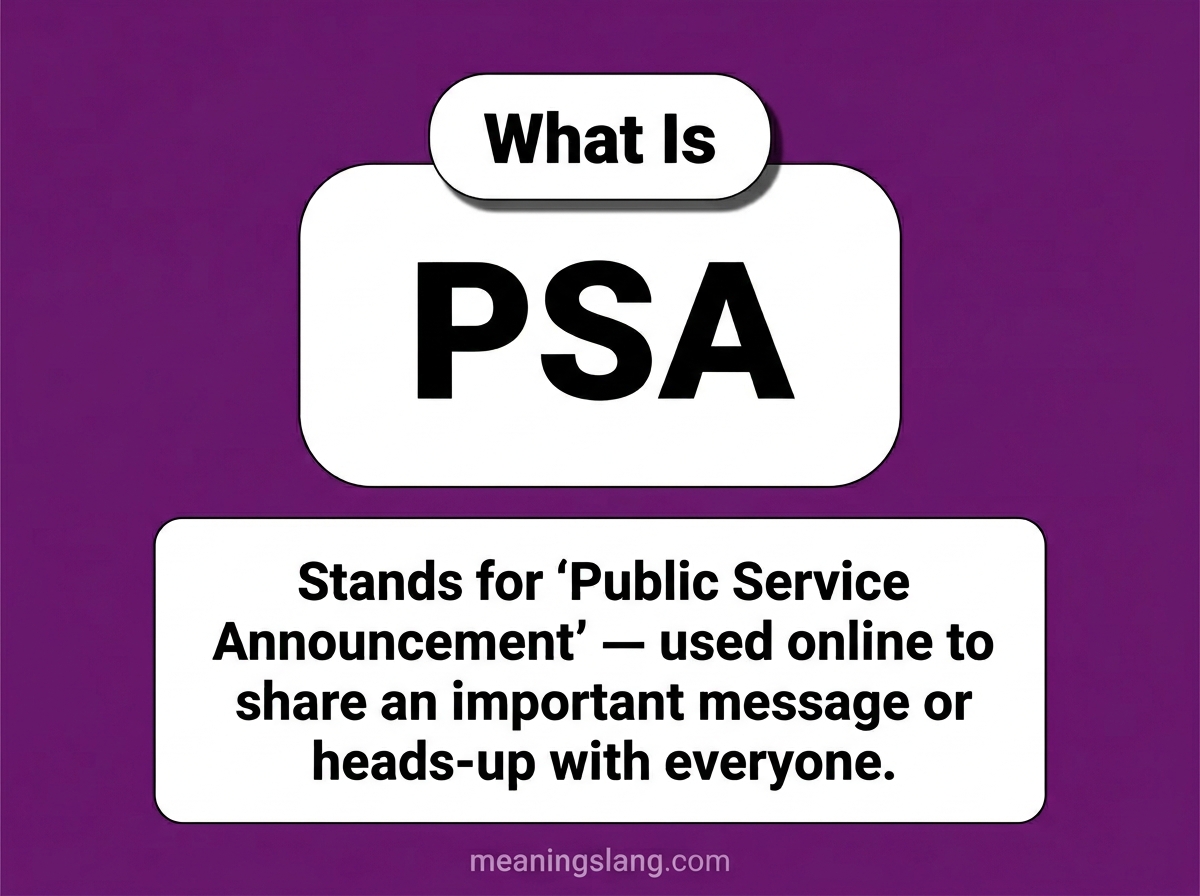
Quick Answer: PSA stands for “public service announcement.” In slang, it means someone is about to share information they think everyone needs to hear. It can be serious, sarcastic, or somewhere in between.
The original PSA comes from government and nonprofit messaging. Think anti-smoking ads or earthquake safety tips. But online? People borrowed that official energy.
When someone types “PSA:” before a statement, they’re framing it as important. They want it to feel urgent. Like they’re doing you a favor by sharing it.
The emotional tone varies wildly. “PSA: drink water today” is genuinely caring. “PSA: your opinion is trash” is aggressive. “PSA: I’m deleting this app” is dramatic. Same format, completely different vibes.
Context matters a lot. A PSA from your best friend probably has a playful edge. A PSA from a stranger on Twitter might be preachy or confrontational.
The key is the announcement structure. Someone’s stepping up to broadcast something. They believe their message deserves attention. Whether that’s earned or annoying depends on what follows.
You’ll often see PSA paired with advice, complaints, warnings, or unpopular opinions. It’s a frame that says “listen up.”
Origin and History of “PSA”
PSA started in traditional media. Radio and TV stations ran public service announcements for decades. These were short messages about health, safety, or civic issues. Think “Don’t drink and drive” or “Only you can prevent forest fires.”
The phrase entered internet culture in the early 2010s. People on Twitter and Tumblr started using it ironically. They’d announce personal opinions with the same serious tone as government warnings.
It spread because the format works. “PSA:” at the start of a message instantly signals importance. Even if the content is silly.
By the mid-2010s, PSA was everywhere online. Meme accounts used it for jokes. Activists used it for genuine awareness. Regular people used it to vent.
The term never really had a viral moment. It grew steadily through constant use. Now it’s just part of how people communicate online. Everyone knows the format. Everyone recognizes the energy.
How “PSA” Is Used on Different Platforms
TikTok
Creators open videos with “PSA” when they’re calling something out. It might be a product warning, a relationship hot take, or life advice. The format makes videos feel urgent. “PSA to everyone buying that viral mascara — it’s not worth it.”
PSA shows up in Stories and captions. People use it for announcements about their lives or opinions they want to broadcast. “PSA: I’m no longer accepting negativity.” It works well for grabbing attention in busy feeds.
Twitter/X
This is PSA’s natural home. Short tweets starting with “PSA:” perform well because they promise information fast. “PSA: that link going around is a scam.” It’s direct and scroll-stopping.
Snapchat
Less common here, but friends use it in chats. “PSA: I’m not texting back today.” It’s casual and usually means someone’s setting a boundary or making a joke.
Discord/Gaming
Server announcements often start with PSA. Mods use it for rule reminders. Players use it for warnings. “PSA: don’t trust the trader in zone 3.” It fits the community alert style.
Subreddit posts frequently use PSA in titles. “PSA for new users: read the rules first.” It signals helpful intent, though some posts are passive-aggressive warnings disguised as advice.
| Platform | Common Use | Tone | Example |
|---|---|---|---|
| TikTok | Video intros, callouts | Urgent, direct | “PSA: stop buying this product” |
| Stories, captions | Personal, declarative | “PSA: boundaries are beautiful” | |
| Twitter/X | Tweets, threads | Informative or sarcastic | “PSA: nobody cares about your crypto” |
| Snapchat | Friend chats | Casual, joking | “PSA: I’m in my flop era” |
| Discord | Server announcements | Helpful, warning | “PSA: server maintenance tonight” |
| Post titles | Advisory, sometimes preachy | “PSA: this website tracks your data” |
PSA in Texting vs. Real Life
People type PSA constantly. They rarely say it out loud.
In texts and group chats, “PSA:” works perfectly. It’s quick and everyone gets the format. “PSA: I’m late again” reads naturally.
Saying “PSA” in conversation sounds awkward. You’d sound like you’re performing a skit. Most people just say “heads up” or “just so you know” when speaking.
The exception? Ironic use. Friends might dramatically announce “PSA, everyone” before sharing gossip. But they’re leaning into the joke.
Written PSA feels official. Spoken PSA feels forced. Stick to typing it.
Examples of “PSA” in Sentences
GROUP 1 — Friendly/Casual
“PSA: the coffee shop on Main Street has free refills now.”
“Quick PSA — I changed my number so update your contacts.”
“PSA: your package is at my place, come get it whenever.”
GROUP 2 — Sarcastic/Humorous
“PSA: I’m the main character today, act accordingly.”
“PSA to my future self: don’t text them back.”
GROUP 3 — Pointed/Opinionated
“PSA: replying ‘k’ is never acceptable.”
“PSA: if you’re not tipping, you can’t afford to eat out.”
GROUP 4 — Online/Caption Use
“PSA: this is the only warning before I go private.”
“PSA for my followers: new content dropping Friday.”
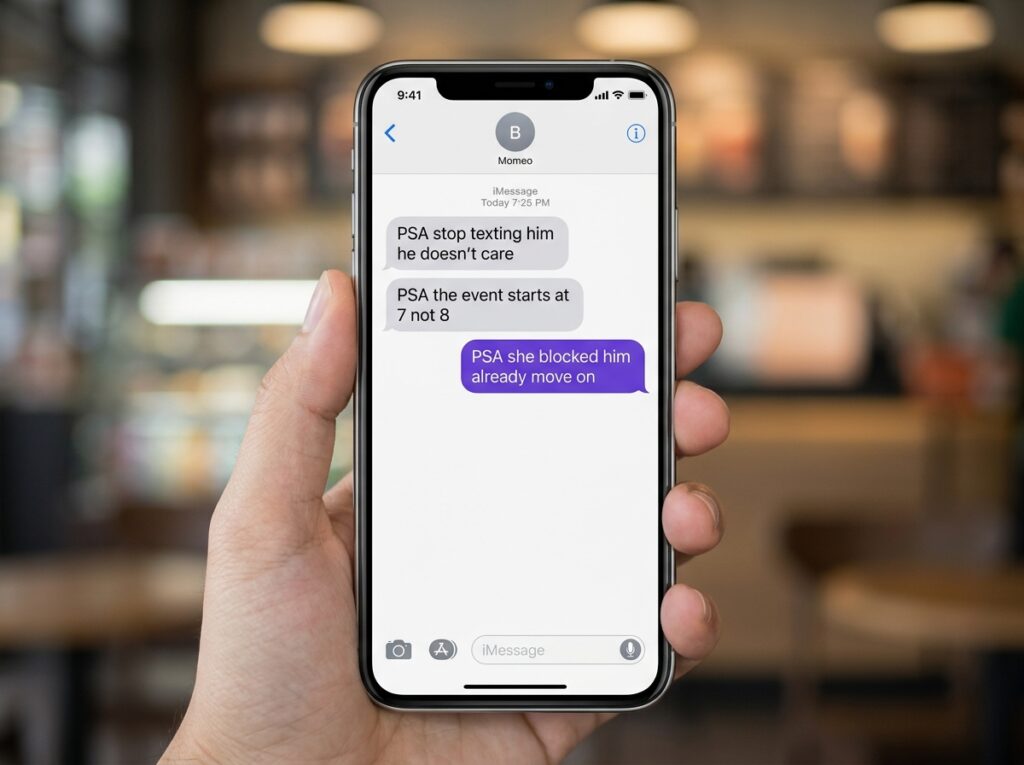
[EXAMPLE CHAT SCREENSHOT MOCKUP — fake phone chat bubbles, iMessage or WhatsApp style]
Variations and Related Slang
Spelling Variations
Most people write “PSA” or “PSA:” Some use lowercase “psa” for a more casual tone. You’ll occasionally see “p.s.a.” but that’s rare.
Related Slang
Understanding PSA helps you decode similar announcement-style slang. If you know what NGL means, you’ll notice people often pair them. “NGL, PSA: that take was bad.”
IMO shares similar energy — it frames an opinion as worth hearing. Check out the meaning of IMO to see how these overlap.
FYI is the workplace cousin of PSA. Less dramatic, more informational.
ICYMI (in case you missed it) announces old news. PSA announces new opinions.
| Term | Meaning | Similar/Different? |
|---|---|---|
| PSA | Public service announcement, framing a statement as important | — |
| NGL | Not gonna lie, preface for honesty | Both frame what follows |
| IMO | In my opinion, softens statements | Less urgent than PSA |
| FYI | For your information | Neutral; PSA has more attitude |
| ICYMI | In case you missed it | Past news vs. current announcement |
Is “PSA” Safe for Kids?
Direct answer: Yes. PSA itself is completely safe.
The abbreviation carries no inappropriate meaning. It’s just a way to introduce a statement. Kids learn about public service announcements in school, so they’ll recognize the concept.
The concern isn’t the term. It’s what follows it. Someone could write “PSA:” before anything — good advice or harmful content.
Teach kids to evaluate the message, not just the format. PSA doesn’t make something true or trustworthy. It’s just a frame.
Teachers wouldn’t flag PSA at all. Parents don’t need to worry about this one. It’s one of the safer internet abbreviations out there.
[PARENT SAFETY ICON — shield/safety graphic, 300x200px, “Parent Guide” label]
When to Use (and Avoid) “PSA”
USE IT WHEN:
- You have genuinely helpful information to share
- You’re making a lighthearted announcement to friends
- You want to add dramatic emphasis to an opinion (knowing it’s a bit extra)
- You’re warning people about something real — scams, issues, problems
AVOID IT WHEN:
- Your “announcement” is just a complaint disguised as advice
- You’re being preachy about something nobody asked about
- The situation calls for a normal sentence, not a dramatic frame
- You’re in professional contexts where it would seem immature
Conclusion
PSA means someone’s about to share information they think you need. It can be sincere, sarcastic, or playful. The tone depends entirely on context and delivery.
Slang like this gives people a quick way to signal intent. “PSA:” says “pay attention” without extra words. It’s efficient and expressive.
Now you can spot a PSA and understand what’s really being said. And if you’re feeling bold, maybe drop one yourself. Just make sure what follows is actually worth announcing. For more internet speak, check out what “sus” means — another term that shapes how we read online messages.
FAQ
What does PSA mean when someone texts it?
PSA in texts means “public service announcement.” The person is framing their message as important news you should hear. It can be serious advice, a joke, or a dramatic statement. The tone depends on what comes after.
Is PSA only used sarcastically online?
No. PSA gets used both sincerely and sarcastically. Some people share genuine warnings or helpful tips. Others use PSA to make their opinions sound more important than they are. Read the context to tell the difference.
Can I use PSA in professional emails?
Generally, no. PSA feels too casual and internet-coded for most workplaces. Use “FYI” or “Please note” instead. PSA works best in social media, texts, and informal digital communication.
Why do people put a colon after PSA?
The colon mimics traditional announcement formatting. It signals that an important statement follows. “PSA:” looks more official than just “PSA” alone. It’s a small formatting choice that adds emphasis.
Is saying PSA out loud weird?
Usually, yes. PSA works great in writing but sounds awkward when spoken. Most people say “heads up” or “just so everyone knows” in real conversations. Speaking “PSA” only works if you’re being intentionally dramatic or joking.