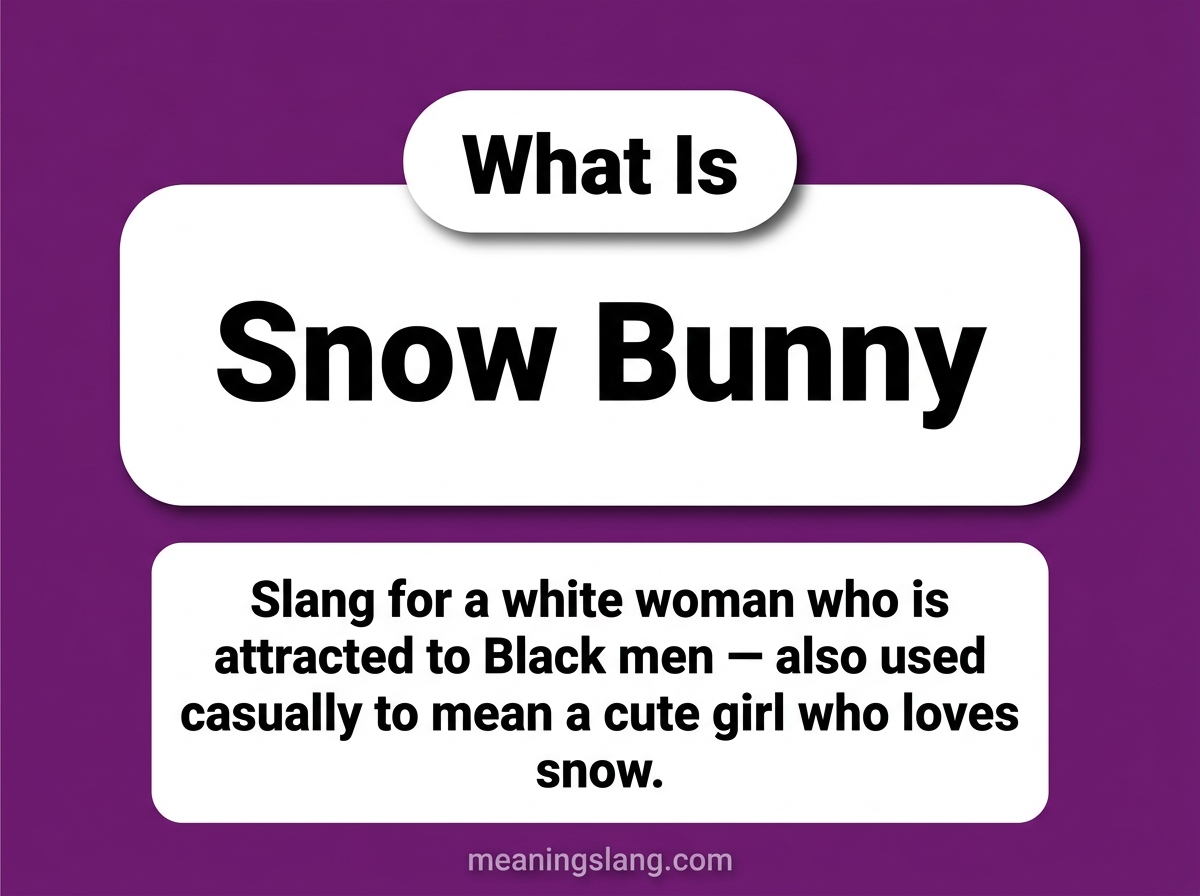
Someone just called your friend a snow bunny in the comments. Everyone’s laughing. You’re scrolling, trying to figure out if it’s a compliment or an insult.
Here’s the thing. Snow bunny doesn’t mean one simple thing. The phrase has lived multiple lives across decades. Your parents might think of ski slopes. Gen Z might think of something completely different.
This term pops up constantly on TikTok, Instagram captions, and rap lyrics. Sometimes it’s playful. Sometimes it’s loaded with racial and dating implications. Context changes everything.
The confusion makes sense. Unlike straightforward slang like what SMH means, snow bunny requires you to read the room. Who said it? Where? About whom?
You’ve probably seen it thrown around without fully understanding the weight behind it. That’s why knowing both meanings matters. One version is innocent. The other carries real cultural baggage.
Let’s break down exactly what people mean when they say snow bunny in 2026.
What Does Snow Bunny Mean?
QUICK ANSWER: Snow bunny has two main meanings. Originally, it described a woman who loves skiing or snowboarding. Now, in modern slang, it often refers to a white woman who dates Black men. The second meaning is more common online today.
The original meaning is simple. A snow bunny was a cute name for women who hang out at ski resorts. She might ski. She might just look good in snow gear. Either way, it was lighthearted.
The newer meaning shifted things. In hip-hop culture and online spaces, snow bunny became a term for white women attracted to Black men. Sometimes people use it neutrally. Other times it carries judgment or stereotypes.
Tone matters a lot here. A guy might call his girlfriend his snow bunny affectionately. Someone else might use it mockingly about a stranger. “She’s such a snow bunny” could be teasing or dismissive depending on who’s talking.
You’ll hear it in rap songs constantly. Artists like Lil Baby and others have referenced snow bunnies in lyrics. This pushed the term further into mainstream slang.
The vibe changes based on the speaker. A Black man calling his white partner a snow bunny might feel like a pet name. A stranger using it about someone else might feel reductive.
[DEFINITION GRAPHIC HERE — term on left, arrow, plain definition on right, white card background]
Origin and History of “Snow Bunny”
Snow bunny started on the slopes. Back in the 1950s and 60s, it described women at ski resorts. Think cozy lodges and hot cocoa. The term was flirty but innocent.
For decades, that’s all it meant. Ski culture owned the phrase completely.
The shift happened through hip-hop. By the 2000s, rappers started using snow bunny differently. It became code for white women in relationships with Black men. The “snow” referenced white skin. The “bunny” kept the cute, playful edge.
This meaning spread through music first. Then social media amplified it. TikTok videos, Instagram captions, and Twitter jokes made the newer definition dominant among younger users.
Today, if someone under 30 says snow bunny, they probably mean the dating-related definition. Older generations might still picture ski slopes. Neither is wrong. Both meanings exist simultaneously.
The term sits in complicated territory. Some view it as harmless slang. Others argue it reduces women to their dating preferences and race.
How “Snow Bunny” Is Used on Different Platforms
TikTok
TikTok loves this term. Videos tagged snow bunny often show interracial couples. Sometimes it’s celebration. Sometimes it’s commentary or jokes about stereotypes. “POV: You’re his snow bunny” is a popular caption format.
Example: “Finally found me a snow bunny who can handle the cold 🐰❄️”
Couples use it in captions for photos together. It shows up in comments too. The tone ranges from sweet to spicy depending on context.
Example: “His snow bunny forever 💕”
Twitter/X
Debates happen here. People argue about whether the term is cute or problematic. You’ll see hot takes and think pieces alongside casual usage. Similar to how people analyze what being down bad means, Twitter users dissect snow bunny’s implications.
Example: “Why do y’all keep calling every white girl a snow bunny 😭”
Snapchat
Private conversations use it casually. Friends might tease each other. Couples might use it as a nickname.
Example: “My snow bunny coming to visit this weekend 🔥”
Discord/Gaming
Less common here. When it appears, it’s usually jokes or references to songs.
| Platform | Common Use | Tone | Example |
|---|---|---|---|
| TikTok | Couple content, POV videos | Playful, proud | “POV: You’re his snow bunny” |
| Captions, comments | Affectionate, flirty | “His snow bunny 4L” | |
| Twitter/X | Debates, jokes | Mixed, analytical | “The snow bunny discourse is wild” |
| Snapchat | Private nicknames | Casual, intimate | “Miss my snow bunny” |
Snow Bunny in Texting vs. Real Life
People definitely say snow bunny out loud. It doesn’t sound awkward spoken like some internet slang does.
In texts, it might come with emojis. The bunny emoji and snowflake appear constantly. “My snow bunny 🐰❄️” is classic.
In person, the phrase flows naturally in conversation. You might hear it at parties, in friend groups, or between couples. The spoken version tends to feel warmer and less loaded than typed versions.
Written online, snow bunny can feel more pointed. Comments sections add edge to everything. Someone typing it about a stranger feels different than a boyfriend saying it to his girlfriend.
Examples of “Snow Bunny” in Sentences
GROUP 1 — Friendly/Casual
“He’s been looking for a snow bunny ever since he moved to Colorado.”
“My roommate is dating a snow bunny now. They’re actually really cute together.”
“She called herself a snow bunny in her bio and I respect the honesty.”
GROUP 2 — Romantic/Flirty
“You’re my favorite snow bunny. Come here.”
“Found my snow bunny and I’m never letting go 💍”
GROUP 3 — Sarcastic/Humorous
“Every guy in this city thinks he needs a snow bunny on his arm.”
“She’s giving snow bunny energy at the wrong barbecue.”
GROUP 4 — Online/Caption Use
“Snow bunny season is upon us ❄️🐰”
“Caption this: When your snow bunny meets your mom for the first time”
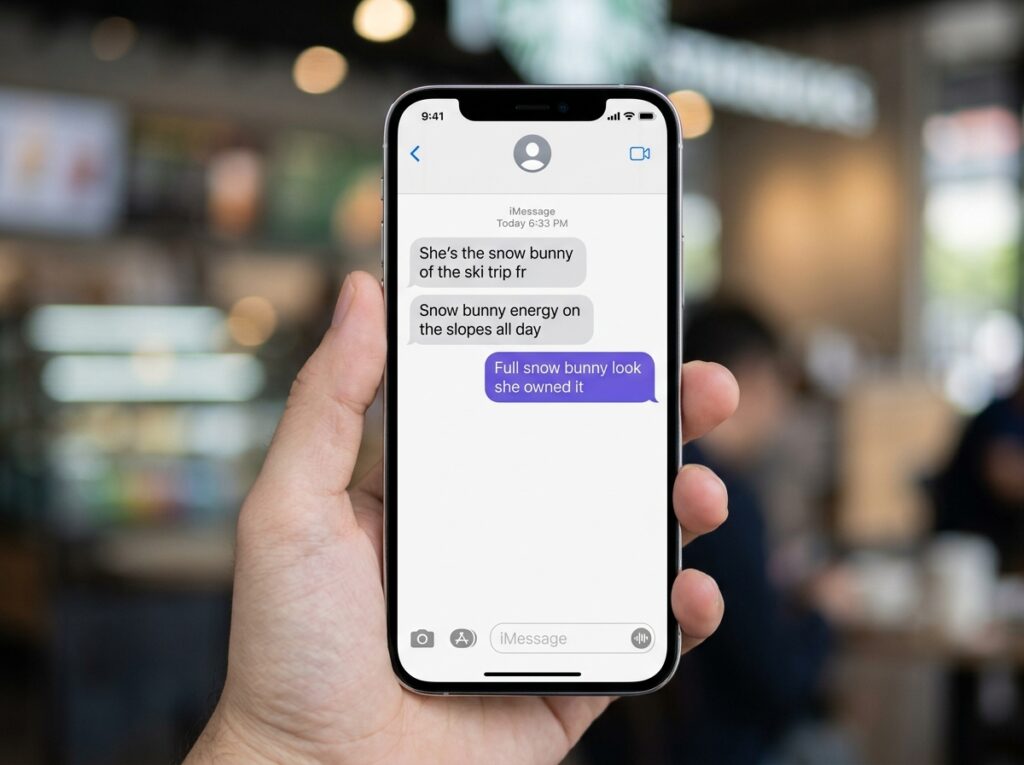
[EXAMPLE CHAT SCREENSHOT MOCKUP — fake phone chat bubbles, iMessage or WhatsApp style]
Variations and Related Slang
The term itself doesn’t have many spelling variations. You’ll occasionally see “snowbunny” as one word. Some people write “snow 🐰” with just the emoji.
Related terms exist in the same cultural space. Understanding them helps you navigate similar conversations. If you’ve ever looked up what zesty means, you know slang often comes in clusters.
Swirl describes interracial dating, particularly between Black and white people. It’s older slang that still appears.
Jungle fever is an outdated term for white people attracted to Black people. It’s now considered offensive by many.
Becky sometimes overlaps. It’s slang for a basic white woman, though the meaning varies.
BBG stands for beautiful baby girl and gets used as a general pet name. Different vibe but similar affectionate territory.
| Term | Meaning | Similar/Different? |
|---|---|---|
| Snow bunny | White woman dating Black men | — |
| Swirl | Interracial dating/relationship | Similar concept, more neutral |
| Jungle fever | Attraction across racial lines | Similar but outdated/offensive |
| Becky | Basic white woman | Overlaps sometimes |
| Ice princess | Cold or distant white woman | Different — about personality |
Is “Snow Bunny” Safe for Kids?
Short answer: It depends on context, but lean toward caution.
The ski-related meaning is completely harmless. A kid talking about snow bunnies at a resort? Totally fine.
The dating-related meaning gets complicated. It’s not explicitly vulgar. No curse words involved. But it does involve adult relationship dynamics and racial implications that younger kids shouldn’t navigate yet.
Teenagers will encounter it on TikTok and in music. That’s unavoidable. The term itself won’t damage them. But parents might want to discuss what it means and why some people find it reductive.
Teachers probably wouldn’t flag it immediately. It’s not like obvious profanity. However, using it in school could spark uncomfortable conversations about race and dating stereotypes.
For parents: If your kid uses it, ask where they heard it. The ski meaning versus the dating meaning tells you a lot about their media consumption.
[PARENT SAFETY ICON — shield/safety graphic, 300x200px, “Parent Guide” label]
When to Use (and Avoid) “Snow Bunny”
USE IT WHEN:
- You’re in a relationship and both partners are comfortable with the term
- You’re referencing the ski/snowboarding meaning genuinely
- You’re discussing the term’s cultural significance academically
- You’re quoting song lyrics or pop culture
AVOID IT WHEN:
- You’re describing a stranger’s relationship without their input
- You’re using it to reduce someone to racial stereotypes
- You’re in professional or formal settings
- The person you’re describing has expressed discomfort with it
Conclusion
Snow bunny carries two lives. The classic meaning celebrates women who love winter sports. The modern meaning describes interracial dating dynamics between white women and Black men.
Slang like this reveals how language evolves through culture. Hip-hop transformed a ski lodge term into relationship vocabulary. Neither meaning erases the other.
What matters is reading context. A couple using it lovingly differs from strangers applying it judgmentally. Like understanding what GYATT means, snow bunny requires you to pay attention to who’s talking and why.
Language keeps shifting. Snow bunny will probably keep evolving too.
FAQ
What does snow bunny mean on TikTok?
On TikTok, snow bunny usually refers to a white woman in a relationship with a Black man. Couples often use the hashtag proudly in their content. The ski-related meaning rarely appears on the platform.
Is snow bunny an offensive term?
It depends on context and perspective. Some couples embrace it affectionately. Others feel it reduces women to racial stereotypes. The term itself isn’t a slur, but careless usage can feel disrespectful.
Where did snow bunny slang come from?
The term originally described women at ski resorts in the 1950s-60s. Hip-hop culture repurposed it by the 2000s to describe white women dating Black men. Music spread this newer meaning widely.
Can I call my girlfriend a snow bunny?
If she’s comfortable with it and understands the meaning, yes. Many couples use it affectionately. Just make sure she knows what it implies and actually likes being called that.
Is snow bunny the same as swirl?
They’re related but different. Swirl broadly describes interracial dating or relationships. Snow bunny specifically refers to a white woman with a Black man. Swirl is more neutral and general.