You’re scrolling Instagram. A girl posts a mirror selfie with perfect winged eyeliner and long lashes. Someone comments “total ABG vibes.” You pause.
What does ABG even mean?
Maybe you’ve seen it on TikTok videos or heard it in conversations about style and nightlife. The term pops up everywhere now. Yet most people outside certain communities have no clue what it stands for.
ABG isn’t random internet gibberish. It describes a specific aesthetic, attitude, and identity within Asian American culture. Some people use it as a compliment. Others use it to poke fun. A few take offense.
The meaning depends heavily on who’s saying it and why. Like many slang terms that start in one community, ABG has spread far beyond its original context. It shows up in memes, fashion content, and dating app bios.
If you’ve been wondering about this three-letter term, you’re about to get the full picture. This word carries more weight than you might expect.
What Does ABG Mean?
QUICK ANSWER: ABG stands for “Asian Baby Girl.” It describes a specific look and lifestyle associated with young Asian American women. Think bold makeup, trendy clubwear, and confident nightlife energy.
The term captures more than just appearance. An ABG typically has a recognizable style. Long eyelash extensions. Dark hair, often dyed. Heavy eye makeup with sharp wings. Fitted clothes. A love for boba tea and late nights out.
But ABG also suggests an attitude. Confidence. Independence. Sometimes a party-focused lifestyle. The vibe is glamorous and unapologetic.
Context matters a lot here. When Asian American women call each other ABGs, it’s often playful. “She’s such an ABG” might mean “she looks amazing tonight.” Between friends, it’s affectionate.
But outsiders sometimes use it differently. The term can feel reductive when someone uses it to stereotype all stylish Asian women. Some women embrace the label proudly. Others find it annoying or limiting.
You might hear someone say “I went full ABG for the party” meaning they did dramatic makeup. Or “that’s so ABG” about a boba-and-nightclub Instagram story. The emotional tone shifts based on speaker and situation. Similar to how what zesty means changes based on context, ABG requires reading the room.
Origin and History of “ABG”
ABG emerged from Asian American communities, specifically on the West Coast. The term gained traction in the early 2010s around Southern California.
Young Asian Americans used it to describe a particular scene. Clubs, raves, and social gatherings in cities like Los Angeles and San Francisco had visible ABG culture. The look drew from K-pop influences mixed with American club style.
Originally, ABG wasn’t always positive. Some people used it mockingly. The stereotype suggested someone shallow or materialistic. But many women reclaimed the term. They owned the aesthetic with pride.
Social media accelerated everything. Instagram and later TikTok spread the ABG look far beyond California. By 2018, the term was mainstream internet slang. Makeup tutorials taught the “ABG look.” Memes joked about ABG starter packs.
The meaning softened over time. Today most people use it neutrally or positively. It’s less of an insult, more of a style descriptor. The evolution mirrors how many identity-based slang terms get reclaimed by their communities.
How “ABG” Is Used on Different Platforms
TikTok
TikTok turned ABG into a viral aesthetic category. Creators post “ABG transformation” videos showing dramatic before-and-afters. The hashtag has billions of views. “Watch me go full ABG for girls’ night out.”
Instagram is ABG home base. The look is highly visual. Captions often play with the term. Stories featuring boba tea runs and club pics scream ABG energy. DMs might include “you’re giving ABG” as a compliment.
Twitter/X
Twitter uses ABG more conversationally. Tweets joke about the lifestyle. “Being an ABG is expensive, the lashes alone cost more than rent.” Commentary tends toward humor or cultural observation.
Snapchat
Snapchat sees ABG in casual context. Friends might snap their makeup progress. “Going ABG mode tonight” with a mirror selfie. It’s low-stakes and playful.
Discord/Gaming
Gaming chats rarely use ABG unless discussing real-life plans. It might pop up when friends coordinate going out. “Anyone else hitting the club? Full ABG energy required.”
Reddit discusses ABG culture more analytically. Threads debate whether the term is empowering or stereotyping. Asian American subreddits have nuanced conversations about identity and the label.
| Platform | Common Use | Tone | Example |
|---|---|---|---|
| TikTok | Transformation videos, aesthetic content | Playful, aspirational | “ABG era activated” |
| Photos, captions, compliments | Glamorous, confident | “She’s the ABG of the group” | |
| Twitter/X | Jokes, cultural commentary | Humorous, observational | “ABG starter pack: boba, lashes, Honda Civic” |
| Snapchat | Pre-going-out selfies | Casual, friendly | “ABG mode loading…” |
| Identity discussions | Analytical, mixed | “Is ABG a compliment or stereotype?” |
ABG in Texting vs. Real Life
People definitely say ABG out loud. It’s not just a texting term. You’ll hear it at parties, in friend groups, and in casual conversation.
Spoken, it sounds like “A-B-G” — three separate letters. Nobody says “abg” as one syllable. The pronunciation is simple.
In texts, ABG usually means the same thing as spoken. But texting allows for more exaggeration. Typing “you’re SUCH an ABG” hits differently than saying it face-to-face. There’s more room for playful emphasis.
Real-life usage tends to be more careful. People read reactions. In text, the term flies faster and freer.
Examples of “ABG” in Sentences
GROUP 1 — Friendly/Casual
“My sister went full ABG for her birthday dinner last night.”
“That new boba place downtown is peak ABG territory.”
“I can’t do ABG makeup, my hands aren’t steady enough for the eyeliner.”
GROUP 2 — Romantic/Flirty
“Not gonna lie, your ABG look is really doing something for me.”
“I matched with this ABG on Hinge and I’m nervous.”
GROUP 3 — Sarcastic/Humorous
“Me pretending to be an ABG when I haven’t left my house in three days.”
“ABG transformation but the before and after look exactly the same because I tried.”
GROUP 4 — Online/Caption Use
“ABG era unlocked 💅✨”
“They said I couldn’t be an ABG, so I got longer lashes to prove them wrong.”
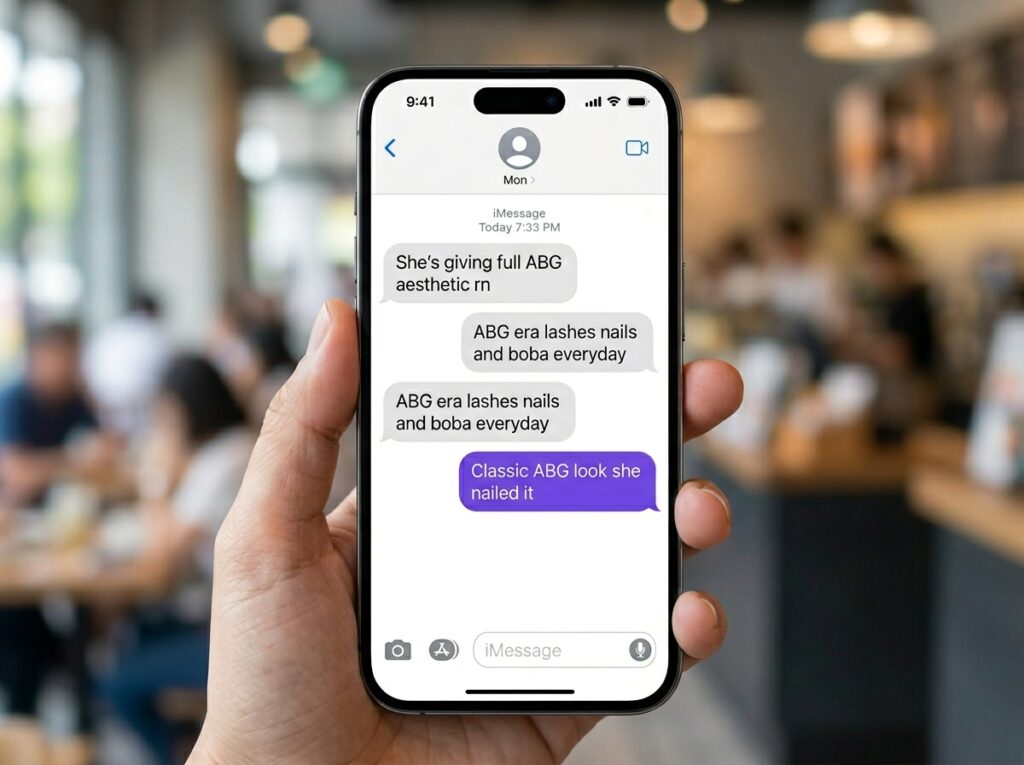
[EXAMPLE CHAT SCREENSHOT MOCKUP — fake phone chat bubbles, iMessage or WhatsApp style]
Variations and Related Slang
ABG has a few spelling variations. Some write it lowercase: “abg.” Others add punctuation: “A.B.G.” The meaning stays identical.
Related terms orbit the same cultural space. BBG means “bad baby girl” or sometimes “beautiful baby girl”, overlapping in aesthetic but not limited to Asian identity. CBC means “Canadian-born Chinese,” describing background rather than style.
Some people joke about ABB for “Asian Baby Boy” — the male equivalent. It’s less common but exists. The ABB look involves streetwear, fade haircuts, and similar nightlife energy.
Understanding ABG helps you get terms like “drip” too. Both describe style-forward aesthetics with specific cultural roots. Fashion slang often connects across communities.
| Term | Meaning | Similar/Different? |
|---|---|---|
| ABG | Asian Baby Girl — specific aesthetic and lifestyle | — |
| BBG | Bad/Beautiful Baby Girl — general term of affection | Similar energy, broader scope |
| ABB | Asian Baby Boy — male counterpart | Same cultural context |
| Baddie | Confident, stylish woman | Overlapping aesthetic goals |
| Drip | Impressive style or fashion | Related concept, any identity |
Is “ABG” Safe for Kids?
Direct answer: Mostly yes, but with context awareness.
The term itself isn’t vulgar. It describes a fashion and lifestyle aesthetic. Kids might encounter it on TikTok or Instagram without harm.
However, ABG culture often connects to nightlife. Clubs, drinking, partying. The aesthetic is mature even if the word isn’t explicit. A child using “ABG” probably just means “cool makeup.” But the adult associations exist.
Stereotyping concerns matter too. Using ABG to label all Asian women would be reductive and potentially offensive. Kids should understand that. It’s a style, not a box to put people in.
Parents don’t need to panic about this term. Schools wouldn’t flag it. But a conversation about not stereotyping people could be valuable. The term is fine. The attitude behind using it matters more.
[PARENT SAFETY ICON — shield/safety graphic, 300x200px, “Parent Guide” label]
When to Use (and Avoid) “ABG”
USE IT WHEN:
- You’re describing an aesthetic, not a person’s entire identity
- You’re complimenting a friend’s glam makeup look
- You’re joking about your own transformation or style
- You’re in a community that uses and understands the term
AVOID IT WHEN:
- You’re using it to stereotype someone you don’t know
- The person might find the label reductive or offensive
- You’re outside Asian American cultural contexts and unsure of reception
- You’re using it mockingly toward someone
Conclusion
ABG means Asian Baby Girl — a specific aesthetic combining bold makeup, trendy fashion, and confident nightlife energy. It started in Asian American communities and spread across social media.
Slang like this shows how style becomes identity. People use ABG to describe a look, claim a vibe, and connect with others who share it. The term carries cultural weight that deserves respect.
Whether you’re admiring the aesthetic or just decoding a comment, now you understand what ABG actually means. It’s similar to understanding what “down bad” signals — context shapes everything in modern slang.
FAQ
What does ABG mean on TikTok?
On TikTok, ABG refers to the Asian Baby Girl aesthetic. Creators use it for transformation videos, makeup tutorials, and content about nightlife culture. The hashtag has billions of views showing dramatic glam looks and confident vibes.
Is ABG an insult or compliment?
It depends on context. Among friends, it’s usually a compliment about someone’s style. Used by outsiders or mockingly, it can feel like stereotyping. The speaker’s intent and relationship to the person matters most.
Can non-Asian people be ABGs?
Technically no, since the A stands for Asian. The term describes a specific cultural aesthetic. Non-Asian people can appreciate the style, but claiming the ABG label would be culturally off. Similar looks might just be called “baddie” instead.
What’s the male version of ABG?
Some people use ABB for Asian Baby Boy. It’s less widespread but describes a similar vibe. Think streetwear, clean haircuts, and nightlife presence. The term hasn’t caught on as strongly as ABG in mainstream slang.
Why do people say ABG is controversial?
Some feel ABG reduces Asian women to a stereotype. It can imply superficiality or suggest all stylish Asian women fit one mold. Others have reclaimed it proudly. The debate reflects larger conversations about identity labels and who gets to use them.