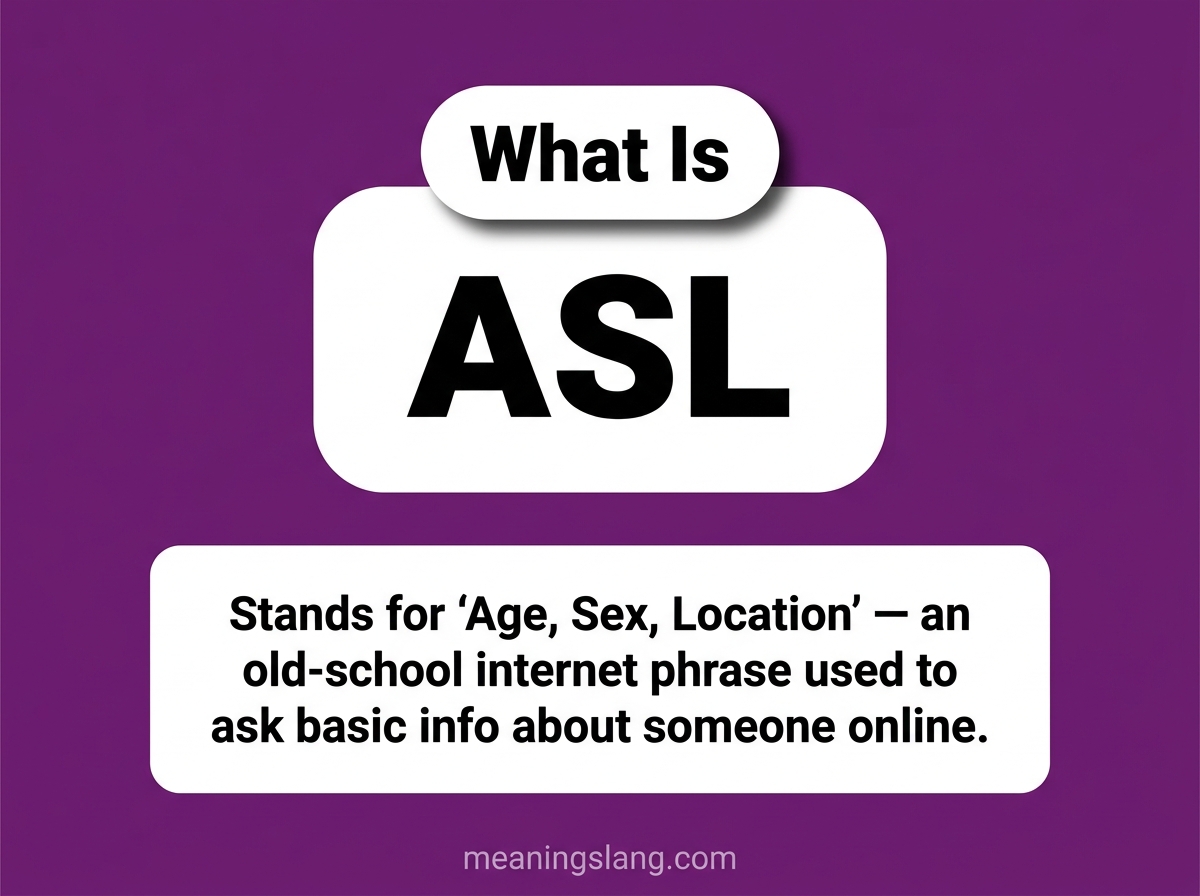
Someone just commented “you’re pretty asl” under your photo. Your brain immediately goes to the old internet days. Age, sex, location—right?
But that doesn’t fit here. The sentence makes no sense with that meaning. You stare at it, trying to decode what just happened.
Here’s the twist. ASL has a completely different meaning in modern slang. Gen Z flipped the script on this classic internet abbreviation. Now it means something you’d never guess from those three letters.
This shift confuses a lot of people. Even folks who grew up in chat rooms get thrown off. The old meaning still exists, but the new one dominates TikTok, texts, and Instagram comments.
If you’ve been scratching your head over ASL, you’re not alone. It’s similar to how SMH changed from a simple headshake to something with more emotional weight. Slang evolves fast, and ASL got a major upgrade.
Let’s break down exactly what ASL means now
What Does ASL Mean?
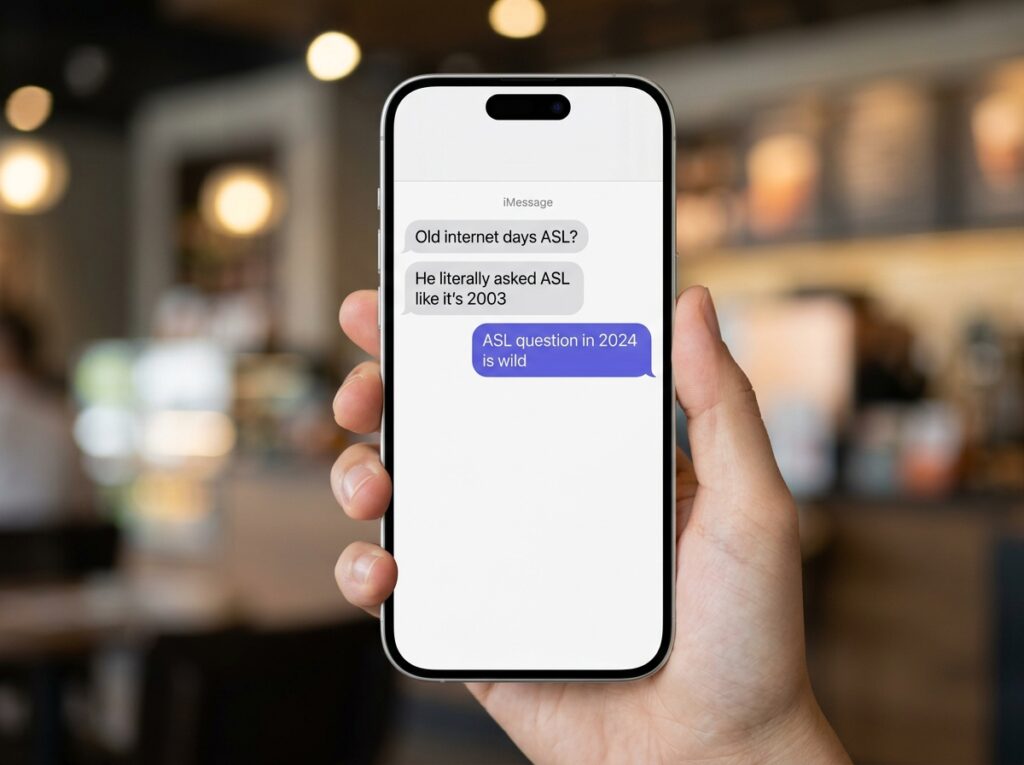
QUICK ANSWER: In modern slang, ASL means “as hell.” It’s used to emphasize something strongly. When someone says “tired asl,” they mean “extremely tired.”
That’s the core meaning in 2026. ASL works like an intensifier. It makes whatever comes before it hit harder.
The emotional tone is usually casual and relaxed. There’s no aggression in it. People use it the same way they’d say “so” or “really” before an adjective. Saying “hungry asl” just means you’re starving.
Context matters though. A friend texting “bored asl” is just venting. But “you’re cute asl” in your DMs? That’s flirty. The word before ASL shapes the whole vibe.
You’ll see it attached to feelings, descriptions, and reactions. “That movie was long asl” means it dragged on forever. “She’s funny asl” is genuine praise. The pattern stays consistent—adjective plus ASL equals extra emphasis.
Some people also still use ASL for “age, sex, location” in dating apps or anonymous chats. But in everyday texting among Gen Z, the “as hell” meaning dominates. If someone under 25 sends you ASL in a sentence, they probably mean “as hell.”
It’s worth knowing both meanings exist. Context tells you which one applies.
[DEFINITION GRAPHIC HERE — term on left, arrow, plain definition on right, white card background]
Origin and History of “ASL”
The original ASL goes way back. Early internet chat rooms in the 1990s used it constantly. Strangers would type “asl?” to quickly learn who they were talking to. Age, sex, location—three basic facts to establish identity.
AOL Instant Messenger, IRC, and early Yahoo Chat made this famous. It was the standard greeting for anonymous conversations. Everyone knew what it meant.
Then something shifted around 2015-2016. Gen Z started typing “asl” at the end of words instead of as a question. They borrowed from spoken AAVE (African American Vernacular English), where “as hell” often sounds like “as hell” compressed into one quick sound.
Typing “asl” became faster than writing “as hell.” It caught on through Twitter first. Then TikTok exploded its popularity. By 2020, the new meaning had overtaken the old one in casual online spaces.
The transformation happened naturally. Nobody planned it. Young people just found a quicker way to express intensity, and the abbreviation already existed.
How “ASL” Is Used on Different Platforms
TikTok
ASL thrives in TikTok comments. People react to videos with quick takes like “this is accurate asl” or “he’s talented asl.” Creators also use it in captions and voiceovers. The casual energy fits TikTok’s vibe perfectly.
Example: “Not me crying at 2am over this edit… emotional asl rn”
On Instagram, ASL pops up in DMs and comment sections. Compliments often include it. Story replies might say “you’re glowing asl in that pic.” It feels personal and direct.
Example: “This fit goes hard asl 🔥”
Twitter/X
Twitter uses ASL in hot takes and relatable tweets. People vent frustrations or share observations. The platform’s quick, punchy style matches ASL’s energy.
Example: “Adulting is stressful asl and nobody warned me”
Snapchat
In Snapchat, ASL appears in quick messages and caption overlays. Friends might snap “bored asl, wyd?” when looking for conversation. It keeps things casual.
Example: “This class is long asl I’m dying”
Discord/Gaming Chats
Gamers use ASL to describe gameplay moments. “That boss was hard asl” or “my team is trash asl tonight.” It expresses frustration or hype without lengthy explanations. Similar to how people use NGL to be blunt in gaming chats.
Example: “Bro I’m lagging asl right now”
| Platform | Common Use | Tone | Example |
|---|---|---|---|
| TikTok | Comments and captions | Casual, reactive | “This is relatable asl” |
| DMs and compliments | Flirty, friendly | “You’re pretty asl” | |
| Twitter/X | Hot takes, venting | Blunt, honest | “Life is exhausting asl” |
| Snapchat | Quick messages | Casual, bored | “Hungry asl, let’s eat” |
| Discord | Gaming reactions | Frustrated, hyped | “That game was intense asl” |
ASL in Texting vs. Real Life
In texting, ASL is everywhere. It’s fast to type and universally understood by younger generations. You’ll see it multiple times in a single conversation.
Speaking ASL out loud is different. Most people just say “as hell” instead. Saying the letters A-S-L sounds awkward and robotic. It breaks the flow of natural speech.
Some people do say “asl” as one quick syllable—almost like “azul” without the “u.” But this only works in very casual settings with close friends. In most spoken conversations, people stick to the full phrase.
The written version carries more punch. It feels more intentional when typed. That’s why ASL stays mostly in texts, comments, and captions.
Examples of “ASL” in Sentences
GROUP 1 — Friendly/Casual
“I’m tired asl, gonna skip the party tonight.”
“This pizza is good asl, where’d you order it from?”
“My room is messy asl and I have zero motivation to clean.”
GROUP 2 — Romantic/Flirty
“Not gonna lie, you’re fine asl.”
“Missing you bad asl tonight.”
GROUP 3 — Sarcastic/Humorous
“Oh great, traffic is moving slow asl again.”
“My bank account is sad asl after that shopping trip.”
GROUP 4 — Online/Caption Use
“Monday energy: unmotivated asl 😭”
“This song hits different asl at 3am.”
[EXAMPLE CHAT SCREENSHOT MOCKUP — fake phone chat bubbles, iMessage or WhatsApp style]
Variations and Related Slang
Spelling Variations
Some people type “ASL” in all caps. Others keep it lowercase as “asl.” You might also see “asll” with an extra L for emphasis. The meaning stays identical across all versions.
Related Slang Terms
Understanding ASL connects to other emphasis slang. When someone says something is down bad, they’re also expressing intensity about feelings. These terms work in similar emotional spaces.
“Fr fr” (for real for real) emphasizes truth like ASL emphasizes degree. “Lowkey” and “highkey” adjust intensity in different directions. “No cap” confirms honesty rather than degree.
| Term | Meaning | Similar/Different? |
|---|---|---|
| ASL | As hell (intensifier) | — |
| Fr fr | For real, truly | Both add emphasis, different focus |
| No cap | Not lying | Confirms truth, not degree |
| Lowkey | Somewhat, quietly | Opposite direction—less intense |
| Highkey | Obviously, very much | Similar intensity, different structure |
Is “ASL” Safe for Kids?
Direct answer: Yes, ASL is generally safe for kids to use.
The phrase “as hell” is mild. It’s not profanity in the traditional sense. Most parents wouldn’t blink at a kid saying something was “fun as hell.”
However, context matters. ASL can appear alongside inappropriate content. A comment section might include “she’s hot asl” or other mature observations. The word itself isn’t the problem—what surrounds it might be.
Teachers probably wouldn’t flag ASL in casual conversation. It’s not on the same level as actual curse words. But in formal writing or school assignments, it’s too casual.
For parents: If you see your kid using ASL in texts, don’t panic. It’s just Gen Z’s way of saying “very” or “extremely.” Monitor who they’re talking to, not the specific abbreviation. The slang itself is harmless.
[PARENT SAFETY ICON — shield/safety graphic, 300x200px, “Parent Guide” label]
When to Use (and Avoid) “ASL”
USE IT WHEN:
- Texting friends casually
- Commenting on social media posts
- Expressing strong feelings quickly
- Talking to people who understand current slang
AVOID IT WHEN:
- Writing professional emails or work messages
- Talking to older generations who might confuse it with “age/sex/location”
- In formal or academic settings
- Speaking to someone who seems unfamiliar with Gen Z language
Conclusion
ASL means “as hell” in modern slang. It’s an intensifier that makes any description stronger. Simple as that.
Slang like this shows how language adapts to save time and energy. Three letters now carry the weight of a two-word phrase. It connects people who share the same linguistic shortcuts.
Next time someone calls you “cool asl,” take the compliment. You’ve got the code figured out. And if abbreviations still confuse you, checking out what WYLL means might help you decode even more DM mysteries.
FAQ
What does ASL mean when someone texts it to me?
In texting, ASL almost always means “as hell.” It’s emphasizing whatever word came before it. If someone says “you’re funny asl,” they mean you’re really funny. The old “age/sex/location” meaning rarely applies in normal text conversations anymore.
Is ASL the same as saying “as hell” out loud?
Yes, ASL is just a shorter way to type “as hell.” Most people don’t pronounce the letters when speaking. They say the full phrase instead. ASL works best in written form—texts, comments, and captions where speed matters.
Can ASL still mean age, sex, location?
It can, but context tells you which meaning applies. On dating apps or anonymous chat sites, someone asking “asl?” wants your details. In a sentence like “tired asl,” it clearly means “as hell.” Pay attention to how it’s used.
Why do people use ASL instead of just typing “as hell”?
Speed and style. Typing three letters is faster than typing eight characters plus a space. It also feels more casual and in-the-know. Using ASL signals that you’re fluent in current internet language.
Is using ASL considered rude or inappropriate?
Not really. ASL is casual but not offensive. The word “hell” is mild compared to actual profanity. You’d want to avoid it in formal situations, but among friends and online, it’s completely normal and widely accepted.