You’re scrolling through a dating app. Someone’s bio says “looking for FWB only.” You pause. Is that good? Bad? Should you swipe right or run?
Or maybe your friend just told you they started an FWB situation. They said it casually, like you should know what that means. You nodded along. But now you’re here, Googling in private.
FWB shows up everywhere now. Dating profiles. Text conversations. TikTok relationship advice. It’s one of those terms that people throw around assuming everyone gets it. But the meaning carries real weight. It describes a specific type of relationship that exists somewhere between friendship and dating.
This term isn’t new, but it’s evolved. The way people use FWB in 2026 is different from even five years ago. Context matters. Platform matters. Who’s saying it matters. If someone’s ever reacted to your message with SMH because you didn’t understand, you know how awkward slang confusion gets.
Here’s everything FWB actually means and how people use it now.
What Does FWB Mean?
QUICK ANSWER: FWB stands for “Friends With Benefits.” It describes two friends who are also physically intimate but aren’t in a committed romantic relationship. They hang out, hook up, but don’t call each other boyfriend or girlfriend.
The term captures a gray area in modern relationships. Two people enjoy each other’s company. They’re attracted to each other. But neither wants the responsibilities of dating. No meeting parents. No anniversary dinners. No exclusive commitment.
The emotional tone of FWB is usually casual and direct. When someone says “we’re just FWB,” they’re setting clear expectations. They like the person. They’re not in love with them. It’s honest but detached.
Context changes things slightly. A college student saying “I have an FWB” sounds normal. A coworker mentioning it might feel awkward. The term works best among friends or on dating apps where everyone understands the language.
You might hear variations like “she’s my FWB” or “we’re in an FWB situation.” The meaning stays the same. It’s a friends-with-benefits arrangement. Physical intimacy exists. Romantic commitment doesn’t.
Some people use FWB loosely to mean any casual relationship. Others use it strictly for actual friends who added a physical element later. Both uses are common now. Similar to understanding what BBG means in texts, knowing FWB helps you decode modern relationship conversations.
Origin and History of “FWB”
FWB didn’t start on the internet. The concept of casual intimacy between friends has existed forever. But the term became popular in American culture during the early 2000s.
The 2011 movie “Friends With Benefits” with Justin Timberlake and Mila Kunis helped push the phrase mainstream. That same year, another film called “No Strings Attached” covered the same topic. Suddenly everyone had language for this relationship style.
Before these movies, people described the same thing differently. “Casual thing.” “Not serious.” “Just messing around.” FWB gave it a clean three-letter label.
The acronym form spread through texting culture. Typing “FWB” is faster than spelling it out. Dating apps like Tinder and Bumble adopted it naturally. By 2015, putting “looking for FWB” in a bio was completely normal.
The meaning hasn’t shifted much since then. It still means exactly what it sounds like. Friends. Benefits. No strings. What has changed is how openly people discuss it. FWB arrangements are less taboo now than a decade ago.
How “FWB” Is Used on Different Platforms
TikTok
FWB appears constantly in relationship content. Creators share stories about FWB situations gone wrong. Or right. Advice videos explain “the rules of FWB.” Comments debate whether FWB ever works long-term.
“POV: your FWB starts texting you good morning”
On Instagram, FWB shows up in DMs and Stories more than captions. Someone might text a friend asking “are they just FWB?” Private Stories sometimes include jokes about FWB drama. Public posts rarely use the term directly.
“Wait so you and Jake are FWB now??”
Twitter/X
Twitter hosts open debates about FWB culture. Hot takes get thousands of likes. People share opinions on whether FWB ruins friendships. The tone ranges from serious to completely sarcastic.
“FWB is just dating with extra steps I’m sorry”
Snapchat
Snap conversations reference FWB when discussing relationships. People ask about situationships using this term. It’s casual and low-pressure here.
“He said he wants FWB but acts like my boyfriend lol”
Discord/Gaming Chats
Less common here. When it appears, it’s usually friends joking around or giving relationship advice in off-topic channels.
Subreddits like r/relationships and r/dating_advice have thousands of FWB posts. People ask for help navigating these situations. Answers get detailed and sometimes judgmental.
| Platform | Common Use | Tone | Example |
|---|---|---|---|
| TikTok | Story time, advice | Dramatic, relatable | “My FWB caught feelings” |
| DM conversations | Curious, gossipy | “Are you guys FWB or what?” | |
| Twitter/X | Hot takes, debates | Opinionated | “FWB never ends well tbh” |
| Snapchat | Private chats | Casual, playful | “She’s just my FWB chill” |
| Advice seeking | Serious, detailed | “How do I end an FWB situation?” |
FWB in Texting vs. Real Life
People type FWB constantly. Saying it out loud is rarer.
In texts, FWB flows naturally. It fits the casual shorthand of digital conversation. Nobody thinks twice about typing “we’re just FWB.”
Speaking it gets slightly awkward. Some people say the letters: “eff-double-you-bee.” Others say the full phrase: “friends with benefits.” The letter version sounds clinical. The full phrase sounds more natural in conversation.
Meaning doesn’t change between typed and spoken. The slight discomfort of saying FWB aloud reflects how personal the topic is. Typing creates distance. Speaking makes it real. That’s why most FWB discussions happen over text first.
Examples of “FWB” in Sentences
GROUP 1 — Friendly/Casual
“We’re just FWB, nothing serious happening there.”
“I’ve had the same FWB for like six months now.”
“Honestly FWB is easier than actual dating right now.”
GROUP 2 — Romantic/Flirty
“So… are we FWB or is this something more?”
“Started as FWB but I think I’m catching feelings.”
GROUP 3 — Sarcastic/Humorous
“He says we’re FWB but texts me 47 times a day.”
“FWB = Free Weekend Buddy for when you’re bored lol”
GROUP 4 — Online/Caption Use
“Looking for FWB not a relationship rn”
“That transition from FWB to actually dating hits different”
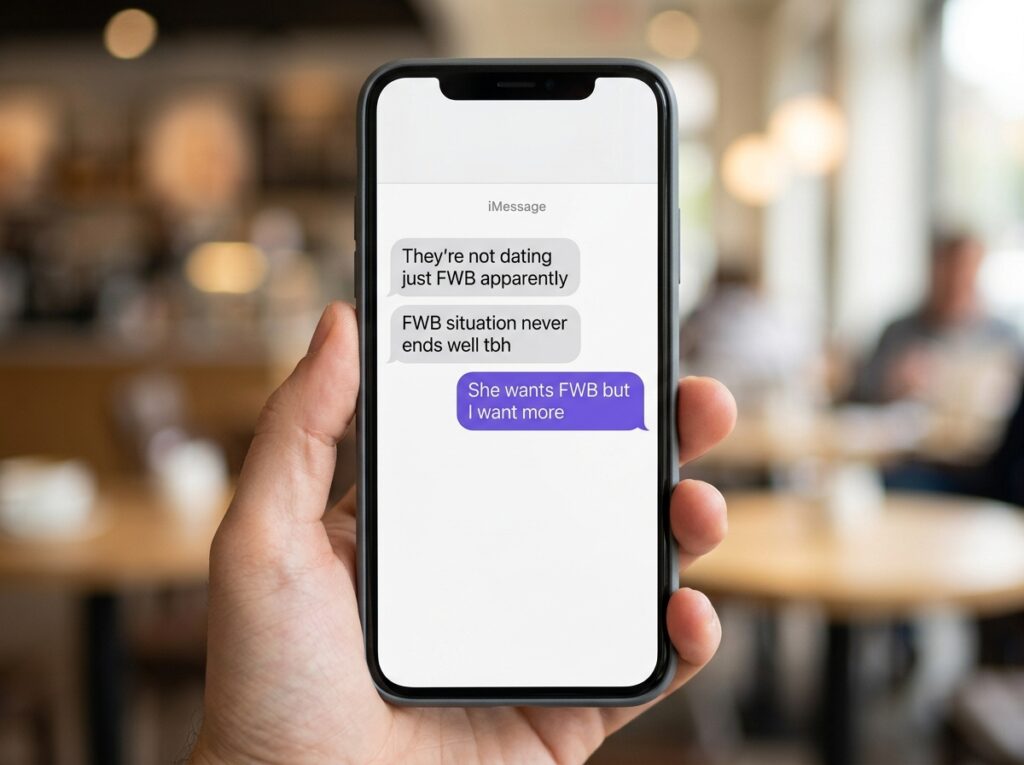
[EXAMPLE CHAT SCREENSHOT MOCKUP — fake phone chat bubbles, iMessage or WhatsApp style]
Variations and Related Slang
FWB doesn’t have many spelling variations. People write it as “fwb” (lowercase) just as often as “FWB.” Some write it out as “friends w benefits” or “friends w/ benefits.” All mean the same thing.
Related terms exist for similar relationship types. A situationship describes an undefined romantic connection. It’s vaguer than FWB. Understanding what “down bad” means helps here too—someone down bad for their FWB is catching feelings hard.
NSA means “no strings attached.” Same idea as FWB but sounds more transactional. Casual dating is broader and might include actual dates. Hookup refers to single encounters rather than ongoing arrangements.
| Term | Meaning | Similar/Different? |
|---|---|---|
| FWB | Friends who are also intimate, no commitment | — |
| Situationship | Undefined romantic relationship | Vaguer, more emotional |
| NSA | No strings attached casual intimacy | More transactional |
| Hookup | Single casual encounter | One-time, not ongoing |
| Casual dating | Dating without serious commitment | May include actual dates |
Is “FWB” Safe for Kids?
Short answer: This term describes adult relationships. It’s not appropriate for young children.
FWB refers to physical intimacy between adults. The term itself isn’t vulgar or explicit. It’s just descriptive. But the concept behind it involves adult topics.
Teenagers will encounter this term online. Dating apps, TikTok relationship content, and friend conversations all use FWB regularly. By high school, most teens understand what it means.
Parents don’t need to panic if their teen knows this word. It’s part of modern relationship vocabulary. The concern isn’t the term—it’s whether a young person fully understands healthy relationship dynamics.
Schools probably wouldn’t flag this word specifically. It’s not profanity. But discussions about FWB situations would obviously be age-inappropriate for younger students. For teens, it might come up naturally in health or relationship discussions.
[PARENT SAFETY ICON — shield/safety graphic, 300x200px, “Parent Guide” label]
When to Use (and Avoid) “FWB”
USE IT WHEN:
- Describing a casual arrangement honestly
- Setting clear expectations on dating apps
- Talking to close friends about your relationship status
- Discussing relationship dynamics in general terms
AVOID IT WHEN:
- Talking to family members (awkward)
- Professional settings (always inappropriate)
- First conversations with someone new (too forward)
- Situations where it might be misunderstood as an offer
Conclusion
FWB means friends with benefits—a casual physical relationship between friends without romantic commitment. The term has been mainstream for over a decade now. It shows up on dating apps, in texts, and across social media daily.
Slang like this exists because relationships are complicated. Labels help people communicate clearly about what they want. FWB gives both people a shared understanding. No confusion about expectations.
Language keeps evolving with how people connect. Knowing terms like FWB—or even what “soft launch” means when someone posts their new person—helps you stay fluent in modern dating culture. Words shape how we understand relationships. This one’s been doing that for years.
FAQ
What does FWB mean in texting?
FWB means “friends with benefits” in texting. It describes two friends who have a casual physical relationship without being in a committed romantic partnership. People use it to clarify that a relationship isn’t serious.
Can FWB turn into a real relationship?
Yes, FWB situations sometimes turn into actual relationships. One or both people might develop feelings over time. However, many FWB arrangements end without becoming romantic. Clear communication matters either way.
Is FWB the same as dating?
No, FWB is different from dating. Dating usually implies working toward a relationship. FWB specifically means no commitment expected. People in FWB situations don’t typically go on dates or meet each other’s families.
Why do people choose FWB over relationships?
People choose FWB for various reasons. Some want companionship without relationship pressure. Others are focused on careers or personal growth. Some recently ended serious relationships and aren’t ready for another one yet.
How do you end an FWB situation?
End an FWB situation with honest conversation. Tell the other person clearly that you want to stop. Don’t ghost them since they’re technically your friend. Keep it simple, direct, and kind. Respect usually makes it easier.