Your friend just texted “I’m geeking so hard rn” with three crying-laughing emojis. You stare at your phone. Geeking? Like… being a geek? That doesn’t fit.
You’re not alone. This word trips people up all the time. It sounds nerdy. But the way people use it online? Totally different vibe.
Geeking has become a go-to word for moments when you can’t stop laughing. Someone cracks a joke, you lose it, and suddenly you’re “geeking.” It’s pure, uncontrollable laughter.
But there’s more. Sometimes geeking means being super into something. Obsessively scrolling through sneaker drops? Geeking. Rewatching the same anime for the fifth time? Also geeking.
The word carries energy. It’s not calm interest. It’s not a polite chuckle. It’s intense. Whether you’re dying laughing or deep in a hobby rabbit hole, geeking captures that all-in feeling.
Similar to how SMH shows disappointment, geeking shows an emotional extreme. Let’s break down exactly what this word means and how to use it right.
What Does Geeking Mean?
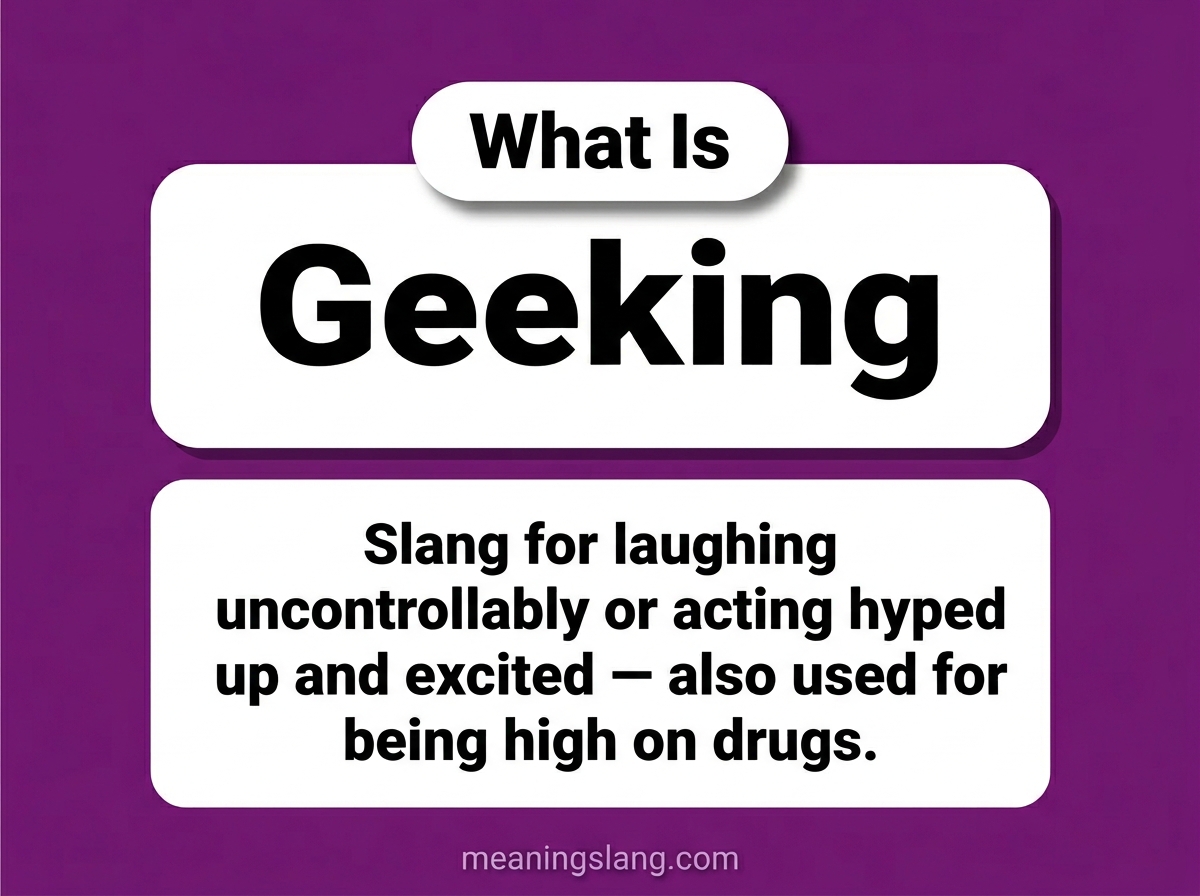
Quick Answer: Geeking means laughing really hard or being extremely excited about something. When someone says “I’m geeking,” they usually mean they can’t stop laughing. It can also mean obsessing over a topic or hobby.
The most common meaning is uncontrollable laughter. Picture yourself watching a meme compilation at 2 AM. You’re wheezing. Tears streaming. That’s geeking.
The tone is always playful and energetic. Nobody uses “geeking” in serious conversations. It’s lighthearted. Fun. A little chaotic.
Context matters though. “I was geeking at that video” means laughing hard. But “I’ve been geeking over this album all week” means obsessing. Same word, different energy.
Who says it changes things too. In some communities, especially where AAVE influences speech, geeking emphasizes that out-of-control laughter. Among hobbyist groups, it leans toward intense enthusiasm.
You might hear someone say “Stop, you’re making me geek” during a funny moment. Or “I’m geeking out over the new trailer.” Both work. The word flexes depending on the situation, much like how tweaking describes erratic behavior in different contexts.
[DEFINITION GRAPHIC HERE — term on left, arrow, plain definition on right, white card background]
Origin and History of “Geeking”
Geeking didn’t start as slang. The word “geek” dates back decades. It originally meant someone socially awkward or obsessed with niche interests. Think computer nerds and comic book collectors.
The shift happened in Black American communities during the 1990s and 2000s. “Geeking” became slang for laughing hysterically. It spread through hip-hop lyrics and everyday conversation.
Chicago and other Midwest cities helped popularize this version. Drill rap and social media pushed it further into the mainstream. By the 2010s, geeking was everywhere online.
The “obsession” meaning came from a different path. “Geeking out” already existed in nerd culture. It meant getting super excited about Star Wars or video games. Eventually, both meanings merged into one flexible word.
Social media blurred the lines completely. Now Gen Z uses geeking for both laughing fits and intense fandom. The word carries its history, but younger users mostly know it through TikTok and group chats.
How “Geeking” Is Used on Different Platforms
TikTok
Geeking lives in TikTok comments. When a video makes someone laugh, they’ll type “I’m geeking” or “this has me geeking.” Creators also use it in captions to signal their video is meant to be funny. Example: “This sound has me geeking every time.”
On Instagram, geeking shows up in DMs and story replies. Someone sends a meme, you reply “geeking rn.” It’s quick reaction language. Captions sometimes include it too, especially on comedy accounts. Example: “Posted this and my whole family is geeking.”
Twitter/X
Twitter uses geeking in quote tweets and replies. When something absurd trends, people tweet “I’m geeking at this ratio.” The sarcastic layer runs strong here. Example: “The internet is geeking over this interview clip.”
Snapchat
Geeking fits Snapchat’s casual energy perfectly. Friends send snaps back and forth, and “geeking” becomes shorthand for “this is hilarious.” Example: “You gotta see this, I’m literally geeking.”
Discord/Gaming
Gamers use geeking both ways. Laughing at a friend’s fail? Geeking. Obsessing over a new character build? Also geeking. Example: “I’m geeking over this new patch, it’s insane.”
| Platform | Common Use | Tone | Example |
|---|---|---|---|
| TikTok | Reacting to funny videos | Playful | “This has me geeking 💀” |
| DM reactions, story replies | Casual | “I’m geeking at your caption” | |
| Twitter/X | Quote tweets, commentary | Often sarcastic | “Everyone geeking over this drama” |
| Snapchat | Quick friend responses | Informal | “Can’t stop geeking at this” |
| Discord | Gaming moments, hobby talk | Energetic | “Geeking over the new update” |
Geeking in Texting vs. Real Life
In texts, geeking is super common. It’s fast to type and everyone gets it. “Geeking” works as a one-word response. Clean. Efficient.
Out loud? It sounds natural too. People definitely say “I was geeking” when telling stories. It flows easily in casual speech.
The meaning stays consistent either way. Whether typed or spoken, geeking means intense laughter or excitement. No awkward translation needed.
Spoken versions sometimes stretch the word. “I was geeeeking” adds emphasis. In text, people might add extra letters or skull emojis for the same effect.
Examples of “Geeking” in Sentences
GROUP 1 — Friendly/Casual
“Bro, I was geeking so hard at lunch today.”
“That video you sent has me geeking, I can’t breathe.”
“We were all geeking when he fell off the chair.”
GROUP 2 — Hobby/Obsession Context
“I’ve been geeking over sneaker drops all week.”
“She’s geeking about the new album release.”
GROUP 3 — Sarcastic/Humorous
“Yeah, I’m totally geeking over another Monday morning.”
“Everyone’s geeking like this isn’t the third reboot.”
GROUP 4 — Online/Caption Use
“This comment section has me geeking 😭”
“POV: you’re geeking at 3 AM alone in your room”
“Caption this, I’m geeking rn”
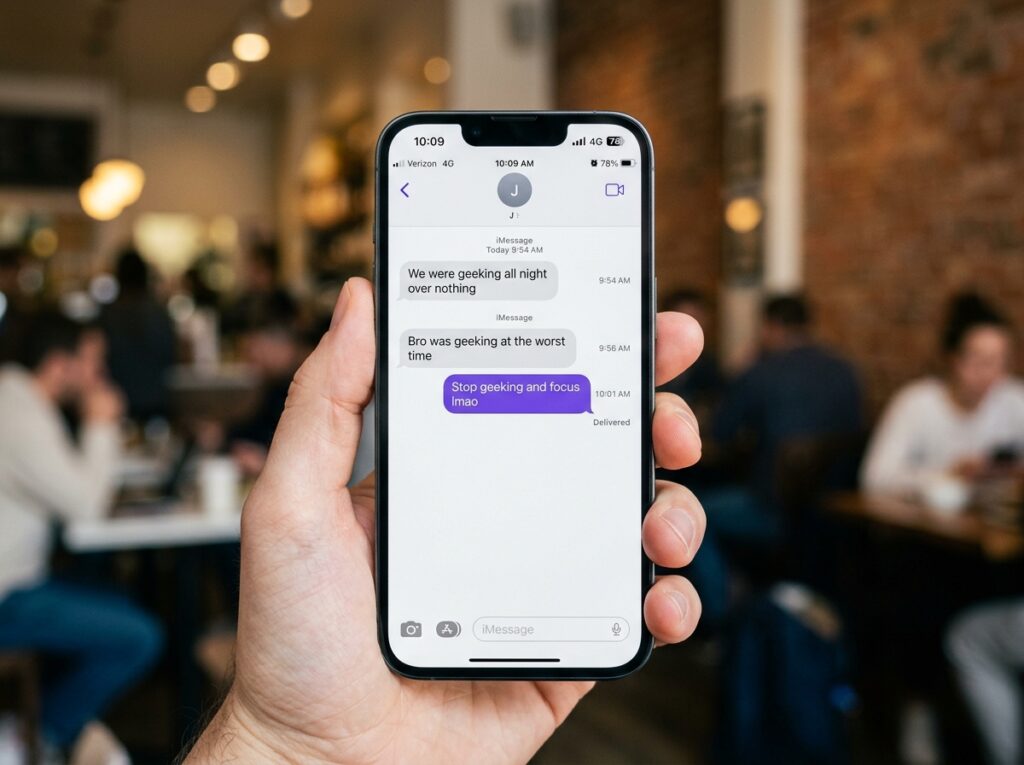
[EXAMPLE CHAT SCREENSHOT MOCKUP — fake phone chat bubbles, iMessage or WhatsApp style]
Variations and Related Slang
Spelling Variations
People keep geeking simple. You might see “geekin” without the G. Sometimes “geekin'” with an apostrophe. Both mean the same thing.
Related Terms
Several slang words overlap with geeking. If you’re tweaking, you’re acting wild or erratic. That shares energy with geeking’s chaotic side.
“Dead” or “I’m dead” also signals intense laughter. “Crying” works similarly. These all describe that can’t-breathe moment.
For the obsession meaning, “stanning” comes close. Both describe intense focus on something you love. Down bad captures obsessive energy too, though it’s usually romantic.
| Term | Meaning | Similar/Different? |
|---|---|---|
| Geeking | Laughing hard or obsessing | — |
| Dead | Laughing so hard you feel lifeless | Similar (laughter) |
| Tweaking | Acting erratic or wild | Related (intensity) |
| Stanning | Being an obsessive fan | Similar (obsession) |
| Crying | Laughing until tears | Similar (laughter) |
Is “Geeking” Safe for Kids?
Direct answer: Yes, geeking is generally safe for kids.
The word itself isn’t offensive. It describes laughter or enthusiasm. Nothing vulgar or harmful about that.
Context rarely gets problematic with geeking. Unlike some slang, it doesn’t have hidden adult meanings. A kid saying “I’m geeking” just means they’re laughing hard.
One small note: geeking occasionally appears in drug-related contexts. In some older slang, it referenced being high on stimulants. This usage is rare now, especially among younger users. Most teens use it innocently.
Parents shouldn’t worry much here. Teachers wouldn’t flag this word. It’s casual, playful language that fits normal conversation.
If your child uses geeking, they probably just think something is hilarious. No alarm needed.
[PARENT SAFETY ICON — shield/safety graphic, 300x200px, “Parent Guide” label]
When to Use (and Avoid) “Geeking”
USE IT WHEN:
- You’re texting friends about something hilarious
- Reacting to funny content on social media
- Talking about a hobby you’re super into
- Describing a moment when you couldn’t stop laughing
AVOID IT WHEN:
- You’re in professional or formal settings
- Talking to someone unfamiliar with slang
- Writing academic papers or work emails
- The context could confuse geeking with drug references
Conclusion
Geeking means laughing uncontrollably or obsessing over something you love. It’s flexible, fun, and fits right into casual conversations.
Slang like this connects people. It captures feelings that formal words can’t. When you’re “geeking,” everyone instantly understands that unfiltered joy or excitement.
Language keeps evolving, and geeking shows how words shift meaning across communities. Keep exploring terms like ISTG to stay fluent in how people actually talk online.
FAQ
What does geeking mean in text?
In texting, geeking means you’re laughing really hard at something. It’s a quick way to show someone that their joke, meme, or video made you crack up. Think of it as saying “I can’t stop laughing.”
Is geeking the same as geeking out?
They’re related but slightly different. Geeking alone usually means laughing hard. Geeking out specifically refers to being super excited or obsessed with a hobby, topic, or interest. Context determines which meaning applies.
Where did geeking slang come from?
Geeking originated in Black American communities, particularly in Chicago and Midwest cities. It spread through hip-hop culture and social media during the 2010s. The “obsession” meaning came from older nerd culture slang.
Can geeking be used for anything besides laughing?
Yes. Geeking also describes intense enthusiasm. If you’re geeking over sneakers, video games, or music, it means you’re deeply invested and excited. The laughter meaning is more common, but both usages are valid.
Is geeking appropriate for school or work?
It’s fine for casual conversations with classmates or coworkers you’re friendly with. Avoid it in formal settings like presentations, emails, or speaking with authority figures. Save it for relaxed social moments.