Your favorite streamer just posted a selfie. The comments explode. One reads: “You’re literally the greatest human alive, the sun rises because of you.” Someone replies with one word: “Glaze.”
You stare at your screen. Is that good? Bad? An insult? You’ve seen it everywhere now. TikTok comments. Gaming chats. Group texts. People throwing around “glazing” and “glazer” like everyone should already know.
Here’s the thing. Glaze sounds like something you do to a donut. But online, it describes something totally different. It’s about praise — but not the normal kind. We’re talking praise so extreme it becomes suspicious. Almost embarrassing.
The word captures that cringe moment when someone goes way too hard complimenting a celebrity, creator, or even a friend. It’s the internet’s way of calling out over-the-top flattery.
If you’ve been scratching your head at this term, you’re about to understand exactly what it means. You’ll also learn why people use it and when it might apply to you. Similar to understanding what “cap” means, knowing “glaze” helps you read the room online.
What Does Glaze Mean?
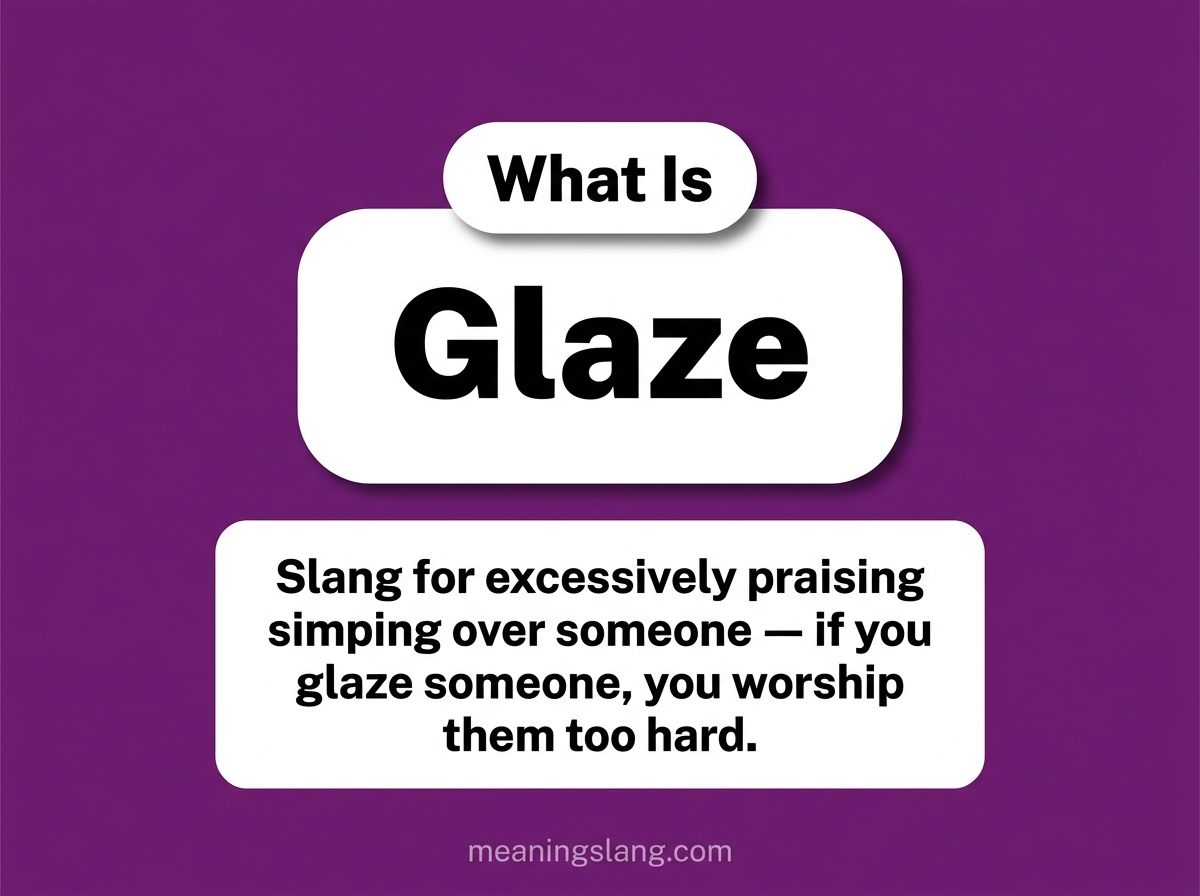
QUICK ANSWER: Glaze means giving someone excessive, over-the-top praise. When you’re “glazing” someone, you’re complimenting them so hard it seems fake or obsessive. A “glazer” is someone who does this constantly.
The word carries a mocking tone. It’s not about genuine compliments. It’s about compliments that cross into weird territory. Think of how donuts get a glaze coating — thick, shiny, almost too much. That’s what glazing does to a person’s ego.
When someone says “you’re glazing,” they mean you’re being too complimentary. You’re laying it on thick. Maybe you called your favorite artist “the greatest musician in human history” when they dropped an okay song. That’s glazing.
The term works differently based on context. Among friends, it’s usually playful teasing. In comment sections, it can be a genuine criticism. Fans glazing celebrities often don’t realize they’re doing it.
Here’s an example: “Bro said LeBron is better than every player combined. He’s glazing so hard right now.” Or imagine someone typing “This YouTuber could cure diseases with their content” — someone will definitely reply “glazer detected.”
The emotional tone ranges from lighthearted to annoyed. It depends on how seriously the original praise was meant.
Origin and History of “Glaze”
The slang version of “glaze” emerged from gaming and sports communities around 2021-2022. It grew from debates about athletes, particularly in basketball and football discussions.
Fans would argue about players like LeBron James or Cristiano Ronaldo. Some defenders went so far with their praise that others started calling it out. The donut metaphor stuck. You’re coating someone with so much sweetness it becomes ridiculous.
The term exploded on TikTok in 2023. Sports content creators used it constantly. Then it spread beyond sports. People started calling out glazing in music fandoms, gaming communities, and stan culture everywhere.
By 2024, “glaze” had become mainstream Gen Z vocabulary. It moved from niche sports arguments to everyday conversation. Now in 2026, even people outside internet culture recognize it.
The word filled a gap. Before “glaze,” you might say someone was “dickriding” — but that term felt harsher. Glaze offered a lighter alternative. It points out the same behavior without being as aggressive.
How “Glaze” Is Used on Different Platforms
TikTok
TikTok made “glaze” go viral. Comment sections under celebrity videos overflow with both glazing and accusations of glazing. You’ll see someone type “He’s literally perfect in every way” followed by replies saying “the glaze is crazy.” Creators also make videos specifically calling out glazing behavior in fandoms.
Example: “The glaze on this man is unreal. He made one good video and y’all act like he invented entertainment.”
On Instagram, glazing happens in DMs and comments. Fans leave excessive compliments under influencer posts. Friends might jokingly accuse each other of glazing when someone hypes up their partner’s average cooking skills.
Example: “You’re glazing your boyfriend so hard rn. Those pancakes look burnt.”
Twitter/X
Twitter debates about athletes, musicians, and public figures constantly feature glazing accusations. It’s a quick way to dismiss someone’s argument. If your praise seems biased, expect someone to call it out. This platform sees the most sports-related glazing discussions.
Example: “Saying he’s the greatest quarterback ever after one good game? Glaze merchant behavior.”
Discord/Gaming Chats
Gamers use “glaze” when someone overhypes a player, team, or game. If you keep praising your favorite streamer after they lose, your squad will notice. It’s become standard vocabulary in gaming communities. Similar to calling someone an NPC, it’s a quick criticism.
Example: “You’re glazing that game so hard. It literally crashed three times.”
Reddit threads discussing celebrities often devolve into glazing debates. Sports subreddits especially love this term. Someone posts a stat favoring their favorite player, and replies flood in calling it glazing.
Example: “This whole thread is just glazing LeBron. Y’all need to be objective.”
| Platform | Common Use | Tone | Example |
|---|---|---|---|
| TikTok | Comment sections, calling out fans | Playful to mocking | “The glaze is insane” |
| DMs, friend teasing | Light, joking | “Stop glazing your man” | |
| Twitter/X | Sports debates, celebrity discussions | Dismissive, argumentative | “Certified glazer” |
| Discord | Gaming chat, streamer fans | Teasing, friendly | “You’re glazing that game” |
| Thread debates, sports arguments | Critical, debate-focused | “This post is pure glaze” |
Glaze in Texting vs. Real Life
In texts, “glaze” flows naturally. You type it fast when calling out a friend’s over-the-top compliment. It’s quick, punchy, and everyone gets it.
Speaking it out loud feels slightly different. People do say it in real life, especially in friend groups. But it sounds more casual when typed. Saying “you’re glazing him so hard” in person works fine. It just hits different.
The meaning stays the same across both contexts. Typed versions tend to feel funnier. Spoken versions can sound more like genuine criticism. Tone of voice matters when you say it aloud — you could sound playful or annoyed.
Gen Z uses it both ways without hesitation. It’s crossed over from internet-only to everyday speech.
Examples of “Glaze” in Sentences
GROUP 1 — Friendly/Casual
“Bro why are you glazing that restaurant? The food was mid at best.”
“She keeps glazing her new car like it’s a Lamborghini. It’s a Honda.”
“Y’all are glazing this album way too hard. It’s got like three good songs.”
GROUP 2 — Romantic/Flirty
“The way you glaze me in front of your friends is actually so cute.”
“He called me his soulmate after two dates. I’m being glazed.”
GROUP 3 — Sarcastic/Humorous
“Oh you think that movie deserves an Oscar? The glaze is unreal.”
“Glazing yourself in your own Instagram bio is wild behavior.”
GROUP 4 — Online/Caption Use
“Caption: Don’t glaze me too hard in the comments, I know I look good 😌”
“Comment: The glaze on this man is THICK. He made one funny TikTok.”
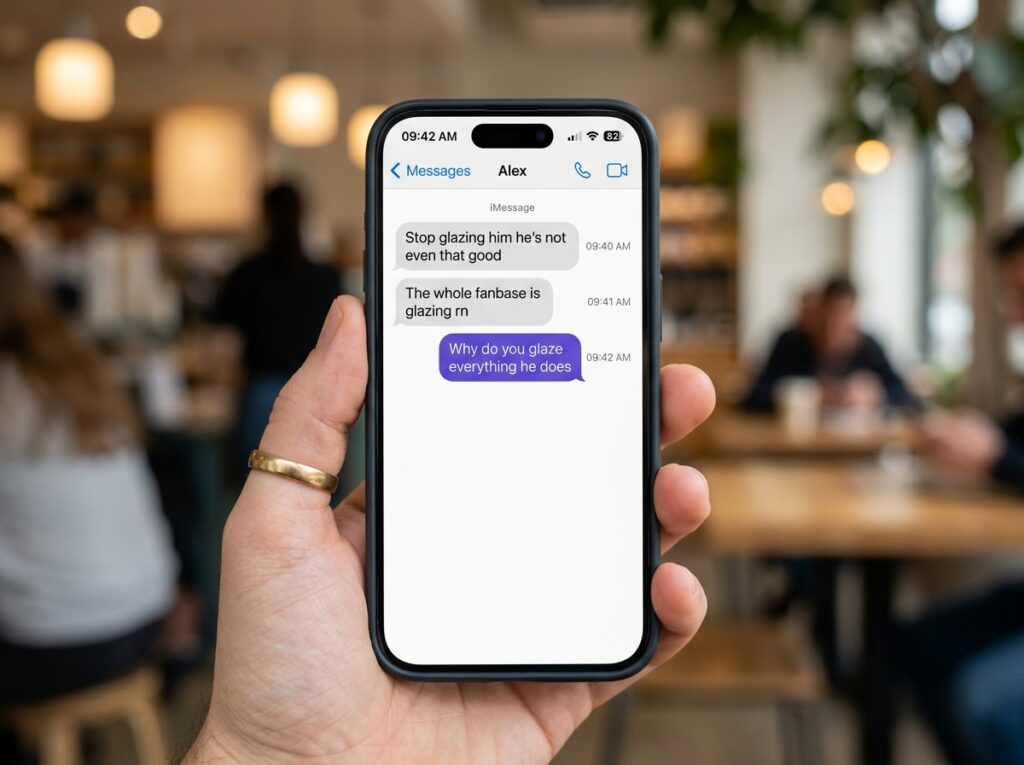
[EXAMPLE CHAT SCREENSHOT MOCKUP — fake phone chat bubbles, iMessage or WhatsApp style]
Variations and Related Slang
The main variations are simple. “Glazing” is the verb form. “Glazer” describes the person doing it. “Glaze merchant” takes it further — someone who glazes professionally, almost.
You might also see “the glaze is crazy” or “glaze mode activated.” These emphasize how extreme the flattery has become.
Related slang includes several terms for similar behavior. Sigma culture often gets glazed by fans who take it too seriously. Understanding this overlap helps you read online conversations better.
“Dickriding” means the same thing but sounds harsher. “Simping” overlaps when the glazing targets a romantic interest. “Stanning” is related — extreme fandom — but doesn’t always imply the criticism that “glazing” does. Being “down bad” sometimes leads to glazing behavior.
| Term | Meaning | Similar/Different? |
|---|---|---|
| Glaze | Over-the-top praise, excessive compliments | — |
| Glazer | Person who glazes constantly | Same concept, noun form |
| Dickriding | Aggressively supporting someone blindly | Similar but harsher |
| Simping | Doing too much for romantic interest | Similar in romantic contexts |
| Stanning | Being an extreme fan | Related but not always negative |
Is “Glaze” Safe for Kids?
Direct answer: Yes, mostly safe. The word itself isn’t vulgar or offensive. It’s essentially calling out flattery.
Kids using “glaze” are usually joking with friends. They might say “stop glazing that YouTuber” during a debate. That’s harmless banter.
The concern comes from adjacent terms. “Dickriding” means the same thing but includes crude language. Kids might learn one and discover the other. Context matters here.
Schools probably won’t flag “glaze” itself. It’s not on any banned word lists. Teachers might not even know what it means.
Parents don’t need to worry much about this one. If your kid says someone’s glazing, they’re just saying the praise seems excessive. It’s commentary on behavior, not profanity. Monitor how it’s used, but this term ranks low on the concern scale compared to others.
[PARENT SAFETY ICON — shield/safety graphic, 300x200px, “Parent Guide” label]
When to Use (and Avoid) “Glaze”
USE IT WHEN:
- A friend is overhyping something that doesn’t deserve it
- You’re playfully teasing someone about their celebrity crush
- Calling out clearly biased takes in online debates
- Joking about your own tendency to over-compliment
AVOID IT WHEN:
- Someone is giving genuine, deserved praise
- You’re talking to older adults who won’t understand
- The situation is serious or professional
- You might actually hurt someone’s feelings about their passion
Conclusion
Glaze means giving excessive, almost suspicious levels of praise. It’s the internet’s way of pointing out when compliments cross into cringe territory.
Slang like this helps people communicate nuance quickly. One word captures an entire behavior pattern. It creates shared understanding within a generation. You don’t need a paragraph to explain that someone’s being over-the-top — you just say they’re glazing.
Language keeps evolving, and terms like this show how online culture shapes how we talk. Similar to learning what “based” means, understanding glaze makes you more fluent in how people actually communicate today.
Now go forth and spot the glazers. Or maybe recognize when you’re doing it yourself.
FAQ
FAQ #1: What does “glazing” mean on TikTok?
On TikTok, glazing means giving someone excessive compliments in comments or videos. When people say “the glaze is crazy,” they’re pointing out that someone praised a creator, celebrity, or friend way too hard. It’s usually playful criticism.
FAQ #2: Is calling someone a “glazer” an insult?
It’s a mild insult or playful tease. Calling someone a glazer means they’re being too complimentary to the point of seeming fake or obsessive. Among friends, it’s usually joking. In debates, it dismisses someone’s opinion as biased.
FAQ #3: What’s the difference between glazing and simping?
Glazing applies to any excessive praise toward anyone — celebrities, friends, athletes, products. Simping specifically involves doing too much for a romantic interest or crush. Both describe over-the-top behavior, but simping has romantic undertones that glazing doesn’t require.
FAQ #4: Where did the slang “glaze” come from?
Glaze originated in sports communities around 2021-2022, especially in basketball debates. Fans coating their favorite players with extreme praise got compared to glazing a donut. TikTok made it mainstream by 2023, spreading it beyond sports.
FAQ #5: Can glazing be a good thing?
Rarely. The term almost always carries criticism. However, some people reclaim it jokingly, saying “I’m glazing and I don’t care” when they genuinely love something. In those cases, they acknowledge the excessive praise but own it anyway.