Your favorite streamer just called someone “habibi” in a comment. Now everyone’s replying with it. You’ve heard it in memes, TikToks, and maybe even at school.
But wait. Isn’t this Arabic? Why are people in Ohio using it?
You’re not imagining things. Habibi has exploded beyond Arabic-speaking communities. It’s everywhere now. Gamers use it. Influencers drop it casually. Your friend who’s never left their hometown suddenly texts you “thanks habibi” like it’s normal.
The word carries genuine warmth in its original language. Online, it’s become something different. Sometimes affectionate. Sometimes ironic. Sometimes just a vibe.
This shift happens with lots of slang. Words travel. They pick up new meanings along the way. Similar to how people use pookie as a cute nickname, habibi has become a go-to term for showing love or joking around.
Understanding habibi means understanding how internet culture borrows, remixes, and spreads language. The word itself tells a story about connection across cultures.
What Does Habibi Mean?
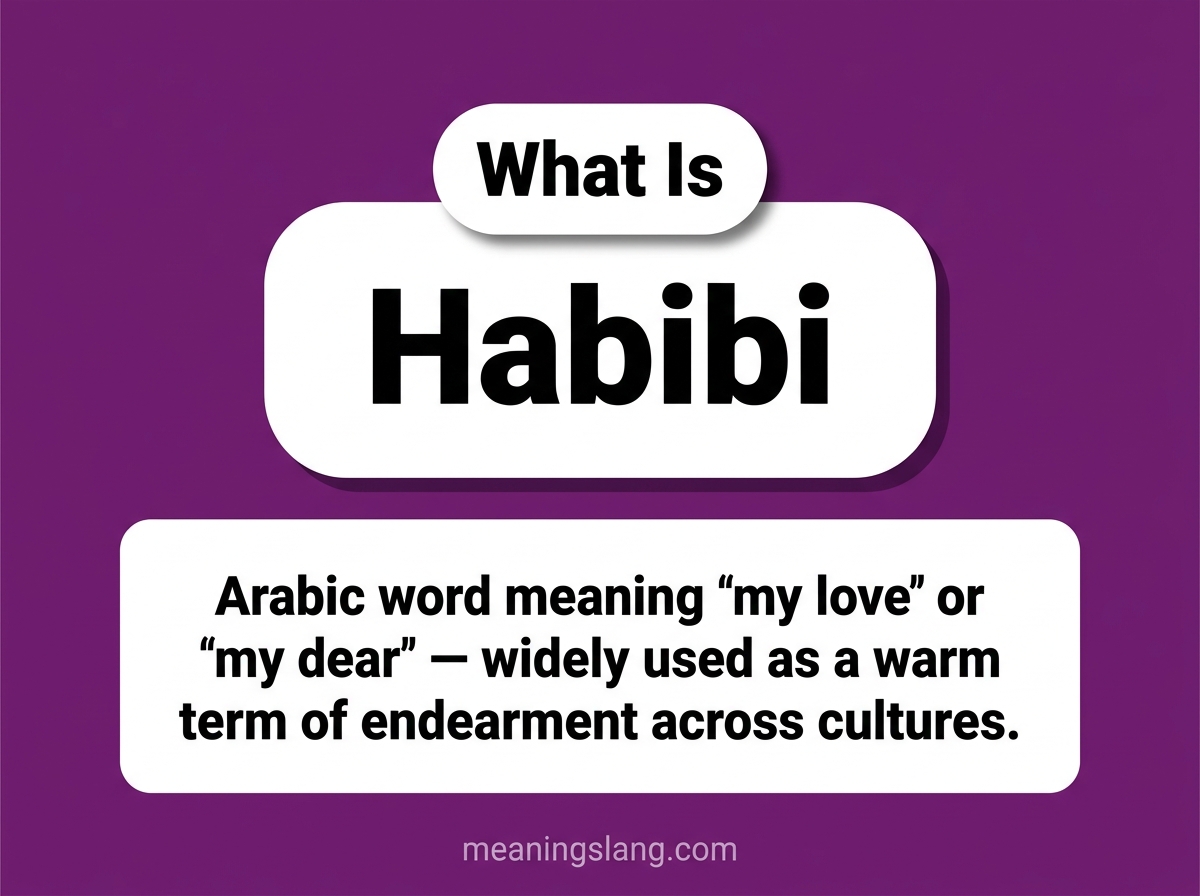
QUICK ANSWER: Habibi is an Arabic word meaning “my love” or “my dear.” Online and in texts, people use it as an affectionate nickname for friends, crushes, or even strangers. The tone can be sincere, playful, or completely ironic depending on context.
The literal translation is “my beloved.” In Arabic, it’s a common term of endearment. Parents say it to children. Friends say it to each other. Romantic partners use it constantly.
But here’s where it gets interesting. The emotional weight changes based on who’s speaking.
When Arabic speakers use habibi, it feels natural. It’s part of daily life. When non-Arabic speakers use it online, the vibe shifts. Sometimes it’s genuine appreciation. “Thanks for helping me, habibi.” Other times it’s purely comedic. “Bro really thought he cooked, habibi no.”
The word works for any gender in casual use. Technically, “habibi” is masculine and “habibti” is feminine. But online? People mostly use habibi for everyone.
Context matters a lot. A streamer saying “my habibi” to fans feels warm. A sarcastic comment calling a clueless person “habibi” feels like gentle mockery. You’ll know the difference by the situation.
Think of it like calling someone “bro” or “bestie.” The word itself is neutral. Your delivery makes it sweet or shady.
[DEFINITION GRAPHIC HERE — term on left, arrow, plain definition on right, white card background]
Origin and History of “Habibi”
Habibi comes from the Arabic root word “hub,” meaning love. It’s been used in Arabic-speaking countries for centuries. This isn’t new slang. It’s ancient vocabulary.
The word appears in Arabic poetry, music, and everyday speech. In the Middle East and North Africa, you’ll hear it constantly. Shopkeepers say it to customers. Taxi drivers use it with passengers. It’s genuinely part of how people connect.
So how did it reach American teens?
Music played a huge role. Arabic pop songs featuring “habibi” spread through YouTube and streaming platforms. Artists like Amr Diab made the word familiar to global audiences.
Then came memes. Around 2020, habibi started appearing in ironic internet content. Gaming communities picked it up. FIFA players and CS:GO streamers used it jokingly with Middle Eastern teammates. The word became associated with friendly trash talk.
TikTok accelerated everything. Creators used habibi in skits about Arab culture, relationships, and everyday situations. The algorithm pushed these videos to millions of non-Arabic speakers.
By 2024, habibi had fully crossed over. It became mainstream internet vocabulary.
How “Habibi” Is Used on Different Platforms
Different platforms give habibi different flavors. The word adapts to wherever it lands.
TikTok is ground zero for habibi content. You’ll see it in comedy skits about overprotective Arab dads. It appears in thirst traps and relationship videos. Creators use it sincerely and sarcastically, sometimes in the same video. “POV: he calls you habibi for the first time” has millions of views.
Instagram keeps habibi in captions and DMs. Couples post photos with captions like “Forever my habibi ❤️.” Friends comment it under each other’s posts. Stories feature habibi as an inside joke or genuine appreciation. Similar to how people express reactions with SMH meaning shock or disappointment, habibi carries emotional shorthand.
Twitter/X uses habibi in replies and quote tweets. It’s often ironic here. Someone posts a bad take, and replies flood in with “habibi, no.” The word softens criticism while making a point.
Snapchat keeps it casual. Quick snaps captioned “miss u habibi” to close friends. It fits the platform’s intimate, temporary style.
Discord and gaming chats made habibi legendary. Teammates call each other habibi mid-match. It’s both affectionate and trolling. “Nice shot habibi” could mean genuine praise or sarcastic commentary on a miss.
| Platform | Common Use | Tone | Example |
|---|---|---|---|
| TikTok | Skits, captions, comments | Playful/Romantic | “He finally called me habibi 😭” |
| Photo captions, DMs | Affectionate | “My habibi forever 💕” | |
| Twitter/X | Quote tweets, replies | Ironic/Corrective | “Habibi, that ain’t it” |
| Discord | Voice chat, messages | Friendly/Trolling | “Let’s go habibi, carry me” |
| Snapchat | Quick snaps | Casual/Intimate | “Wyd tonight habibi” |
Habibi in Texting vs. Real Life
Texting habibi feels natural now. People type it without thinking. It flows in casual messages and group chats. The written form lets you control the tone with emojis and context.
Saying habibi out loud? That depends on your social circle.
In communities where Arabic is spoken, saying habibi is completely normal. It sounds warm and familiar. Nobody blinks.
Outside those communities, it can feel performative. Some people pull it off smoothly. Others sound like they’re trying too hard. Your accent and delivery matter.
Generally, habibi works better typed than spoken for non-Arabic speakers. The text version carries internet culture vibes. The spoken version requires more authenticity. If you’d feel awkward saying it, stick to typing it.
Examples of “Habibi” in Sentences
GROUP 1 — Friendly/Casual
“Thanks for covering my shift, habibi. I owe you one.”
“Habibi, you already know I got your back.”
“Good morning habibi, hope your day goes smooth.”
GROUP 2 — Romantic/Flirty
“You’re the only habibi I need in my life.”
“Come here habibi, I missed you today.”
GROUP 3 — Sarcastic/Humorous
“Habibi really thought that outfit was fire. Someone lied to him.”
“You spent $200 on what? Habibi, we need to talk.”
GROUP 4 — Online/Caption Use
“New fit just dropped 🔥 your habibi is glowing”
“When he texts ‘goodnight habibi’ >>> everything else”
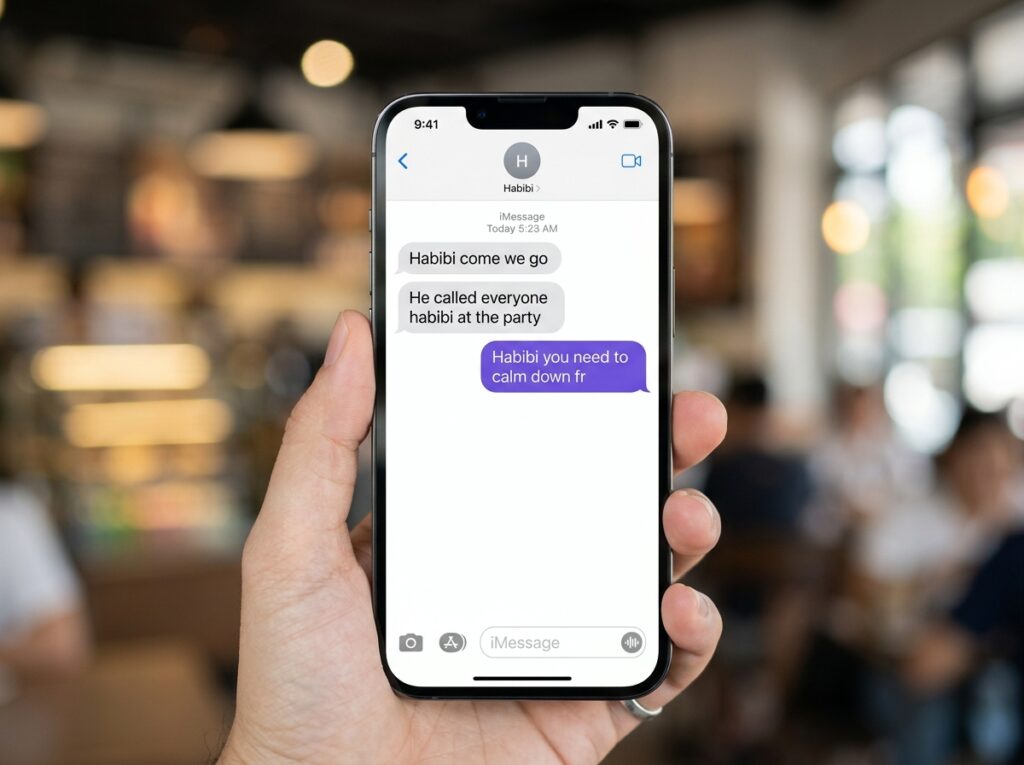
[EXAMPLE CHAT SCREENSHOT MOCKUP — fake phone chat bubbles, iMessage or WhatsApp style]
Variations and Related Slang
Habibti is the feminine version. Arabic speakers use it specifically for women. Online, people mostly ignore this distinction and use habibi universally.
Habibs is a casual plural some people use for groups of friends. “Love my habibs” appears in Instagram captions.
Bebe/Bae/Boo serve similar purposes in English. They’re all terms of endearment for people you care about. Habibi just has more exotic appeal right now.
Azizi means “my dear” in Arabic but hasn’t crossed over like habibi. It stays within Arabic-speaking communities.
The word BBG meaning “baby girl” fills a similar slot in texts. Both are affectionate, slightly playful nicknames.
| Term | Meaning | Similar/Different? |
|---|---|---|
| Habibi | My love/beloved (masculine/universal) | — |
| Habibti | My love (feminine) | Gendered version |
| Bae | Babe, significant other | Similar affection, English origin |
| Pookie | Cute nickname for loved one | Similar warmth, more playful |
| Azizi | My dear (Arabic) | Same language, less viral |
Is “Habibi” Safe for Kids?
Yes, habibi is safe for kids. The word simply means “my love” or “my dear.” There’s nothing inappropriate about it.
Kids using habibi with friends is innocent. They picked it up from TikTok or gaming. It’s no different from saying “bro” or “bestie.”
The only mild concern? Cultural awareness. Some Arabic speakers feel weird when the word gets used ironically or mockingly. Teaching kids to use it respectfully matters.
Schools won’t flag habibi. It’s not profanity. It’s not an insult. Teachers might not even recognize it.
Parents shouldn’t worry about this one. If your kid says habibi, they’re just being affectionate in internet-speak. It’s actually pretty wholesome compared to most slang floating around.
[PARENT SAFETY ICON — shield/safety graphic, 300x200px, “Parent Guide” label]
When to Use (and Avoid) “Habibi”
USE IT WHEN:
- Texting close friends who understand the vibe
- Commenting on friends’ posts with affection
- Joking around in gaming lobbies or Discord
- Writing captions that need warmth without being too serious
AVOID IT WHEN:
- Speaking with people who might find cultural borrowing disrespectful
- Using it mockingly toward Middle Eastern people
- In professional settings like work emails
- You’re not sure if the person will get the tone
Conclusion
Habibi means “my love” in Arabic, but online it’s become something more flexible. It can be sweet, sarcastic, or just friendly depending on how you use it.
Words like this show how internet culture mixes languages and ideas. Slang travels fast now. A term that felt niche five years ago becomes universal vocabulary.
That’s what makes tracking language fun. It keeps evolving. If you’re curious about other borrowed expressions, check out what namaste means and how it’s shifted in Western culture.
Use habibi when it fits. Skip it when it doesn’t. You’ll figure out the balance quickly.
FAQ
What does habibi mean when a guy says it?
When a guy calls you habibi, he’s showing affection or friendliness. It could mean he sees you as a close friend, or it might be flirty depending on context. In gaming or online spaces, guys often use it casually with anyone.
Is habibi only for romantic relationships?
Not at all. Habibi works for friends, family, and romantic partners equally. Arabic speakers use it broadly. Online, people call strangers habibi as a joke or friendly gesture. The romantic meaning exists but isn’t the only one.
Can a girl use habibi?
Absolutely. Girls use habibi constantly in texts and online. While “habibti” technically addresses females, everyone uses habibi universally now. Gender rules from formal Arabic don’t apply to casual internet usage.
Is it offensive for non-Arabs to say habibi?
Most Arabic speakers don’t mind respectful use. Problems arise when people use habibi to mock or stereotype. If you’re being genuinely friendly, it’s usually fine. Just avoid exaggerated accents or making it a joke about Arab culture.
Why is habibi so popular on TikTok?
TikTok’s algorithm pushed Arabic-culture content to massive audiences. Creators made relatable videos using habibi naturally. The word sounds nice, feels affectionate, and works in many contexts. That combination made it viral and kept it trending.