You’re scrolling through TikTok. Someone comments “giving major topknot energy” under a video. The person in the clip isn’t even wearing their hair up.
Now you’re confused. Is topknot still about hair? Or did it turn into something else entirely?
Here’s the thing. Words shift meaning all the time online. What starts as a simple description can become a whole vibe. Topknot is one of those words.
Some people use it literally. They mean that bun sitting high on someone’s head. Others use it to describe a certain aesthetic. Think effortlessly cool, slightly messy, but intentional.
The confusion makes sense. Unlike terms with clear slang origins like what demure means, topknot straddles two worlds. It’s both a real hairstyle and a cultural shorthand for a specific look.
So which meaning applies to you? That depends on where you saw it. And who said it. Let’s break down exactly what topknot means in 2026 — the hair, the slang, and everything in between.
What Does Topknot Mean?
QUICK ANSWER: A topknot is a hairstyle where hair is gathered and twisted into a bun on top of the head. In slang, “topknot” describes someone who looks effortlessly put-together or gives off cool, unbothered energy.
The literal meaning comes first. A topknot is a bun worn high on the head. It’s quick to do. It looks casual but stylish. Think yoga class, coffee runs, or late-night study sessions.
But online, the word has grown. When someone says “topknot vibes,” they usually mean a whole aesthetic. It’s about looking good without trying too hard. Messy but intentional. Relaxed but still cute.
The tone matters here. Calling someone “topknot” is almost always positive. It suggests they’ve mastered the art of low-effort cool. “She’s so topknot” means she looks effortlessly stylish.
Context changes things slightly. In fashion circles, it stays pretty literal. In casual texting, it leans more toward that vibe-based meaning.
You might see it like this: “Threw on sweats and still felt topknot about it.” That’s the slang version. The person felt good, confident, unbothered.
The word carries warmth. It’s not about being polished or perfect. It’s about being comfortable in your own skin while still looking put-together.
[DEFINITION GRAPHIC HERE — term on left, arrow, plain definition on right, white card background]
Origin and History of “Topknot”
Topknots aren’t new. Not even close.
This hairstyle appears in ancient cultures across the globe. Samurai warriors wore them. So did ancient Greeks. The style symbolized different things — status, practicality, spiritual meaning.
In Western fashion, the topknot became trendy around 2010. Celebrities wore them on red carpets. Fitness influencers made them their signature look. The “messy bun” era had officially begun.
The slang evolution happened gradually. By the late 2010s, people started using “topknot” to describe more than hair. It became shorthand for that whole casual-chic aesthetic.
Social media accelerated this shift. Pinterest boards dedicated to topknot hairstyles mixed with lifestyle content. The word started meaning a way of being, not just a way of styling hair.
By 2024, “topknot energy” was a phrase. You didn’t need actual hair in a bun. You just needed that unbothered, pulled-together vibe.
The journey from ancient hairstyle to modern slang took centuries. But the internet compressed decades of evolution into a few years.
How “Topknot” Is Used on Different Platforms
TikTok
This is where topknot lives its best slang life. Creators use it in captions describing their aesthetic. “Topknot era” videos show morning routines and outfit checks. The word signals effortless style.
“Just entered my topknot era and I’m never leaving.”
On Instagram, topknot stays closer to its literal meaning. Hair tutorials dominate. But captions sometimes use the slang version too. Stories might show someone saying “feeling very topknot today” while dressed casually cute.
“Topknot and iced coffee kind of morning.”
Twitter/X
Here it’s more conversational. People joke about their topknot being the only thing holding their life together. The humor is self-deprecating but relatable.
“My topknot is doing all the heavy lifting today.”
Snapchat
Quick selfies with messy buns. The word appears in captions as both description and vibe check. Friends might send pics captioned “topknot check” before going out.
Discord/Gaming
Less common here. When it appears, it’s usually someone describing their actual appearance. “Sorry I look rough, full topknot mode over here.”
Hair subreddits discuss topknot techniques. Fashion subs occasionally use the slang meaning. The literal definition dominates most conversations.
| Platform | Common Use | Tone | Example |
|---|---|---|---|
| TikTok | Aesthetic/vibe description | Playful, aspirational | “Topknot energy only” |
| Hair tutorials + captions | Casual, stylish | “Messy topknot moment” | |
| Twitter/X | Self-deprecating jokes | Humorous, relatable | “Topknot = personality now” |
| Snapchat | Quick selfie captions | Casual, friendly | “Topknot check ✓” |
| Hair technique discussions | Informative, helpful | “Best topknot for thick hair?” |
Topknot in Texting vs. Real Life
In texts, topknot works both ways. You might describe your actual hairstyle. Or you might say “I’m feeling topknot” to mean you’re in a chill, confident mood.
Out loud, it’s almost always about hair. Saying “she’s so topknot” in conversation would sound weird. People would probably think you meant her actual bun.
The slang usage stays mostly digital. It reads naturally in captions and texts. But spoken aloud, it loses that effortless cool.
If you’re talking to friends in person, stick to describing the hairstyle. Save the vibe-based meaning for your group chat. Similar to how people use what soft launch means mostly online, topknot slang lives on screens.
Examples of “Topknot” in Sentences
GROUP 1 — Friendly/Casual
“Running late but my topknot is actually looking good for once.”
“She showed up in a topknot and sweats and somehow looked amazing.”
“Topknot days are my favorite days honestly.”
GROUP 2 — Romantic/Flirty
“You look so cute with that messy topknot.”
“Something about you in a topknot just hits different.”
GROUP 3 — Sarcastic/Humorous
“My topknot is the only thing keeping me from falling apart today.”
“Sure I look professional. If professional means aggressive topknot and yesterday’s mascara.”
GROUP 4 — Online/Caption Use
“Topknot szn 🫶”
“POV: you finally mastered the perfect topknot and now it’s your whole personality.”
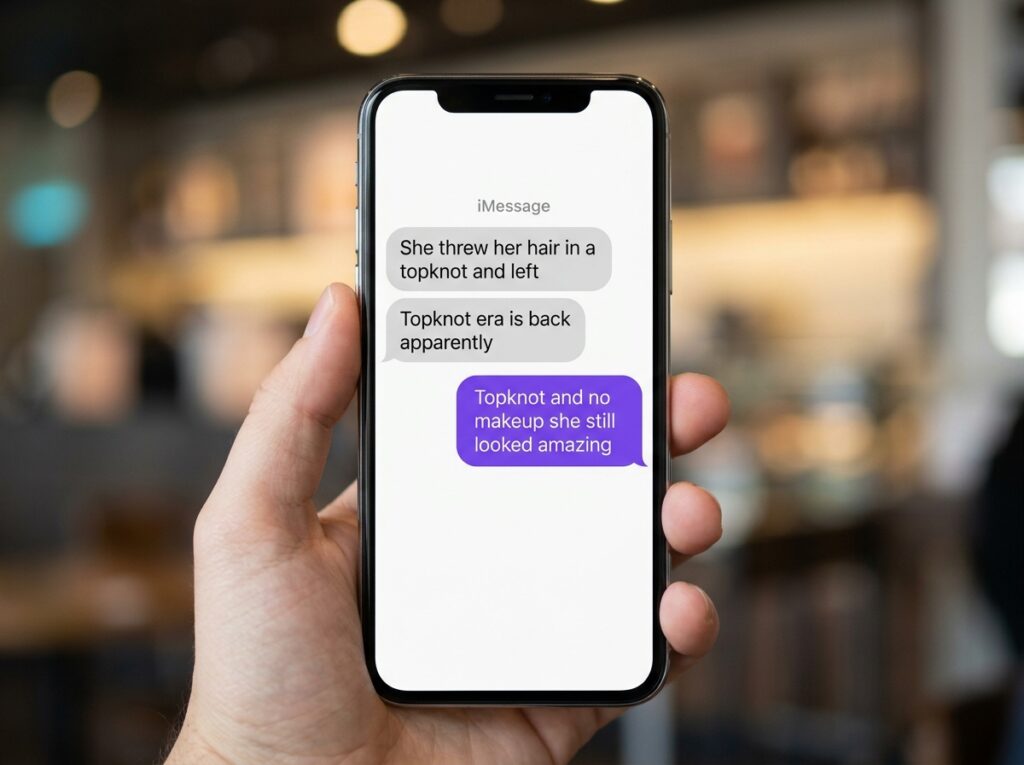
[EXAMPLE CHAT SCREENSHOT MOCKUP — fake phone chat bubbles, iMessage or WhatsApp style]
Variations and Related Slang
Topknot doesn’t have many spelling variations. But you might see it written as “top knot” (two words) or “top-knot” (hyphenated). All three mean the same thing.
Related terms pop up in the same conversations. Messy bun is the most common alternative. It’s slightly more casual. Man bun applies specifically to guys wearing the style.
You’ll also hear effortless thrown around in similar contexts. And what zesty means often describes a similar but more energetic vibe.
Low-maintenance captures part of the topknot aesthetic too. It’s about looking good without obvious effort.
| Term | Meaning | Similar/Different? |
|---|---|---|
| Topknot | High bun or effortless aesthetic | — |
| Messy bun | Casual, loose bun hairstyle | Similar, slightly more casual |
| Man bun | Topknot worn by men | Same style, gender-specific |
| Clean girl | Polished, minimal aesthetic | Different — more put-together |
| Effortless | Looking good without trying | Similar vibe, broader meaning |
Is “Topknot” Safe for Kids?
Yes. Topknot is completely safe for kids to use and hear.
There’s nothing inappropriate about this word. It describes a hairstyle. The slang meaning is equally harmless — it just means looking casually cool.
Kids might use it when describing their hair. They might also pick up the vibe-based meaning from TikTok. Either way, there’s no hidden meaning to worry about.
Parents don’t need to monitor this one. Teachers wouldn’t flag it. It’s as innocent as words get in the slang world.
The only potential confusion? Your kid might say they’re “feeling topknot” and you’ll think they want their hair done. Just ask for clarification.
[PARENT SAFETY ICON — shield/safety graphic, 300x200px, “Parent Guide” label]
When to Use (and Avoid) “Topknot”
USE IT WHEN:
- You’re describing your actual hairstyle in texts or captions
- You want to compliment someone’s effortlessly cool look
- You’re posting content about casual, put-together aesthetics
- You’re joking about your low-effort appearance in a positive way
AVOID IT WHEN:
- You’re in professional settings like work emails or meetings
- You’re talking to someone unfamiliar with current slang
- You’re describing someone’s polished, formal appearance
- You’re speaking out loud and mean the slang version
Conclusion
Topknot means two things now. It’s still that messy-but-cute bun on top of your head. But it’s also become shorthand for looking effortlessly cool without trying too hard.
Words evolve like this all the time. A hairstyle becomes an aesthetic. An aesthetic becomes a vibe. And suddenly you’re “feeling topknot” without touching your hair.
That’s the fun part of slang. It captures feelings that formal language can’t. Like understanding what drip means in fashion contexts, topknot now carries cultural weight beyond its dictionary definition.
Next time you see the word, you’ll know which meaning fits. Context tells the story.
FAQ
What does topknot mean in slang?
In slang, topknot describes an effortlessly cool, put-together aesthetic. It goes beyond the hairstyle to mean someone who looks good without trying too hard. The vibe is casual, relaxed, and confident.
Is a topknot the same as a man bun?
A man bun is a type of topknot worn by men. The terms overlap significantly. Topknot can refer to any gender, while man bun specifically describes the style on male-presenting people.
Why do people say “topknot energy”?
“Topknot energy” means giving off that casual, unbothered coolness. It’s about looking stylish with minimal effort. The phrase became popular on TikTok around 2023-2024 to describe this specific aesthetic.
Can I use topknot to describe someone without a bun?
Yes, in slang contexts. If someone looks effortlessly put-together, you can say they’re giving “topknot vibes” even without the hairstyle. The word has expanded beyond literal hair descriptions online.
Is topknot offensive or inappropriate?
No. Topknot is completely neutral and appropriate for all ages. It has no offensive connotations. Whether describing hair or an aesthetic, the word carries only positive or neutral meaning.