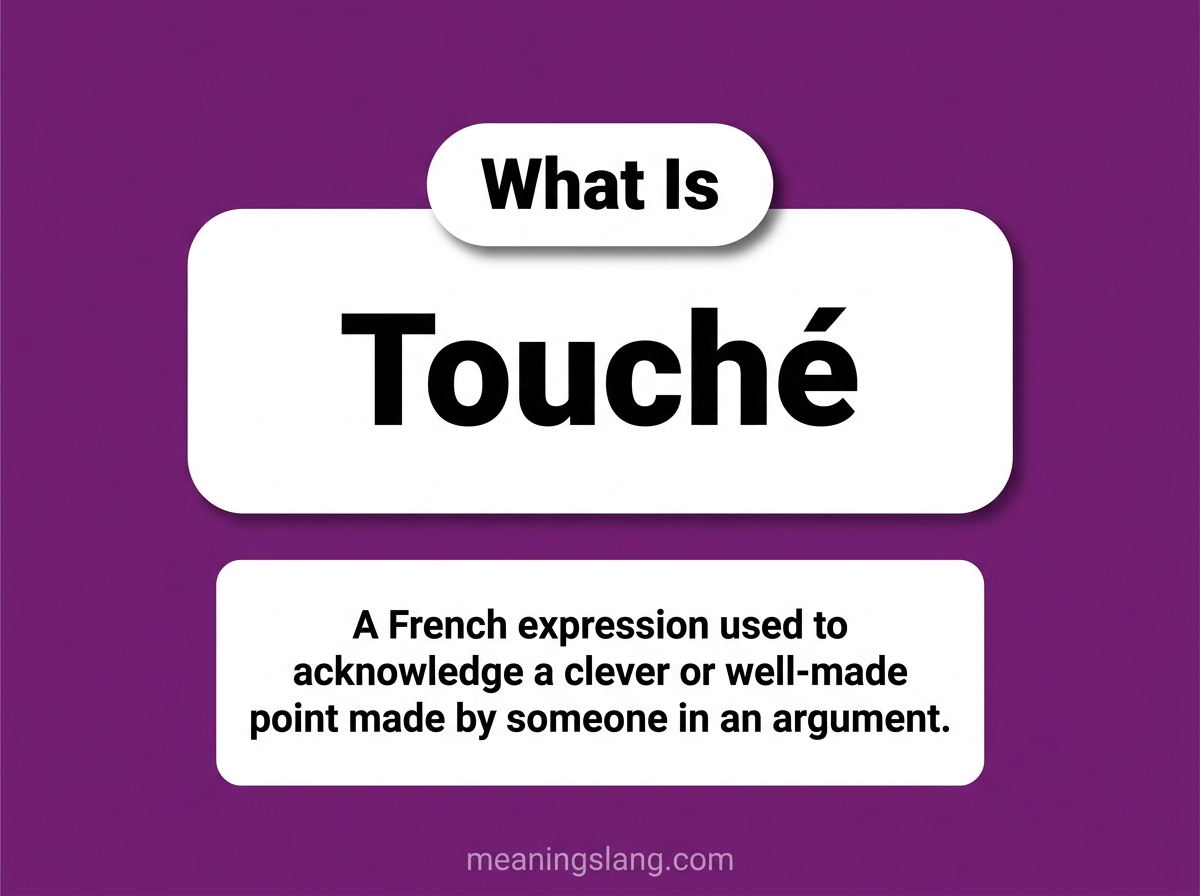
You’re in a Twitter argument. You made your point. It was solid. Then someone replies with just one word: “touché.”
Wait. Did you win? Did you lose? Are they mocking you or agreeing?
This little French word pops up everywhere. Group chats. Comment sections. TikTok duets. People drop it like a mic and walk away. And if you’re not sure what it means, it can feel like you missed the punchline.
Here’s the thing. Touché is one of those words that sounds fancy but carries real weight. It’s the verbal equivalent of a respectful nod. Someone used a good argument against you? Touché. You caught them in their own logic? Touché right back.
The word works because it says a lot with very little. It admits defeat without actually losing. It gives credit without gushing. It’s similar to saying IMO — short, punchy, and loaded with tone.
Understanding touché helps you recognize when you’ve landed a point or when someone else just did.
What Does Touché Mean?
QUICK ANSWER: Touché means “good point” or “you got me there.” You say it when someone makes a clever argument that you can’t really counter. It’s a way of admitting they scored a hit — with style.
The word comes from fencing. When a fencer lands a hit, they call out “touché.” Today, people use it the same way — but for words, not swords.
When you say touché, you’re acknowledging that the other person just made an excellent point. Maybe they caught a flaw in your logic. Maybe they flipped your own words back on you. Either way, touché signals respect.
The tone matters. Touché can sound genuinely impressed. “Okay, fair enough. You win this round.” Or it can sound slightly playful, like you’re pretending to bow after a verbal duel.
It’s never aggressive. Someone might say, “You told me to eat healthier, but I saw you order pizza three times this week.” Your response? “Touché.” You’ve admitted they caught you — no hard feelings.
Touché works when someone’s point is too good to argue against. It’s not surrender. It’s sportsmanship. Think of it as the polite cousin of SMH — except instead of shaking your head at someone, you’re tipping your hat.
[DEFINITION GRAPHIC HERE — term on left, arrow, plain definition on right, white card background]
Origin and History of “Touché”
Touché is French. It means “touched” — as in, your opponent’s sword just touched you. In competitive fencing, calling out “touché” acknowledges that your opponent scored a point.
The word entered English in the early 1900s. At first, it stayed close to fencing circles. But by the mid-20th century, people started using it for verbal sparring too.
The shift made perfect sense. Arguments are like duels. When someone lands a sharp comeback, it feels like a hit. Saying touché became a way to acknowledge that hit without getting defensive.
Over the decades, touché moved from formal debates into casual conversation. Today, you’ll hear it in sitcoms, see it in tweets, and read it in texts. It lost none of its elegance. A single word that says “you got me” will always have appeal.
The word never went viral in the meme sense. It didn’t need to. Touché has stayed relevant for over a century because it fills a gap no other word quite fills.
How “Touché” Is Used on Different Platforms
TikTok
Creators use touché in duets and stitches. Someone makes a counterpoint? The response video might just be someone nodding and saying, “Touché.” It’s dramatic. It’s satisfying.
“She really said ‘you can’t judge my spending when you bought a $6 coffee today.’ Touché, girl. Touché.”
Instagram
In DMs and comments, touché pops up when debates get playful. It’s the classy way to back down. People also use it in captions after making a self-aware joke.
“Friend called me out for posting workout pics but skipping leg day. Touché.”
Twitter/X
Twitter loves a good verbal spar. Touché shows up when someone lands a reply so good that the original poster has to respect it. It’s the graceful exit from an argument.
“You said pineapple doesn’t belong on pizza, but you eat cereal with water. Touché. I have no defense.”
Discord and Gaming Chats
Gamers drop touché when someone roasts them well. It’s quick, keeps the vibe light, and shows you’re not actually mad.
“You’re mocking my aim, but I saw your K/D ratio last match.” “Touché.”
Reddit
On Reddit, touché appears in debate-heavy threads. When someone dismantles an argument cleanly, the response is often just “touché” — upvoted and left alone.
| Platform | Common Use | Tone | Example |
|---|---|---|---|
| TikTok | Duets and stitches | Dramatic, playful | “She got me. Touché.” |
| DMs, captions | Classy, self-aware | “Touché to my friend who exposed me” | |
| Twitter/X | Replies and threads | Respectful, witty | “Okay, touché. That was good.” |
| Discord | Gaming roasts | Light, quick | “Touché, you win this round.” |
| Debate threads | Concise, mature | “Touché. Fair point.” |
Touché in Texting vs. Real Life
People use touché both in texts and out loud. It’s one of the rare slang-adjacent words that works perfectly in speech.
In texting, touché is fast. It ends a debate cleanly. One word. Sent. Done.
In real life, it sounds slightly formal but never weird. Saying “touché” after someone roasts you shows wit. You’re not scrambling for a comeback — you’re acknowledging their skill.
The main difference is delivery. In person, you might smile or raise your hands in mock surrender. In texts, the word does all the work alone. Some people add an emoji for effect. A simple “Touché 😂” softens the moment.
Examples of “Touché” in Sentences
GROUP 1 — Friendly/Casual
“You complained about my music taste, but you unironically love early 2000s pop. Touché.”
“I tried to call him lazy, but he reminded me I slept until 2pm yesterday. Touché.”
“She said I talk too much, then gave a 20-minute speech about her cat. Touché.”
GROUP 2 — Romantic/Flirty
“He said I always steal the blankets. I said he snores. We both said touché.”
“You’re judging my Netflix history when yours is all reality dating shows? Touché, babe.”
GROUP 3 — Sarcastic/Humorous
“I mocked his cooking. He brought up the time I burned water. Touché, I guess.”
“She called me dramatic. I reminded her she cried over a commercial. Touché.”
GROUP 4 — Online/Caption Use
“When your little brother uses your own excuse against you 😂 touché”
“POV: Your best friend just destroyed your argument and all you can say is touché”
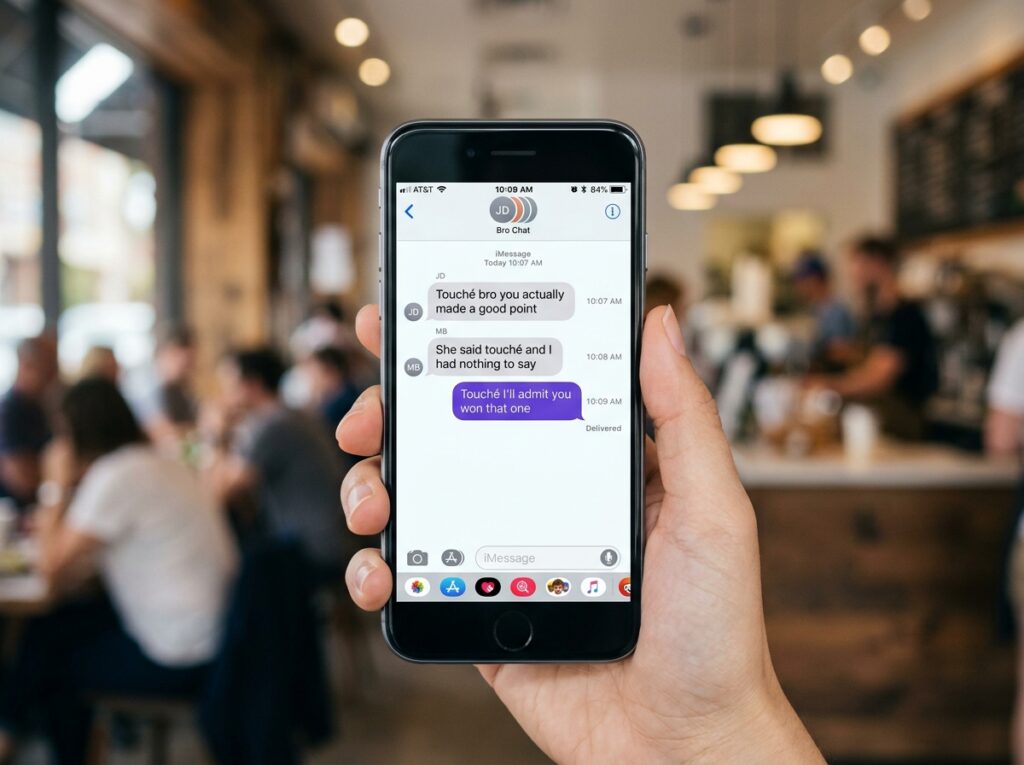
[EXAMPLE CHAT SCREENSHOT MOCKUP — fake phone chat bubbles, iMessage or WhatsApp style]
Variations and Related Slang
Touché doesn’t have many spelling variations. You might see it with or without the accent mark (touché vs touche). Both are understood. Some people type “toosh” or “tooshay” as a joke or phonetic spelling, but this is rare.
Related slang terms capture similar vibes. If someone says touché, they might also use these:
- Fair point — Same meaning, less fancy
- Valid — Gen Z version of “you’re right”
- I can’t even argue — Longer but same energy
- You got me — Casual equivalent
- Based — Acknowledges someone’s bold, honest take
| Term | Meaning | Similar/Different? |
|---|---|---|
| Touché | You made a good point | — |
| Valid | Your argument holds up | Similar, more casual |
| Fair point | Acknowledging logic | Very similar, less elegant |
| Based | Respecting bold honesty | Different vibe, more about attitude |
| You got me | Admitting defeat | Same meaning, informal |
Is “Touché” Safe for Kids?
Yes. Touché is completely safe for kids to use and hear.
There’s no vulgar meaning. No hidden adult context. The word is literally borrowed from fencing — a sport taught in schools. Using touché shows vocabulary range and good sportsmanship.
Kids might use it to acknowledge a sibling’s clever comeback. That’s healthy. It teaches them to lose gracefully and respect good arguments.
Teachers wouldn’t flag this word. In fact, many would appreciate it. Touché is the kind of word that shows a kid is learning to debate rather than just argue.
Parents have zero reasons to worry about this one. If your kid starts saying touché, they’re picking up social intelligence. Encourage it.
[PARENT SAFETY ICON — shield/safety graphic, 300x200px, “Parent Guide” label]
When to Use (and Avoid) “Touché”
USE IT WHEN:
- Someone makes a point you can’t counter
- You want to admit they “got you” without getting defensive
- The debate is friendly, not heated
- You want to end an argument gracefully
AVOID IT WHEN:
- The conversation is genuinely angry or hostile
- You’re using it sarcastically in a way that feels dismissive
- The other person won’t understand the word
- You’ve already said it three times in the same conversation
Conclusion
Touché means “good point — you win this one.” It’s a graceful way to admit someone just out-argued you, borrowed from the world of fencing and sharpened for everyday conversation.
Words like touché matter because they add texture to how we communicate. Instead of getting defensive or going silent, you can acknowledge skill. That builds better conversations — online and off.
Next time someone catches you in your own logic, try it. One word. No ego. Just respect. If you want to explore more expressions that carry hidden weight, check out what poignant really means.
FAQ
What does touché mean in a text?
Touché in a text means “good point” or “you got me.” The sender is admitting that your argument was clever or that you caught them in something. It’s respectful and usually playful, not hostile.
Is touché rude to say?
No. Touché is polite. It acknowledges someone else’s intelligence or wit. Using it shows you can take a verbal hit gracefully. It’s the opposite of rude — it’s sportsmanlike.
Can I say touché in professional settings?
Yes. Touché works in workplaces, emails, and meetings. It sounds educated without being pretentious. Just make sure the context is light enough for a bit of verbal play.
Why do people say touché after arguments?
People say touché to acknowledge a winning point. It comes from fencing, where calling touché meant your opponent scored a hit. In conversation, it means their comeback or argument landed effectively.
Is touché only used when you lose an argument?
Not exactly. Touché admits someone made a strong point, but it doesn’t mean total defeat. You’re acknowledging one good hit, not surrendering the whole debate. It’s about respecting the moment.