Your friend just sent you a text about their terrible date. At the end, they typed “smh” and nothing else. You stare at those three letters. Are they sad? Mad? Laughing?
You’ve probably seen SMH everywhere. It pops up in tweets, comment sections, group chats, and TikTok captions. People use it to react to bad news, dumb choices, and frustrating situations. But the exact feeling behind it can be tricky to pin down.
Here’s the thing about SMH. It’s one of those terms that carries a whole mood in just three letters. Similar to how NGL softens what you’re about to say, SMH adds emotional weight to a message. It tells the other person exactly how you feel without needing a long explanation.
Whether someone sent it to you or you want to start using it yourself, understanding SMH matters. This abbreviation has been around for years, but it’s still going strong. Let’s break down what it actually means and how to use it right.
What Does SMH Mean?
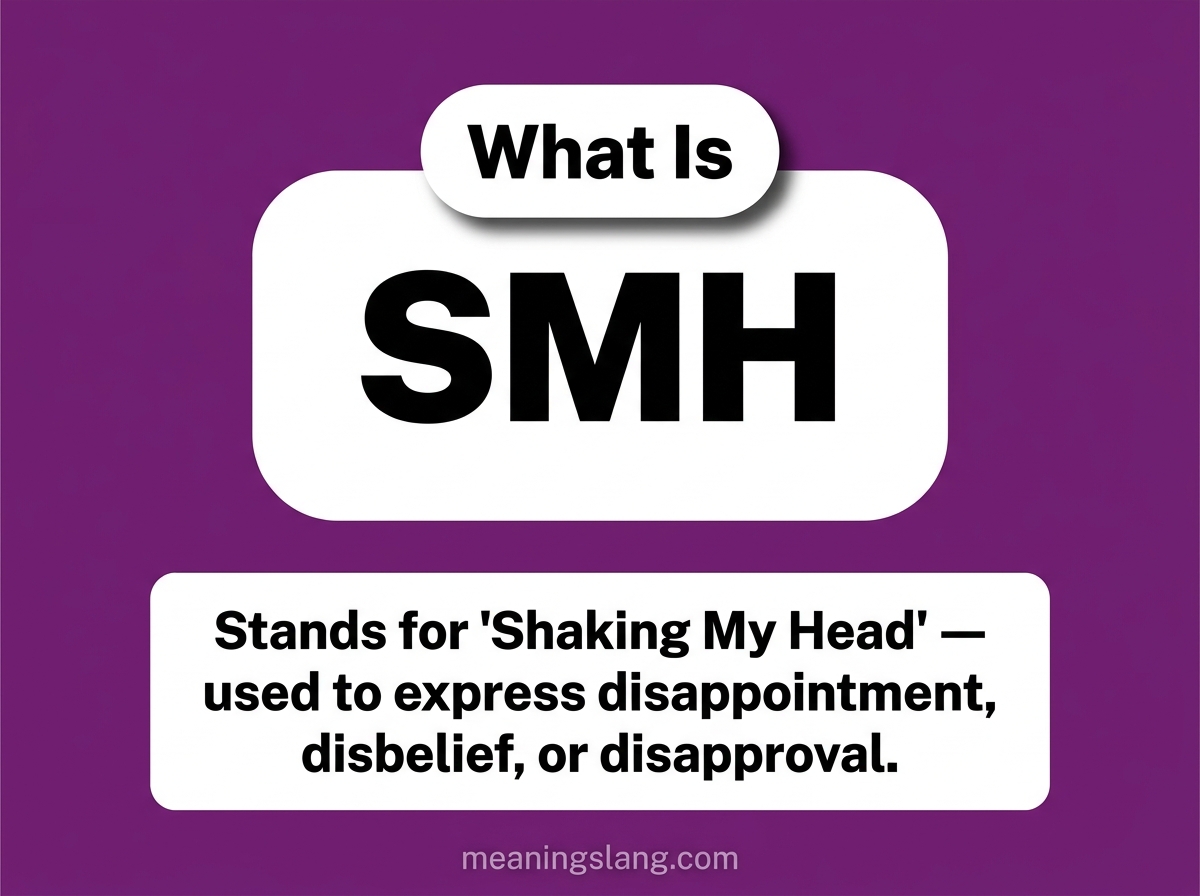
QUICK ANSWER: SMH stands for “shaking my head.” It expresses disappointment, frustration, or disbelief at something dumb or annoying. People use it when words alone don’t capture how they feel.
SMH is your go-to response when someone does something ridiculous. It’s the digital version of slowly shaking your head while sighing. The emotion behind it ranges from mild annoyance to genuine disappointment.
When your coworker forgets the meeting for the third time, you text your work bestie “smh.” When a celebrity posts something tone-deaf, the comments fill up with “smh.” It captures that specific feeling of “I can’t believe this” without needing a full paragraph.
The tone shifts depending on context. Sometimes SMH is playful, like when your friend trips over nothing. Other times it’s genuinely frustrated, like when plans fall through again. You might even use it about yourself—”Forgot my keys again smh.”
One important thing: SMH doesn’t usually mean anger. It’s more like tired disappointment or amused disbelief. Think of it as the difference between yelling and sighing. The sigh is SMH.
[DEFINITION GRAPHIC HERE — term on left, arrow, plain definition on right, white card background]
Origin and History of “SMH”
SMH emerged from early internet and texting culture in the mid-2000s. Like many text abbreviations, it grew out of the need to communicate quickly and save characters.
The term gained traction on forums, early social media, and in Black digital communities. By the early 2010s, it had spread across Twitter and Facebook. Hip-hop culture and meme pages helped push it into the mainstream.
Urban Dictionary entries for SMH date back to 2004. But the real explosion came around 2010-2012 when smartphones made texting the default communication method. Everyone needed shortcuts.
Unlike some slang that fades after a viral moment, SMH stuck around. It filled a gap that other words couldn’t. “Disappointed” sounds too formal. “Ugh” feels different. SMH captures that exact head-shake energy perfectly.
The term hasn’t changed much over time. It still means what it meant fifteen years ago. That consistency is rare in internet slang, where meanings shift constantly.
How “SMH” Is Used on Different Platforms
TikTok
On TikTok, SMH appears in captions and comments reacting to cringe content. Creators use it when showing something frustrating or ridiculous. “Caught my roommate doing this smh” is a classic format.
In Instagram DMs and story replies, SMH adds quick emotional context. Captions might include it for relatable content about everyday annoyances. “Monday mornings smh” hits different when you’re doom-scrolling.
Twitter/X
Twitter loves SMH for quote tweets and reactions. When someone posts a bad take, the quote tweets fill with “smh” and variations. It’s efficient roasting.
Snapchat
In snaps and chats, SMH works just like texting. Quick reactions to friend drama or daily frustrations. “He did WHAT smh” is a Snapchat classic.
Discord/Gaming
Gamers drop SMH when teammates make bad plays. It’s less aggressive than cursing but still expresses frustration. “You walked right into that smh.”
Reddit comments use SMH when reacting to story posts or bad advice. It often appears alongside longer explanations of why something is disappointing.
| Platform | Common Use | Tone | Example |
|---|---|---|---|
| TikTok | Video captions, comments | Playful/frustrated | “The way he fumbled smh” |
| Stories, DM reactions | Casual/relatable | “Dating in 2026 smh” | |
| Twitter/X | Quote tweets, reactions | Sarcastic/disappointed | “They really said that smh” |
| Snapchat | Chat reactions | Quick/casual | “Smh can’t believe her” |
| Discord | Gaming reactions | Frustrated/teasing | “Missed that shot smh” |
SMH in Texting vs. Real Life
In texts, SMH flows naturally. You type it without thinking. It’s become as automatic as “lol” or “ok.”
Out loud, it’s different. Some people actually say “S-M-H” letter by letter. Others say “shaking my head” fully. Both sound a little awkward, but Gen Z does it anyway. Usually for comedic effect.
The meaning stays the same either way. But saying it out loud often comes across as more intentional or dramatic. You’re choosing to verbalize internet slang, which adds emphasis.
Texted SMH feels casual and fast. Spoken SMH feels like a performance. Neither is wrong. Just different vibes.
Examples of “SMH” in Sentences
GROUP 1 — Friendly/Casual
“Left my charger at home again smh”
“She’s late to everything smh I’m not surprised”
“They canceled the show smh what a waste”
GROUP 2 — Romantic/Flirty
“You really forgot our anniversary smh but I still love you”
“Caught you looking at my profile again smh”
GROUP 3 — Sarcastic/Humorous
“He thought the earth was flat smh we need better schools”
“My dog ate my homework smh and I’m 25”
GROUP 4 — Online/Caption Use
“When the WiFi dies during the finale smh”
“POV: Your alarm didn’t go off smh” — just like when people use POV in their videos, SMH adds that relatable touch.
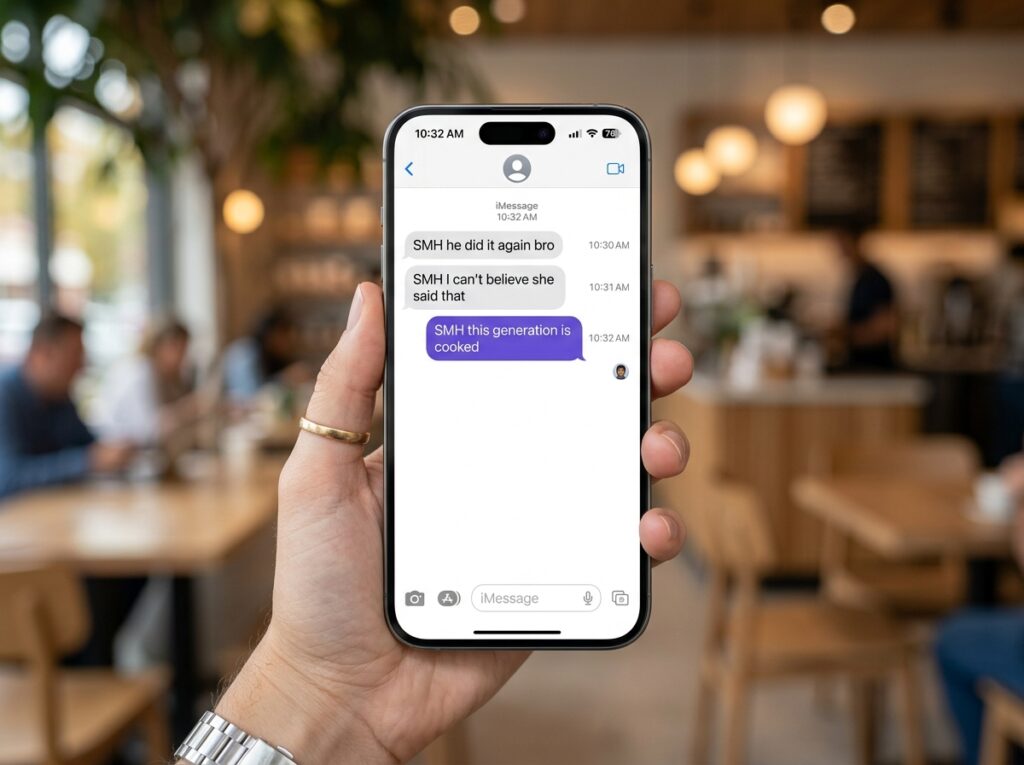
[EXAMPLE CHAT SCREENSHOT MOCKUP — fake phone chat bubbles, iMessage or WhatsApp style]
Variations and Related Slang
SMH has a few popular variations. SMFH adds a curse word for emphasis—”shaking my f***ing head.” Use this when regular disappointment isn’t enough.
SMDH stands for “shaking my damn head.” It’s a middle ground between SMH and SMFH. Strong but not explicit.
Some people type “smhhh” with extra H’s to show extended frustration. The more H’s, the longer the head shake.
Related slang that captures similar vibes includes terms like ISTG (I swear to God), which expresses frustration or emphasis. When something’s extra disappointing, people might call it mid—just average and not worth the hype.
| Term | Meaning | Similar/Different? |
|---|---|---|
| SMH | Shaking my head | — |
| SMFH | Shaking my f***ing head | Stronger, explicit |
| SMDH | Shaking my damn head | Slightly stronger |
| ISTG | I swear to God | Similar frustration energy |
| Bruh | Expression of disbelief | Less disappointed, more shocked |
Is “SMH” Safe for Kids?
Yes, SMH is generally safe for kids. The base term has no inappropriate meaning. It simply expresses disappointment or disbelief.
However, the variation SMFH contains profanity. If your child uses this version, that’s a separate conversation about language choices. The standard SMH itself is harmless.
Context matters too. SMH might appear in conversations about drama or conflict. The abbreviation isn’t the problem, but what’s being discussed could be.
Teachers and schools wouldn’t flag SMH. It’s mainstream enough that most adults recognize it now. You’ve probably seen it used by news outlets and brands.
For parents: SMH is one of the tamer slang terms out there. If this is what you’re finding in your kid’s texts, you’re probably doing okay.
[PARENT SAFETY ICON — shield/safety graphic, 300x200px, “Parent Guide” label]
When to Use (and Avoid) “SMH”
USE IT WHEN:
- Reacting to something mildly frustrating or disappointing
- Your friend makes a dumb but harmless mistake
- Commenting on relatable everyday annoyances
- You want to express feelings without a long explanation
AVOID IT WHEN:
- Someone shares genuinely sad or serious news
- You’re in a professional email or work chat
- The situation calls for real comfort, not quick reactions
- Talking to someone who might not understand internet slang
Conclusion
SMH means “shaking my head” and expresses disappointment, frustration, or disbelief. Three letters carry a lot of weight.
This abbreviation has survived nearly two decades of internet evolution. That’s because it captures something real. We all have moments where words feel like too much effort, but silence isn’t right either. SMH fills that gap perfectly.
Language keeps evolving, and new slang emerges constantly. Just like how people use “sus” to call out something sketchy, SMH gives us a shortcut for shared feelings. That connection through language? That’s why slang matters.
Now go ahead and drop an SMH next time someone does something ridiculous. You’ve earned it.
FAQ
What does SMH mean in a text from a girl?
SMH means the same thing regardless of who sends it—”shaking my head.” She’s expressing disappointment or disbelief about something. Context tells you whether it’s playful or genuinely frustrated. Check what she’s reacting to.
Is SMH rude to use?
SMH isn’t inherently rude. It’s casual and widely accepted in informal conversations. However, using it dismissively toward someone’s feelings could come across as cold. Read the room before dropping it.
What’s the difference between SMH and SMFH?
SMFH adds an f-bomb for emphasis—”shaking my f***ing head.” It expresses stronger frustration or disbelief. Use SMH for everyday annoyances and SMFH when something truly outrageous happens.
Can I use SMH in professional settings?
Avoid SMH in formal emails, work chats, or professional communication. It’s too casual for those contexts. Save it for personal texts, social media, and conversations with friends who understand internet slang.
Why do people say SMH out loud?
Saying “S-M-H” out loud adds dramatic or comedic effect. It signals you’re so done with a situation that internet speak escapes into real life. Gen Z does this intentionally for humor.