Your best friend hasn’t replied in three weeks. You check their Instagram. They’re posting stories, hanging out with other people. They’re alive. They’re just not talking to you.
No fight happened. No awkward moment. No “we need to talk” message. Just silence.
This is ghosting friends. And it hits different than romantic ghosting.
When someone ghosts a relationship, people get it. But friendships? Those feel permanent. People react to friend ghosting with real confusion. You might catch yourself thinking, SMH, what did I even do?
The term started in dating culture. Now it’s everywhere. People ghost coworkers, family members, and childhood best friends. Gen Z talks about it constantly online. TikTok has millions of videos about being ghosted by friends.
You’re probably here because someone vanished on you. Or maybe you did the vanishing. Either way, understanding what ghosting friends actually means can help you process what happened.
Let’s break down the full meaning, why people do it, and what it says about modern friendships.
What Does Ghosting Friends Mean?
QUICK ANSWER: Ghosting friends means completely cutting off communication with a friend without any explanation. The person stops replying to texts, ignores calls, and acts like you don’t exist. It’s a silent exit from the friendship.
The full picture is more layered. Ghosting isn’t just being busy for a week. It’s a deliberate, sustained choice to disappear.
When someone ghosts a friend, they stop all contact. No replies. No acknowledgment. They might even unfollow you or remove you from their close friends list. The emotional tone is confusing and cold.
The key part? No explanation ever comes. The ghoster doesn’t say “I need space” or “I’m upset about something.” They just vanish.
Here’s how it plays out. You text “hey, wanna hang this weekend?” and get nothing back. A week later, you try again. Still nothing. You see them active online. Posting. Commenting on other people’s stuff. But your messages sit on delivered forever.
The meaning shifts based on context. Sometimes ghosting is avoidance. The person can’t handle confrontation. Other times it’s intentional punishment. And sometimes, NGL, people ghost because they simply lost interest in the friendship.
It hurts because friendships feel like they should last. You expect a goodbye at minimum. Ghosting denies you that closure.
[DEFINITION GRAPHIC HERE — term on left, arrow, plain definition on right, white card background]
Origin and History of “Ghosting Friends”
The word “ghosting” came from dating culture in the early 2010s. People used it to describe when a romantic interest suddenly disappeared. No breakup. Just gone.
The term went mainstream around 2015. Articles started appearing in major publications. It became a recognized relationship phenomenon. Dating apps made ghosting easy. You could unmatch, block, and vanish in seconds.
By 2018, the term expanded. People started using it for friendships too. The phrase “ghosting friends” appeared more in social media conversations. TikTok accelerated this around 2020. Creators made videos about being ghosted by best friends.
The shift made sense. Digital communication changed friendships too. You can mute someone. Archive their chat. Remove them from your feed. Modern tools make slow fading out feel invisible.
Therapists started writing about “friendship ghosting” as its own category. It’s now recognized as a real social behavior. The psychology behind it involves conflict avoidance and emotional exhaustion.
Today in 2026, ghosting friends is part of everyday vocabulary. People casually say “she ghosted me” about any friendship that ended abruptly. The word has fully crossed over from dating slang to general social language.
How “Ghosting Friends” Is Used on Different Platforms
TikTok
TikTok is where ghosting friends became a cultural conversation. Creators post storytime videos about friends who vanished. Comments fill up with “same thing happened to me.” The phrase appears in captions constantly.
Example: “POV: Your best friend of 10 years ghosted you over nothing”
On Instagram, ghosting shows up in DMs and Stories. People vent about being ghosted in their close friends stories. The platform itself enables ghosting through muting and restricting features.
Example: Story text reading “When they watch your stories but won’t reply to your texts 🙃”
Twitter/X
Twitter discussions about ghosting friends get philosophical. People debate whether ghosting is ever justified. Threads go viral about friendship breakups. The tone is more conversational.
Example: “unpopular opinion: ghosting friends is sometimes self-care and that’s okay”
Snapchat
Snapchat makes ghosting visible through the friend emoji system. When someone drops your streak or removes you from their list, you notice. The platform creates pressure around consistent contact.
Example: “We had a 500 day streak and she just stopped snapping me???”
Discord/Gaming
In gaming circles, ghosting happens in servers. Someone leaves the group without explanation. They go offline and never come back to shared spaces.
Example: “Dude just left our Discord and blocked everyone. Full ghost mode.”
| Platform | Common Use | Tone | Example |
|---|---|---|---|
| TikTok | Storytimes and vents | Emotional, relatable | “When your ride or die becomes your ghost” |
| DM complaints, Stories | Frustrated, sad | “Posted but still no reply… cool” | |
| Twitter/X | Hot takes and debates | Analytical, opinionated | “Ghosting is the coward’s breakup” |
| Snapchat | Streak deaths | Confused, hurt | “She removed me from her snap map” |
| Discord | Server exits | Blunt, surprised | “He just dipped from the server” |
Ghosting Friends in Texting vs. Real Life
Texting is where ghosting lives. The read receipts. The typing bubbles that never lead anywhere. The delivered messages sitting unanswered for weeks. It all happens in your phone.
In real life, ghosting looks different. The person might avoid places you both go. They might give one-word answers if you run into them. But they won’t explain anything.
Saying “they ghosted me” out loud works fine. People understand it immediately. The phrase sounds natural in conversation.
The emotional weight is heavier in texting though. You have evidence. Screenshots of unanswered messages. Their online activity while ignoring you. Real life ghosting feels more deniable. Texting makes it undeniable.
Examples of “Ghosting Friends” in Sentences
GROUP 1 — Friendly/Casual
“I think Maya is ghosting me. She hasn’t responded to anything in two weeks.”
“We used to hang out every weekend but then she just started ghosting me.”
“My college roommate ghosted me after graduation. No idea why.”
GROUP 2 — Emotional/Hurt
“Being ghosted by your best friend hurts worse than any breakup.”
“I keep checking my phone hoping she’ll text back. This ghosting is messing with my head.”
GROUP 3 — Sarcastic/Humorous
“Love when my ‘friend’ ghosts me but watches all my stories. Very cool behavior.”
“Got ghosted by someone I’ve known since kindergarten. Guess I’ll just go bury myself.”
GROUP 4 — Online/Caption Use
“Caption: When they ghost you but your feed stays fire 💅”
“Replying to a TikTok: Girl I’ve been ghosted by three friends this year alone”
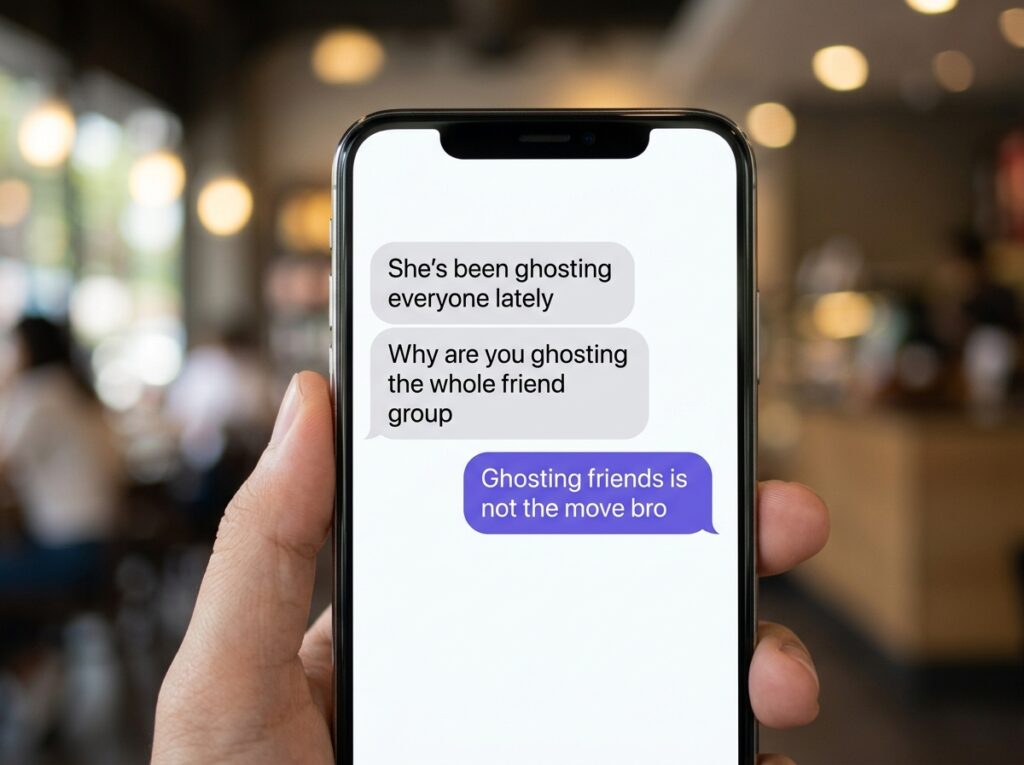
[EXAMPLE CHAT SCREENSHOT MOCKUP — fake phone chat bubbles, iMessage or WhatsApp style]
Variations and Related Slang
The phrase “ghosting friends” stays pretty consistent. Some people shorten it to just “ghosted” when context is clear. Others say “she went ghost on me.”
Related terms you’ll see:
Soft ghosting means slowing down replies instead of stopping completely. The person takes days to respond. They send dry answers. It’s a gradual fade.
Caspering is a gentler version. Named after the friendly ghost. The person starts pulling back but might eventually explain why.
Slow fade describes the same gradual disappearance. It’s been around longer than ghosting as a term.
Zombieing happens when someone ghosts you and then comes back months later. They rise from the dead like nothing happened.
If someone suddenly reappears after ghosting you, people might say that behavior is sus. Trust takes time to rebuild.
| Term | Meaning | Similar/Different? |
|---|---|---|
| Ghosting friends | Cutting off all contact without explanation | — |
| Soft ghosting | Gradual pullback, minimal replies | Softer version |
| Caspering | Friendly fadeout, may explain eventually | More considerate |
| Slow fade | Decreasing contact over time | Similar, older term |
| Zombieing | Coming back after ghosting | What happens after |
Is “Ghosting Friends” Safe for Kids?
Yes, this phrase is completely safe for kids to use and hear.
There’s no profanity or inappropriate content in the term itself. Kids and teens use it casually to describe friend group drama. It’s standard vocabulary in middle and high school social life.
The concept might need discussion though. If your child mentions being ghosted by a friend, it could mean they’re hurting. That emotional impact matters more than the word itself.
Schools wouldn’t flag this language. Teachers understand the term. It’s not considered disrespectful or inappropriate.
For parents: if your teen says they got ghosted, listen. Ask what happened. The phrase gives you an opening to talk about friendship, rejection, and healthy communication. These conversations matter.
The word is neutral. The experience behind it can be painful. Focus on the feelings, not the slang.
[PARENT SAFETY ICON — shield/safety graphic, 300x200px, “Parent Guide” label]
When to Use (and Avoid) “Ghosting Friends”
USE IT WHEN:
- Describing a friendship that ended with zero explanation
- Venting to other friends about being ignored
- Explaining why you’re confused about someone’s behavior
- Talking about social patterns online
AVOID IT WHEN:
- Someone is just busy and will likely respond soon
- You’ve only waited a day or two for a reply
- You’re accusing someone publicly without certainty
- The person has told you they need space (that’s not ghosting)
Conclusion
Ghosting friends means disappearing from a friendship without explanation. It’s the silent exit that leaves the other person confused and hurt.
This slang matters because it names something real. Before the term existed, people struggled to describe this experience. Now there’s a word for it. That validation helps.
Modern friendships happen partly online. That makes ghosting easier than ever. It also makes the term more relevant than ever.
If you’re exploring other ways people express feelings in slang, check out what down bad means. Language keeps evolving to match how we actually connect.
FAQ
What does it mean when a friend ghosts you?
It means your friend stopped all communication without telling you why. They ignore your texts, calls, and social media messages. You don’t get closure or explanation. The friendship just ends in silence, which often leaves you confused about what went wrong.
Is ghosting friends toxic behavior?
It depends on context. Sometimes ghosting protects someone from a harmful friendship. Other times it’s avoidance that causes unnecessary pain. Generally, clear communication is healthier. But some situations make direct confrontation feel unsafe or impossible.
Why do people ghost their friends?
Common reasons include conflict avoidance, outgrowing the friendship, feeling overwhelmed, or not knowing how to end things. Some people ghost to avoid difficult conversations. Others ghost because they’ve become tweaking over small issues they never addressed.
How long until it counts as ghosting?
Most people consider it ghosting after two to three weeks of zero response. One week might just be busy. But if someone’s active online and ignoring only you for weeks, that’s ghosting. Context matters too. Previous communication patterns affect expectations.
Can a friendship recover after ghosting?
Sometimes. If the ghoster reaches out and explains, healing is possible. Trust takes time to rebuild though. Both people need to communicate openly about what happened. Some friendships come back stronger. Others stay broken permanently.