You’re scrolling through TikTok. Someone posts a video staring out a rainy window with the caption “feeling that deep ennui today.” The comments are full of people agreeing. But wait — what even is ennui?
It sounds French. Fancy. Maybe pretentious? You’ve probably seen it on aesthetic mood boards or in captions about existential dread. The word pops up when “bored” doesn’t quite capture the feeling.
Ennui describes something heavier than regular boredom. It’s that tired, empty feeling when nothing excites you anymore. Not sad exactly. Just… flat. Like everything feels pointless for a moment.
Gen Z grabbed this old French word and made it their own. Now it lives on Pinterest boards, poetry accounts, and late-night tweets. People use it when life feels gray and meaningless in a weirdly poetic way.
This word connects to bigger feelings about modern life. When you’re feeling down bad, ennui might describe that emotional flatness perfectly. It’s not dramatic. It’s just honest about how exhausting existence can feel sometimes.
What Does Ennui Mean?
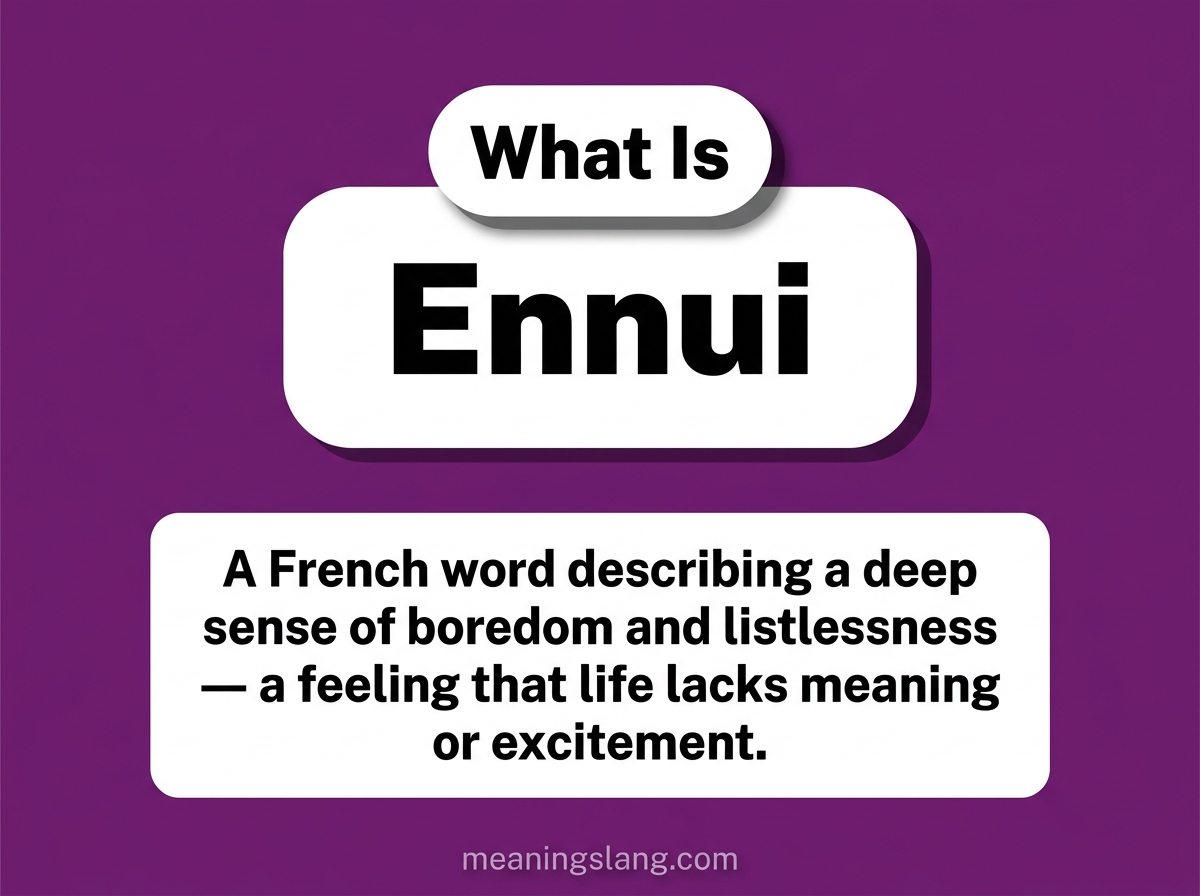
QUICK ANSWER: Ennui means a deep, weary boredom mixed with dissatisfaction. It’s not just being bored — it’s feeling tired of everything and finding nothing interesting. Think of it as existential boredom with fancy French packaging.
The word ennui (pronounced on-WEE) describes emotional exhaustion beyond regular boredom. When someone says they have ennui, they mean life feels dull and meaningless right now.
Regular boredom has a fix. Watch a movie. Call a friend. Do something fun. Ennui feels different. It’s when even fun things don’t sound appealing. Nothing sparks joy or interest.
The emotional tone is quiet and heavy. It’s not dramatic sadness or anger. Ennui sits somewhere between “whatever” and “what’s the point?” Someone might say “I’m in my ennui era” when they feel disconnected from their usual interests.
Context matters with this word. When a literature student uses it, they might reference French philosophy. When your friend texts it at 2 AM, they probably mean they’re stuck in a weird emotional rut. Either way, ennui captures that specific feeling when existence feels exhausting.
You might see it paired with rainy day aesthetics or black-and-white photos. The word has a melancholy beauty to it. People use ennui when “bored” sounds too simple for what they’re experiencing.
Origin and History of “Ennui”
Ennui comes straight from French. The word has existed for centuries in European literature and philosophy. French writers used it to describe a specific type of weariness with life itself.
The term became popular in English during the 1700s and 1800s. Poets and authors borrowed it because English didn’t have an exact equivalent. “Boredom” felt too shallow. Ennui captured something deeper and more existential.
Famous writers like Charles Baudelaire wrote about ennui extensively. He connected it to modern city life and the emptiness that comes with it. The word became associated with intellectuals, artists, and anyone thinking too deeply about existence.
Fast forward to social media. Gen Z discovered ennui fits perfectly with their aesthetic sensibilities. It describes the specific exhaustion of living in an overwhelming digital world. The word went from dusty literature to TikTok captions.
Now ennui appears in memes about burnout, academic stress, and general millennial and Gen Z fatigue. The old French word found new life among people tired of pretending everything is fine.
How “Ennui” Is Used on Different Platforms
TikTok
On TikTok, ennui appears in aesthetic videos about emotional states. Creators film themselves staring at rain or lying in bed with captions about their ennui. The word adds artistic flair to relatable content about feeling emotionally flat.
“POV: the Sunday ennui hits and you haven’t moved in three hours.”
Instagram users drop ennui in moody captions and story posts. It fits the platform’s emphasis on aesthetic presentation. Black-and-white selfies often feature ennui as a descriptor.
“Just my daily ennui and overpriced coffee.”
Twitter/X
On Twitter, ennui shows up in short, punchy observations about life. People tweet about their ennui with dry humor. The word works well for ironic commentary on modern existence.
“The ennui of refreshing my email for literally no reason.”
Discord/Gaming Chats
Gamers occasionally use ennui to describe burnout from their favorite games. When nothing in your library sounds fun, that’s gaming ennui. It’s used somewhat ironically here.
“Can’t pick a game. Pure ennui tonight.”
Reddit discussions about mental health, philosophy, or just venting often include ennui. Users appreciate the word’s precision. It describes a feeling many people recognize but struggle to name.
“Anyone else experience this weird ennui where you want to do stuff but also don’t?”
| Platform | Common Use | Tone | Example |
|---|---|---|---|
| TikTok | Aesthetic mood content | Melancholy, artistic | “Ennui era check” |
| Moody captions | Poetic, curated | “Sunday ennui mood” | |
| Twitter/X | Ironic observations | Dry, humorous | “The ennui is winning today” |
| Discord | Gaming burnout | Casual, relatable | “Total ennui, nothing sounds fun” |
| Deep discussions | Honest, searching | “How do you fight ennui?” |
Ennui in Texting vs. Real Life
People actually say ennui out loud more than most slang terms. The French pronunciation (on-WEE) sounds natural in conversation. It doesn’t feel as awkward spoken as internet abbreviations do.
In texts, ennui adds dramatic flair to mundane complaints. “I have ennui” sounds more interesting than “I’m bored.” Texting makes the word feel playful and slightly ironic.
Spoken out loud, ennui can sound more serious. Saying “I’m experiencing real ennui lately” signals genuine emotional fatigue. The context shifts from aesthetic to authentic.
The word travels well between digital and physical spaces. Unlike SMH, which sounds strange when spoken, ennui works everywhere.
Examples of “Ennui” in Sentences
GROUP 1 — Friendly/Casual
“I scrolled through Netflix for an hour but the ennui won and I just went to sleep.”
“This weather is giving major ennui vibes.”
“The post-vacation ennui is real — nothing at home feels interesting anymore.”
GROUP 2 — Romantic/Flirty
“You’re literally the only thing that cures my chronic ennui.”
“Date me before my ennui becomes permanent.”
GROUP 3 — Sarcastic/Humorous
“Another Monday, another excuse to embrace my ennui.”
“My therapist called it depression but I prefer the term ‘sophisticated ennui.'”
GROUP 4 — Online/Caption Use
“Ennui but make it aesthetic ✨”
“That 3pm ennui when you’ve done nothing but also feel exhausted.”
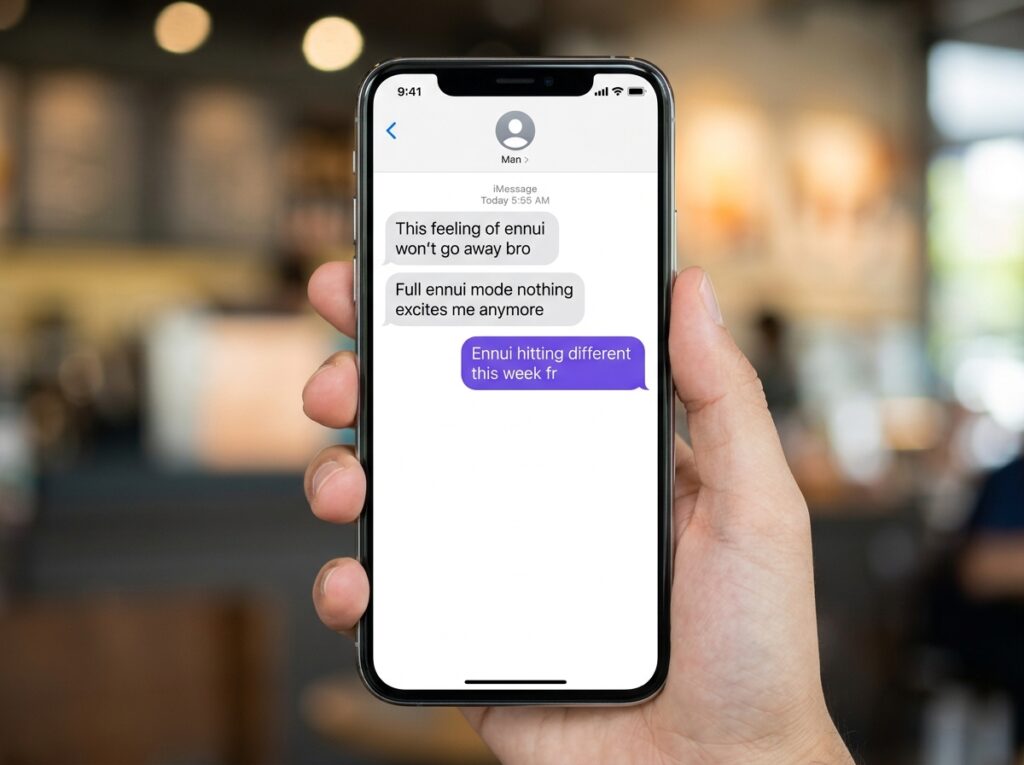
[EXAMPLE CHAT SCREENSHOT MOCKUP — fake phone chat bubbles, iMessage or WhatsApp style]
Variations and Related Slang
The word ennui doesn’t have many spelling variations since it’s borrowed directly from French. Some people write “ennui-core” or “ennui aesthetic” to describe the visual style associated with the feeling.
Related slang captures similar emotional states. Demure describes a quiet, reserved aesthetic that sometimes overlaps with ennui vibes. Both words have that soft, melancholy energy.
People also connect ennui to other mood-describing terms. Knowing what words like poignant mean helps you understand this emotional vocabulary trend. These terms let people express complicated feelings precisely.
Here’s how ennui compares to related terms:
| Term | Meaning | Similar/Different? |
|---|---|---|
| Ennui | Deep, existential boredom | — |
| Languish | Lacking energy or motivation | Similar emotional state |
| Apathy | Not caring about anything | More extreme than ennui |
| Melancholy | Gentle sadness | Ennui plus sadness |
| Burnout | Exhaustion from overwork | Has a specific cause |
| Malaise | General unease or discomfort | Broader, less specific |
Is “Ennui” Safe for Kids?
Yes, ennui is completely safe for kids. The word has no offensive meaning or inappropriate connotations.
Ennui simply describes a type of boredom. Kids might encounter it in books, especially classic literature assigned in school. Teachers would not flag this word at all.
The only consideration is whether a child understands its meaning. A kid saying “I have ennui” without understanding it might sound silly. But there’s nothing harmful about the word itself.
Parents can use this as an opportunity for vocabulary building. Explaining that ennui is a French word for a specific type of boredom teaches kids about emotional nuance. It’s actually educational.
If your child starts using ennui frequently and seems genuinely disconnected or unhappy, that’s worth a conversation. The word itself isn’t the concern — the feeling behind it might be.
[PARENT SAFETY ICON — shield/safety graphic, 300x200px, “Parent Guide” label]
When to Use (and Avoid) “Ennui”
USE IT WHEN:
- You feel bored in a deep, exhausting way that “bored” doesn’t capture
- Creating aesthetic content about mood or emotional states
- Having intellectual conversations about feelings or philosophy
- Joking about being dramatically world-weary
AVOID IT WHEN:
- You’re actually describing depression or serious mental health struggles
- Talking to people who might not know the word
- Trying to seem down-to-earth or casual
- The situation calls for direct, simple language
Conclusion
Ennui means a deep, weary boredom that goes beyond just having nothing to do. It captures the specific exhaustion of finding nothing interesting or meaningful in the moment.
This French word found new life because people needed vocabulary for complicated feelings. When surreal experiences leave you emotionally flat, ennui describes that perfectly. Language evolves to match what we need to express.
Words like ennui help us connect over shared emotional experiences. Sometimes naming a feeling makes it easier to handle. That’s the quiet power of having the right word at the right time.
FAQ
What does ennui mean in simple terms?
Ennui means a deep, tired kind of boredom where nothing feels interesting or meaningful. It’s more than just having nothing to do. The word comes from French and describes feeling weary of life itself, not just a temporary state.
How do you pronounce ennui correctly?
Ennui is pronounced “on-WEE” with the emphasis on the second syllable. It rhymes with “gooey.” Since it’s a French word, the pronunciation might feel unfamiliar at first, but it flows naturally once you practice it.
Is ennui the same as depression?
No, ennui and depression are different. Ennui is temporary boredom and dissatisfaction that passes. Depression is a clinical condition requiring professional help. If your ennui feelings persist for weeks or affect daily functioning, consider talking to a mental health professional.
Why do Gen Z and millennials use ennui so much?
These generations face unique pressures from social media, economic uncertainty, and information overload. Ennui perfectly describes the exhaustion that comes from this environment. The word also fits the aesthetic trend of expressing emotions through sophisticated vocabulary.
Can I use ennui in casual conversation?
Absolutely. Ennui works in both casual and formal settings. Just know your audience — some people might not recognize the word. Used playfully, it adds humor to complaints about boredom. Used seriously, it signals genuine emotional fatigue.