You’re scrolling through comments after something wild happens. A celebrity couple breaks up. Someone’s pet goes viral. A friend texts you news that flips your whole day.
And there it is: “This is so surreal.”
You’ve probably typed it yourself. That moment when your brain can’t quite process what’s happening. When reality feels tilted, dreamlike, or just plain weird.
But what does surreal actually mean? Is it always about dreams? Does Gen Z use it differently than your English teacher did?
People throw this word around constantly now. It pops up in captions, tweets, and group chats. Sometimes it describes something beautiful. Other times, something unsettling.
The word carries weight. It captures feelings that other words can’t quite reach. Similar to how people use poignant for deep emotional moments, surreal fills a specific gap.
Understanding surreal helps you express those “is this really happening?” moments. And trust me, once you get it, you’ll notice it everywhere.
What Does Surreal Mean?
QUICK ANSWER: Surreal describes something that feels dreamlike, bizarre, or hard to believe. It’s that “this can’t be real” feeling when a moment is too strange, beautiful, or unexpected to process normally.
The word started in the art world. But now? It’s everywhere in casual conversation.
When something is surreal, it creates a disconnect between what you’re experiencing and what your brain expects. Think about meeting a celebrity in your local grocery store. Or watching your childhood home get demolished. Those moments feel surreal.
Gen Z uses it to describe intense experiences of all kinds. A concert that felt magical? Surreal. Finding out your ex is dating your coworker? Also surreal. The emotional tone shifts based on context.
Here’s the thing: surreal isn’t always positive or negative. “That sunset was surreal” means it was breathtakingly beautiful. “Finding out I got fired over email felt surreal” means it was shocking and hard to accept.
The word works because it captures that floaty, detached feeling. Like you’re watching your own life from outside your body. People often pair it with phrases like “I can’t believe” or “it doesn’t feel real yet.”
You might see someone comment “this is surreal” when good news drops. They’re saying their brain hasn’t caught up with reality yet.
Origin and History of “Surreal”
Surreal comes from Surrealism. That’s an art movement that started in 1920s Paris.
Artists like Salvador Dalí painted melting clocks and floating objects. Writers created stories where dreams and reality blurred together. The whole point was to go beyond the real — that’s what “sur” means in French. Above or beyond.
The word “surrealism” was coined by Guillaume Apollinaire in 1917. André Breton turned it into a full artistic movement. They wanted to unlock the creative power of the unconscious mind.
By the mid-1900s, surreal moved beyond art galleries. People started using it for any dreamlike or bizarre experience. It became a way to describe what words usually can’t capture.
Fast forward to social media. The word exploded. Suddenly everyone had a platform to share their “surreal” moments.
Now it’s standard vocabulary for Gen Z. They use it naturally when something feels off or extraordinary. The art history connection mostly faded. What remains is that core meaning: reality that doesn’t feel quite real.
How “Surreal” Is Used on Different Platforms
TikTok
On TikTok, surreal often appears in videos about emotional moments. Graduations. Proposals. Meeting someone famous. Creators caption these clips with “this felt so surreal” or use text overlays saying “surreal moment.”
Example: “POV: you finally visit the place you’ve been dreaming about for years. So surreal.”
Instagram users drop surreal in captions for travel photos, milestone posts, and throwback memories. It adds emotional weight without long explanations. Stories often feature the word when something unexpected happens.
Example: “One year ago today I was here. Still feels surreal.”
Twitter/X
Twitter sees surreal during breaking news and cultural moments. When something big drops, the word floods timelines. It’s a quick way to express collective shock or awe. Sometimes people use it sarcastically too.
Example: “Watching my childhood show get rebooted feels surreal ngl.”
Discord/Gaming
Gamers use surreal for unexpected wins or weird in-game glitches. It also describes the feeling of finally beating something they’ve struggled with. The tone is usually excited or disbelieving.
Example: “We actually won against that team?? Surreal.”
Redditors use surreal in personal stories. Relationship updates, career changes, and strange encounters all get described this way. The word often appears in titles to hook readers.
Example: “The most surreal job interview I’ve ever had.”
| Platform | Common Use | Tone | Example |
|---|---|---|---|
| TikTok | Emotional life moments | Reflective | “This whole trip was surreal” |
| Milestone captions | Nostalgic | “Can’t believe I’m here. Surreal.” | |
| Twitter/X | Reacting to news | Shocked/awed | “This timeline is surreal” |
| Discord | Gaming moments | Excited | “That clutch was surreal bro” |
| Personal stories | Descriptive | “Had a surreal experience today” |
Surreal in Texting vs. Real Life
People say surreal out loud all the time. It’s not just a typing thing.
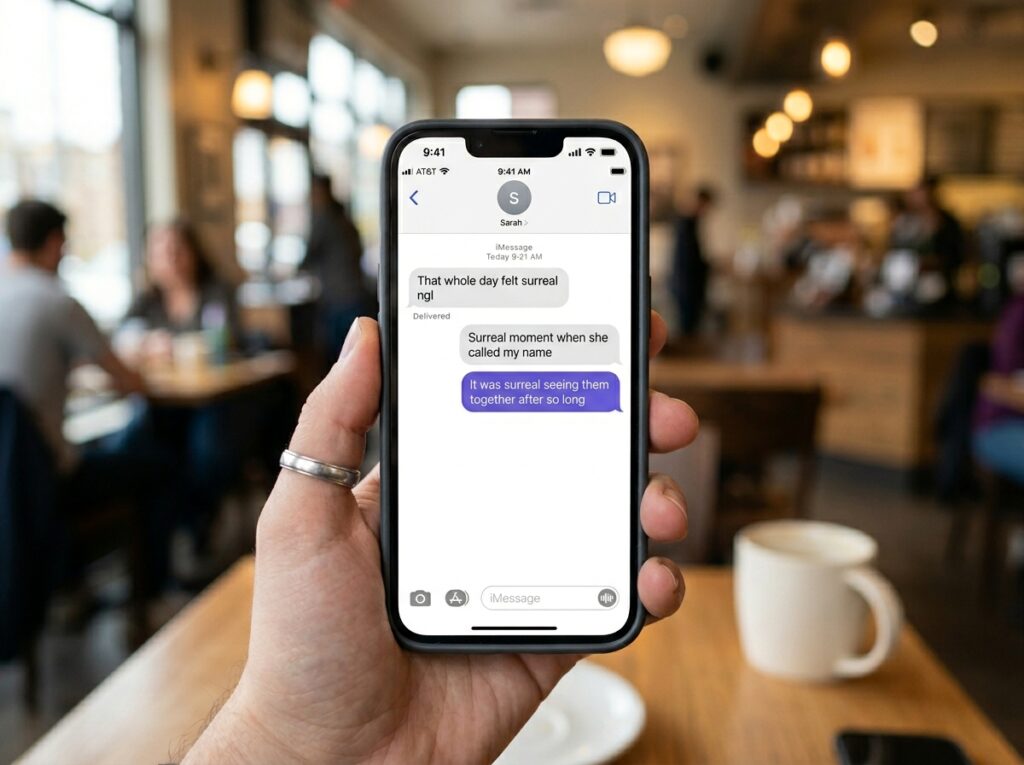
In texts, you might send “this is surreal” to react quickly. It’s shorthand for “I’m processing something big right now.” Sometimes it stands alone as a complete response.
In real life, the word comes out during conversations about intense experiences. “Meeting her parents felt surreal.” “The whole funeral was surreal.” It works naturally in speech.
The meaning doesn’t really change between texting and talking. But in texts, people often add emphasis. They might say “SO surreal” or “genuinely surreal.” Spoken, the emphasis comes through tone of voice.
Unlike some slang that sounds awkward spoken, surreal fits both worlds. Your parents probably use it too.
Examples of “Surreal” in Sentences
GROUP 1 — Friendly/Casual
“Walking across that stage at graduation felt surreal.”
“I ran into my kindergarten teacher at the airport. So surreal.”
“Finally seeing snow for the first time was surreal, like I was in a movie.”
GROUP 2 — Romantic/Flirty
“Waking up next to you still feels surreal honestly.”
“Our first date was surreal. I didn’t want it to end.”
GROUP 3 — Sarcastic/Humorous
“Paying $18 for avocado toast was a surreal experience.”
“My cat ignored me all day then demanded cuddles at 3am. Surreal behavior.”
GROUP 4 — Online/Caption Use
“One year ago I was crying over job rejections. Now I’m here. Surreal.”
“This view is surreal. Pictures don’t do it justice.”
[EXAMPLE CHAT SCREENSHOT MOCKUP — fake phone chat bubbles, iMessage or WhatsApp style]
Variations and Related Slang
Surreal doesn’t have many spelling variations. People write it correctly most of the time. You might see “sureal” as a typo, but that’s not intentional.
Some related words capture similar feelings. Ennui describes a specific kind of dreamlike boredom or restlessness. It’s in the same emotional neighborhood.
When people want to say something felt strange or off, they might use “uncanny” instead. “Ethereal” works for surreal moments that feel magical or otherworldly.
In slang territory, “unreal” covers similar ground. It’s more casual but less specific. Tweaking sometimes describes bizarre behavior, though the meaning is different.
Gen Z might also say “fever dream” for surreal experiences. That phrase captures the same disorienting, dreamlike quality.
| Term | Meaning | Similar/Different? |
|---|---|---|
| Surreal | Dreamlike, hard to believe | — |
| Unreal | Amazing or unbelievable | Similar, more casual |
| Ethereal | Delicate, otherworldly | Similar, more positive |
| Uncanny | Strangely familiar | Similar, often unsettling |
| Fever dream | Bizarre, disorienting | Similar, more chaotic |
Is “Surreal” Safe for Kids?
Yes, surreal is completely safe for kids.
It’s a standard English word with no inappropriate meanings. Teachers use it. News anchors say it. It appears in books assigned in middle school.
Kids might encounter surreal when learning about art history or reading fiction. The word doesn’t carry hidden meanings or double meanings that parents need to worry about.
Context matters very little here. Unlike some slang that shifts meaning based on tone, surreal stays neutral. A child saying “that movie was surreal” just means it felt dreamlike or strange.
Schools wouldn’t flag this word at all. It’s actually encouraged in vocabulary building. If your kid uses surreal correctly, that’s a sign of good word awareness.
No concerns with this one. Let them use it freely.
[PARENT SAFETY ICON — shield/safety graphic, 300x200px, “Parent Guide” label]
When to Use (and Avoid) “Surreal”
USE IT WHEN:
- You’re describing a moment that felt dreamlike or hard to process
- Something amazing or strange happened and you want to capture that feeling
- You’re reflecting on a major life change or milestone
- The ordinary words like “weird” or “amazing” don’t feel strong enough
AVOID IT WHEN:
- You’re just mildly surprised (save it for bigger moments)
- You want to be precise about what was unusual (surreal is vague)
- You’ve already used it three times in the same conversation
- The situation is serious and requires more specific language
Conclusion
Surreal means something feels dreamlike, bizarre, or beyond normal reality. It captures those moments when your brain struggles to accept what’s happening.
This word connects people through shared experience. When you say “this is surreal,” others instantly understand that floaty, disconnected feeling. Language like this builds connection across different lives and situations.
Next time reality feels a little tilted, you’ll have the perfect word for it. And if you want to explore more emotional vocabulary, check out what solace means for those moments when you need comfort instead of confusion.
FAQ
What does surreal mean in simple terms?
Surreal means something feels like a dream or seems too strange to be real. It describes moments when your brain can’t quite process what’s happening. People use it for experiences that feel unbelievable, whether good, bad, or just bizarre.
Is surreal a positive or negative word?
Surreal is neutral. It can describe amazing moments like “that concert was surreal” or difficult ones like “hearing the news felt surreal.” The emotion depends entirely on context. The word itself just means dreamlike or hard to believe.
Can I use surreal in formal writing?
Yes, surreal works in formal and academic writing. It originated in art criticism and literary analysis. Teachers, journalists, and professionals use it regularly. Just make sure the context actually warrants the word instead of simpler alternatives.
Why do people say surreal so often now?
Social media gives everyone a platform to share intense moments publicly. People experience more documented milestones, surprises, and strange events. Surreal became the go-to word for expressing that “I can’t believe this” feeling quickly and relatably.
Is surreal the same as unreal?
They’re similar but not identical. Surreal specifically means dreamlike or beyond normal reality. Unreal is more casual and usually means “amazing” or “hard to believe.” Surreal carries more artistic and emotional weight than unreal does.