Someone posts a black-and-white photo with the caption “she’s my solace.” You pause. You’ve heard this word before, maybe in a song or a poem. But what does it actually mean when someone uses it today?
Solace is one of those words that sounds old but hits hard in modern conversation. It pops up in emotional tweets, song lyrics, and late-night texts. People use it when “comfort” doesn’t feel deep enough.
The word carries weight. It describes a specific kind of relief — the kind you feel when something or someone helps you through pain. It’s not just feeling better. It’s finding peace in the middle of a storm.
You might see it paired with words like ennui in thoughtful captions. Both carry emotional depth that regular slang often lacks.
This word bridges poetry and texting. It sounds soft but means something powerful. And once you understand it, you’ll notice it everywhere.
What Does Solace Mean?
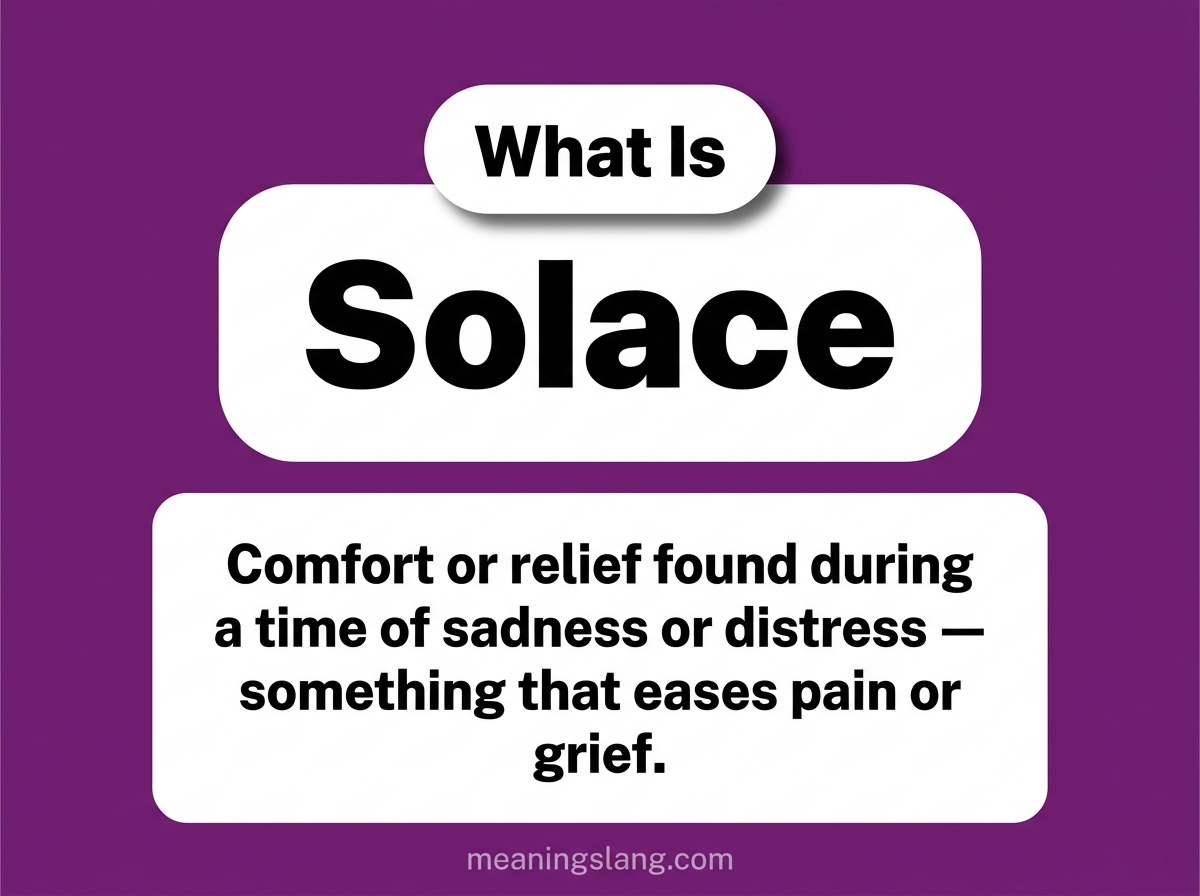
Quick Answer: Solace means comfort or relief during a time of sadness or distress. It’s the feeling of peace you get from something or someone when life feels hard.
Solace isn’t about happiness. It’s about finding calm when everything else feels chaotic. Think of it as emotional shelter.
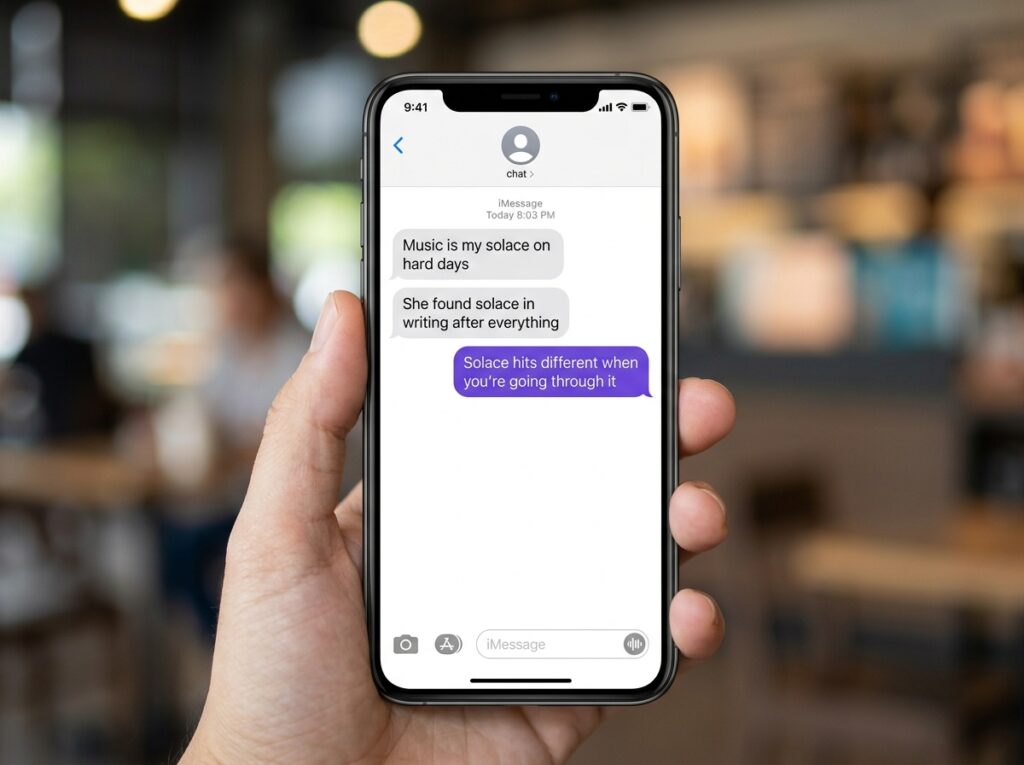
When someone says “music is my solace,” they mean music helps them cope. It eases their pain. It gives them a moment of peace. The word works for people, places, activities, and even memories.
The tone of solace is always soft and sincere. Nobody uses it sarcastically. It’s too emotional for jokes. When you see it, the person usually means it deeply.
Context matters, but the core meaning stays the same. “I found solace in her words” means her words brought comfort. “This place is my solace” means this place feels safe and healing.
The word often shows up in emotional posts. Someone might caption a sunset photo with “solace.” They’re not just sharing a picture. They’re sharing a feeling of peace they found in that moment.
[DEFINITION GRAPHIC HERE — term on left, arrow, plain definition on right, white card background]
Origin and History of “Solace”
Solace comes from the Latin word “solacium,” meaning comfort or consolation. It entered English through Old French around the 13th century. So this word has been around for over 700 years.
For most of its history, solace appeared in poetry, religious texts, and formal writing. It described spiritual comfort or the easing of grief. Think funeral speeches and hymns.
The word never really changed meaning. It just moved into new spaces. Today, you’ll find it in song lyrics, Instagram captions, and mental health conversations.
Artists and musicians brought solace into modern culture. Bands name songs after it. Poets still lean on it. The word feels timeless because grief and comfort are timeless experiences.
Gen Z and millennials use it when they want to express something deeper than “this makes me feel better.” The word carries history, and that history adds weight to whatever they’re describing.
How “Solace” Is Used on Different Platforms
TikTok
On TikTok, solace appears in emotional content. Think montages of healing journeys, nature videos, or tributes to loved ones. Captions like “finding solace in small moments” are common. The word matches the platform’s love for deep, aesthetic content.
Example: “This song has been my solace lately 🖤”
Instagram captions use solace to add emotional depth to photos. Sunsets, quiet mornings, and meaningful places all get paired with this word. DMs might include it when someone thanks a friend for support.
Example: “You’ve always been my solace. Thank you.”
Twitter/X
On Twitter, solace shows up in reflective posts. People share what brings them peace during hard times. It’s common in threads about mental health or grief.
Example: “Books are my solace when everything else feels too loud.”
Discord/Gaming Chats
Less common here, but gamers might describe a favorite game as their solace. It shows up when conversations turn personal.
Example: “This game is genuinely my solace after work.”
Subreddits about mental health, grief, and relationships use solace often. People describe what helps them cope. The tone is sincere and supportive.
Example: “I’ve found so much solace in this community.”
| Platform | Common Use | Tone | Example |
|---|---|---|---|
| TikTok | Emotional captions | Soft, aesthetic | “finding solace in the rain” |
| Photo captions, DMs | Sincere, deep | “you are my solace” | |
| Twitter/X | Reflective posts | Thoughtful | “music is my solace” |
| Discord | Personal chats | Genuine | “gaming is my solace rn” |
| Support threads | Warm, honest | “I found solace here” |
Solace in Texting vs. Real Life
In texts, solace feels natural. You might type “this show is my solace” without thinking twice. It reads as thoughtful and emotionally aware.
Out loud, it sounds more formal. Most people don’t say solace in casual conversation. It’s not weird, just rare. You’re more likely to hear “that helps me feel better” than “that’s my solace.”
The meaning stays identical either way. But texting gives the word more room to breathe. Written solace feels poetic. Spoken solace might sound like you’re reading from a book.
If someone says it out loud, they probably mean it deeply. The spoken version carries extra weight because it’s uncommon.
Examples of “Solace” in Sentences
GROUP 1 — Friendly/Casual
“Long walks are my solace when I’m stressed.”
“I find solace in cooking dinner every night.”
“Her texts always bring me solace after rough days.”
GROUP 2 — Romantic/Emotional
“You’re my solace in all of this chaos.”
“I find solace just being near you.”
GROUP 3 — Reflective/Thoughtful
“There’s a strange solace in knowing others feel this too.”
“I took solace in the fact that I tried my best.”
GROUP 4 — Online/Caption Use
“solace 🌙”
“finding solace in the little things lately”
“this album has been my solace all month”
[EXAMPLE CHAT SCREENSHOT MOCKUP — fake phone chat bubbles, iMessage or WhatsApp style]
Variations and Related Slang
Solace doesn’t have spelling variations or abbreviations. People write it correctly because the word carries emotional weight. Misspelling it would feel off.
But several related words capture similar feelings. Poignant describes something deeply moving, often bittersweet. It pairs well with solace in emotional captions.
“Comfort” is the everyday version. It’s simpler and less poetic. “Refuge” describes a safe place, similar to solace but more physical. “Peace” overlaps but focuses on calm rather than relief from pain.
Surreal sometimes appears alongside solace when describing dreamlike comfort. And if someone shares something with you directly, they might say NGL, this has been my solace — combining casual honesty with emotional depth.
| Term | Meaning | Similar/Different? |
|---|---|---|
| Solace | Comfort during distress | — |
| Comfort | General feeling of ease | Simpler, less poetic |
| Refuge | Safe place or shelter | More physical |
| Peace | Calm state of mind | Less about pain relief |
| Consolation | Something that eases disappointment | Very similar tone |
Is “Solace” Safe for Kids?
Yes, completely safe. Solace has no inappropriate meanings. It’s a vocabulary word that teachers would probably appreciate seeing.
The word appears in literature, poetry, and emotional conversations. Nothing about it is offensive, edgy, or hidden. Kids using this word show emotional awareness and strong vocabulary.
No school or teacher would flag this term. In fact, it might show up on vocabulary lists or in assigned reading. It’s a classic English word.
Parents have nothing to worry about here. If your child uses solace, they’re expressing something meaningful. It’s a sign they understand emotional complexity. Consider it a good thing.
[PARENT SAFETY ICON — shield/safety graphic, 300x200px, “Parent Guide” label]
When to Use (and Avoid) “Solace”
USE IT WHEN:
- Describing what helps you through hard times
- Writing emotional captions or messages
- Thanking someone who supported you
- Expressing deep comfort from something or someone
AVOID IT WHEN:
- The situation is casual or joking
- You’re texting quickly without emotional context
- The person might not know the word
- You want to sound casual, not poetic
Conclusion
Solace means comfort during difficult times. It’s the emotional relief you find in people, places, music, or moments that help you cope.
This word matters because it names something we all experience. Everyone needs solace sometimes. Having the word for it helps us share those feelings with others.
Language like this connects us. When you say something is your solace, people understand the depth behind it. It’s more than comfort — it’s emotional survival.
Next time you want to express what truly helps you through, you’ll have the right word. And if you want to explore more meaningful terms, check out what based means for another word that carries cultural weight.
FAQ
What does solace mean in simple words?
Solace means comfort or relief when you’re sad or going through something hard. It’s the feeling of peace you get from something that helps you cope during tough times.
Is solace a positive word?
Yes, solace is positive. It describes something helpful and healing. The word focuses on finding comfort, peace, or relief during difficult moments in life.
Can you use solace in everyday texting?
You can, but it sounds more poetic than casual. Use it when you want to express something meaningful. It works best in emotional conversations, not quick everyday chats.
What’s the difference between solace and comfort?
Both mean feeling better, but solace is deeper. Comfort is general ease. Solace specifically means finding relief during pain or distress. It carries more emotional weight.
Why do people use solace in captions?
People use solace in captions because it sounds meaningful and poetic. It adds emotional depth to photos or posts. The word shows vulnerability and connects with others who feel similarly.