Someone just replied to your text with “cap 🧢” and nothing else. You stare at your phone. What did you even say wrong?
Or maybe you’re scrolling TikTok. A creator finishes their story and adds “no cap” at the end. The comments are full of 🧢 emojis. Everyone seems to understand something you don’t.
This tiny three-letter word shows up everywhere now. Group chats. Twitter threads. YouTube comments. Instagram captions. It feels like half of Gen Z communication runs on “cap” and “no cap.”
Here’s the thing. It’s not actually complicated. Once you understand what cap means, you’ll hear it differently. You’ll catch the tone. You’ll know when someone’s calling out a lie versus just being dramatic.
The word comes from a real place with real history. It’s not random internet noise. And whether you want to use it yourself or just stop feeling lost, this breakdown covers everything. The meaning shifts depending on platform, tone, and context. Similar to how SMH expresses disappointment without words, cap packs a lot into one syllable.
Let’s break down exactly what cap means and how people actually use it.
What Does Cap Mean?
QUICK ANSWER:
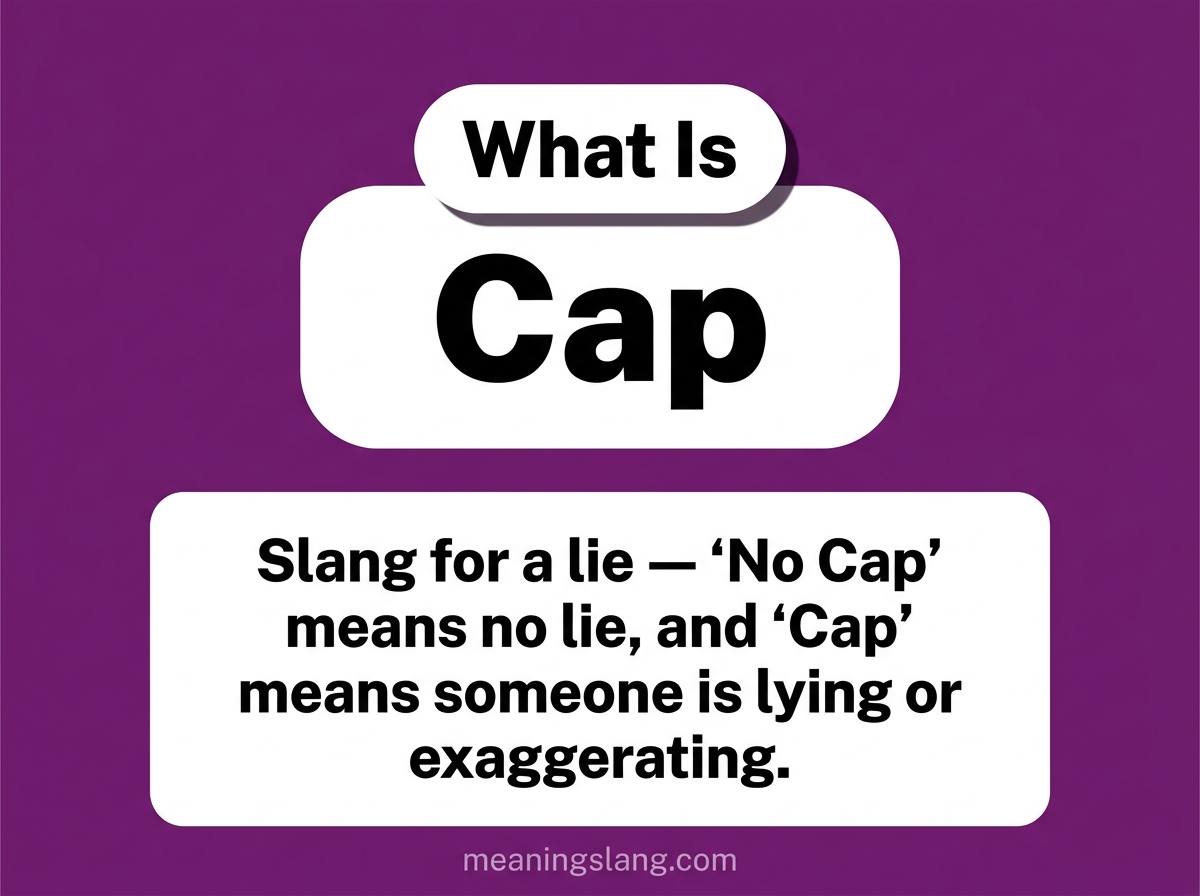
Cap means a lie or something fake. When someone says “that’s cap,” they’re saying you’re lying. “No cap” means “no lie” — the person is being completely serious and honest.
Now let’s go deeper.
Cap is slang for lying, exaggerating, or faking something. If you tell your friend you ran a six-minute mile and they respond “cap,” they don’t believe you. They think you’re making it up.
The 🧢 emoji often replaces the word entirely. Posting just a blue cap emoji under someone’s post means you’re calling them out. No words needed.
The emotional tone depends on context. Sometimes it’s playful teasing between friends. Other times it’s a serious accusation. “You said you’d be here at 8. Cap.” That’s calling out a broken promise.
No cap flips it around. It means “I’m being 100% honest right now.” Someone might say “that movie was incredible, no cap” to emphasize they genuinely mean it. It adds weight to a statement. Think of it like saying “seriously” or “for real.”
The vibe also shifts based on who’s speaking. Among close friends, cap is usually lighthearted. In online arguments, it can feel more aggressive. A stranger commenting “cap” on your post hits different than your best friend texting it after you say you’re not hungry.
Origin and History of “Cap”
Cap didn’t start on TikTok. It comes from African American Vernacular English (AAVE) and has been around for decades.
The term traces back to Black communities, likely as far back as the early 1900s. “Capping” originally meant bragging or showing off in a way that wasn’t genuine. Over time, it evolved into calling out lies directly.
Hip-hop brought it mainstream. Rappers used “no cap” throughout the 2010s. Future and Young Thug released a track called “No Cap” in 2017. That song pushed the phrase into wider youth culture.
By 2018 and 2019, cap exploded on social media. TikTok creators started using it constantly. The 🧢 emoji became a visual shorthand. Suddenly, everyone from high schoolers to Twitter users adopted it.
The meaning stayed consistent through this journey. Cap has always meant fake or dishonest. What changed was who used it and where. Now it’s one of the most recognized slang terms online, though its roots remain in Black American culture and expression.
How “Cap” Is Used on Different Platforms
TikTok
Cap dominates TikTok comments. Creators share stories, and viewers flood the comments with 🧢 if something sounds exaggerated. Storytime videos especially get hit with “that’s cap” responses. Creators also use “no cap” to signal they’re being genuine before sharing something wild but true.
Example: “I met my boyfriend because he accidentally sent me a DM meant for someone else, no cap.”
Instagram (DMs, Stories, captions)
On Instagram, cap shows up in captions for emphasis. Someone posts a photo looking great and writes “woke up like this, no cap.” In DMs, friends might call each other out casually. Story replies often include the 🧢 emoji as a quick reaction.
Example: “You said you were staying in tonight 🧢”
Twitter/X
Twitter uses cap for everything from political takes to celebrity drama. Quote tweets often just say “cap” to dispute a claim. It’s punchy, direct, and works perfectly for the platform’s fast-paced vibe.
Example: “This take is absolute cap.”
Snapchat
In Snapchat streaks and group chats, cap stays casual. Friends tease each other constantly. Someone says they’re going to sleep and then posts a story at a party? That’s getting called cap immediately.
Example: “You’re not tired, stop cappin 😂”
Discord/Gaming chats
Gamers use cap when someone brags about stats or plays. If you claim you clutched a 1v5, your squad might respond “cap until proven.” It’s playful trash talk that keeps lobbies entertaining.
Example: “I hit diamond solo queue.” “Hard cap bro.”
Reddit threads use cap less frequently but it appears in casual subreddits. AITA posts and relationship advice threads sometimes get “this is cap” responses when stories sound too dramatic or convenient.
| Platform | Common Use | Tone | Example |
|---|---|---|---|
| TikTok | Calling out fake stories | Playful to skeptical | “no cap this actually happened” |
| Captions, DM reactions | Casual, teasing | “woke up like this no cap” | |
| Twitter/X | Disputes, quote tweets | Direct, sometimes harsh | “cap” as a full reply |
| Snapchat | Friend group banter | Light, funny | “you’re cappin rn 😂” |
| Discord | Gaming brags | Competitive trash talk | “cap until you show stats” |
Cap in Texting vs. Real Life
People say cap out loud all the time. Unlike some slang that feels weird when spoken, cap sounds natural in conversation.
“That’s cap” rolls off the tongue easily. “No cap” works as verbal emphasis before a serious point. You’ll hear it in schools, at parties, and anywhere Gen Z or millennials gather.
The delivery matters when speaking. Written cap is quick and punchy. Spoken cap often comes with tone — a drawn-out “caaaaap” sounds more dramatic than a flat “cap.”
One difference: the 🧢 emoji only works in text. You can’t really communicate that visually in person. So spoken cap relies more on tone and context. The meaning stays the same, but the vibe shifts slightly.
Examples of “Cap” in Sentences
GROUP 1 — Friendly/Casual
“You finished that whole pizza? Cap.”
“No cap, that was the best concert I’ve ever been to.”
“She said she’s not coming to the party anymore. That’s cap, she always says that.”
GROUP 2 — Romantic/Flirty
“You’re the prettiest person here, no cap.”
“When you said you weren’t into me at first, was that cap?”
GROUP 3 — Sarcastic/Humorous
“I’m going to start going to the gym every day. — Cap. You said that last month.”
“This is the last slice I’m eating. — The biggest cap of the night.”
GROUP 4 — Online/Caption Use
“Just got promoted 🎉 hard work pays off no cap”
“Y’all really believe this story? 🧢🧢🧢”
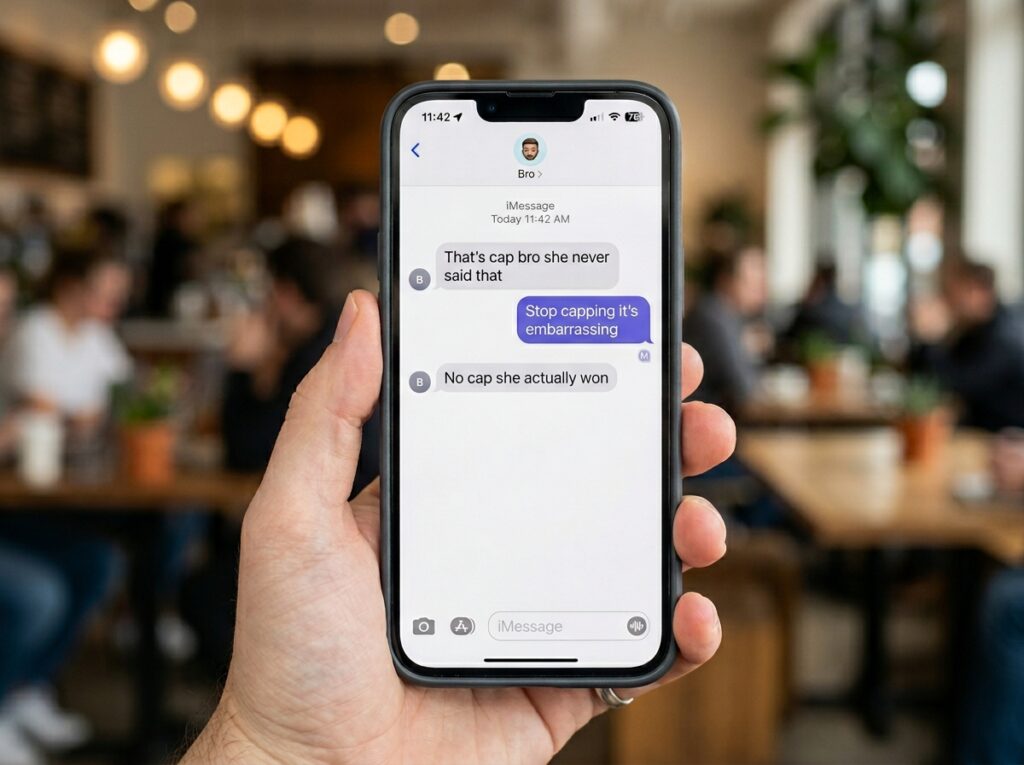
[EXAMPLE CHAT SCREENSHOT MOCKUP — fake phone chat bubbles, iMessage or WhatsApp style]
Variations and Related Slang
Spelling variations:
- Cap (standard)
- Capping (verb form: “you’re capping”)
- Capped (past tense: “he capped so hard”)
- No cap (honesty emphasis)
- 🧢 (emoji replacement)
Some people write “kap” but that’s rare and mostly stylistic.
Related slang terms:
If you’re learning cap, you’ll probably encounter based too. Based means being unapologetically yourself — kind of the opposite energy of capping. The slang term sus also connects here. Something sus makes you suspicious, which might lead you to call it cap.
NGL pairs with no cap sometimes. “NGL, no cap, that was amazing” stacks two honesty markers together for extra emphasis. And if something’s mid, you might accuse someone of capping if they claim it’s great.
| Term | Meaning | Similar/Different? |
|---|---|---|
| Cap | A lie or exaggeration | — |
| No cap | For real, honestly | Opposite meaning |
| Sus | Suspicious, sketchy | Related (both doubt something) |
| Based | Authentic, unapologetic | Different (based = genuine) |
| NGL | Not gonna lie | Similar (both signal honesty) |
| Mid | Average, mediocre | Different topic |
Is “Cap” Safe for Kids?
Direct answer: Yes, cap is generally safe for kids.
The word itself has no profanity or inappropriate meaning. It simply means lying or being honest. Kids use it constantly in schools, gaming, and texting friends.
One potential issue: calling someone a liar can still cause conflict. If your child repeatedly tells classmates “that’s cap,” it might come across as rude or dismissive. The word isn’t inherently mean, but tone matters.
Teachers probably won’t flag cap as inappropriate language. It’s not offensive. However, some adults might not understand it and ask questions.
For parents: If your kid uses cap, don’t worry. It’s just their generation’s way of saying “you’re lying” or “I’m serious.” You can ask them to explain it — most kids enjoy teaching parents slang. Just be aware that overusing any call-out phrase can affect friendships.
[PARENT SAFETY ICON — shield/safety graphic, 300x200px, “Parent Guide” label]
When to Use (and Avoid) “Cap”
USE IT WHEN:
- You’re joking around with friends who know the term
- You want to emphasize you’re being completely honest (no cap)
- Someone shares a story that sounds exaggerated and you’re teasing them
- You’re posting casually on social media
AVOID IT WHEN:
- You’re in professional settings (work emails, job interviews)
- You’re speaking with older adults who might not understand
- The accusation of lying could genuinely hurt someone
- You’re using it to seriously call someone a liar in a conflict
Conclusion
Cap means lying. No cap means you’re being honest. That’s really the whole thing.
This slang connects people through shared language. When you say “no cap” and someone nods, there’s an instant understanding. It’s a shortcut that signals you’re in on the same culture, the same moment.
Language keeps evolving. Terms like cap show how communities create their own ways of communicating truth and trust. Whether you use it yourself or just want to understand your kids’ texts, knowing cap helps you stay connected.
Slang carries culture. And understanding it — like knowing what ISTG means when someone’s frustrated — keeps conversations flowing.
FAQ
What does cap mean when someone texts it?
When someone texts “cap,” they’re saying you’re lying or exaggerating. It’s a quick way to express disbelief. The 🧢 emoji means the same thing. If someone sends just the cap emoji, they think your statement isn’t true.
Is saying “no cap” the same as saying “seriously”?
Yes, basically. No cap emphasizes that you’re being completely honest. It works like “for real” or “I swear.” People add it when they want others to know they’re not joking or exaggerating about something.
Where did the slang term cap come from?
Cap originated in African American Vernacular English (AAVE) decades ago. It gained mainstream popularity through hip-hop music in the 2010s. Artists like Future and Young Thug helped spread it before TikTok made it universal among Gen Z.
Can I use cap in professional settings?
Generally, no. Cap is casual slang meant for friends and social media. Using it in work emails or formal conversations might seem unprofessional or confusing to people unfamiliar with it. Save it for texts and casual chats.
Why do people use the 🧢 emoji instead of typing cap?
The blue cap emoji is faster and more visual. It became shorthand for calling something fake or false. In comment sections especially, spamming 🧢 is quicker than typing and creates a stronger visual impact when many people do it.