Your friend texts back one word: “sus.” That’s it. No explanation. No emoji. Just three letters staring at you.
You scroll back through the conversation. What did you say? Did you mess up somehow? Or are they just joking around?
This tiny word shows up everywhere now. Gaming lobbies. TikTok comments. Group chats with your cousins. Even your coworker dropped it in a Slack message last week.
Sus feels like it should be obvious. It sounds like it means something sketchy. But context matters with slang. Sometimes sus is playful. Sometimes it’s a real accusation. And sometimes people use it the way older generations might say “that’s weird” — similar to how people drop SMH meaning disappointment without actually shaking their heads.
The word exploded thanks to a viral video game. But it existed before that. And it’s evolved since then.
You’re about to understand exactly what sus means, where it came from, and how to use it without sounding like you’re trying too hard.
What Does Sus Mean?
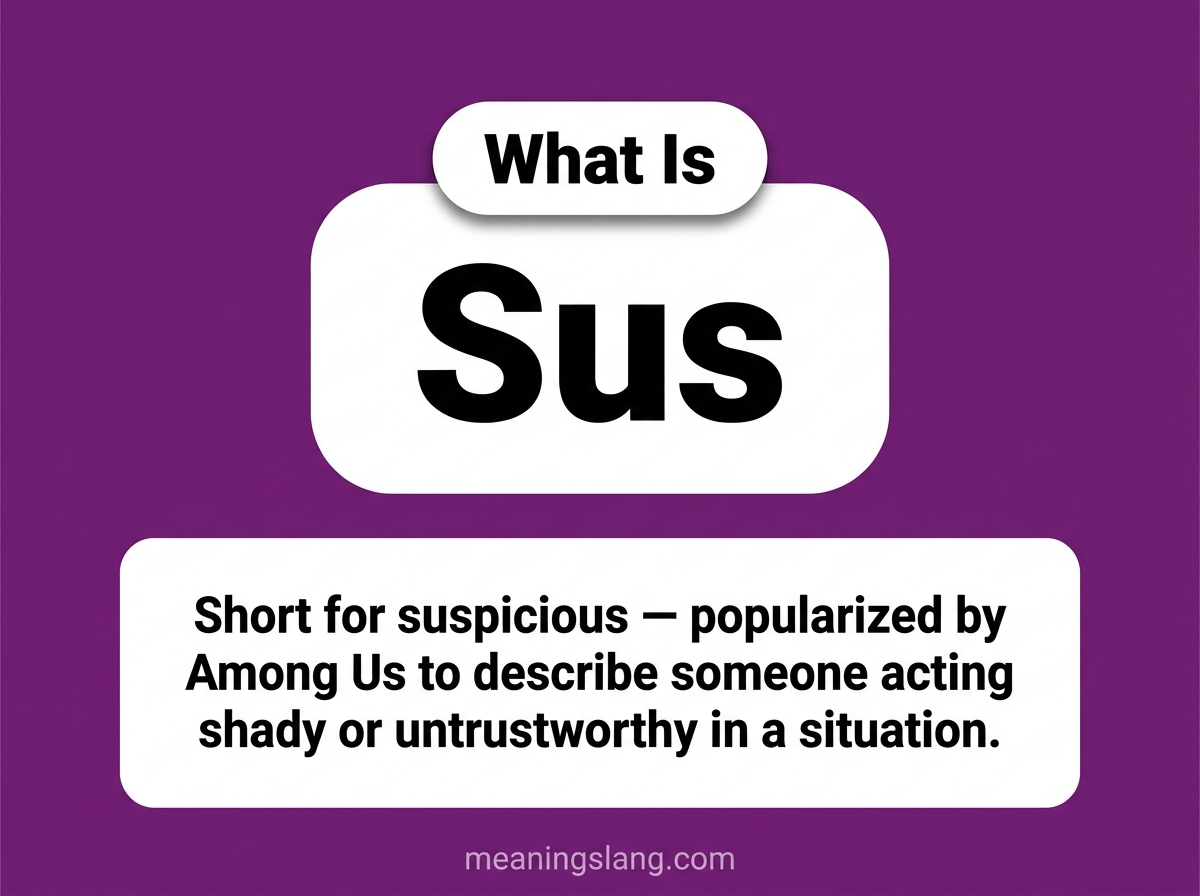
QUICK ANSWER: Sus means suspicious or suspect. When someone calls you sus, they think you’re acting shady, lying, or hiding something. It can be serious or totally playful — context tells you which.
The word works like a shorthand for “I don’t trust what you just did.” Someone cancels plans last minute? Sus. Your brother says he didn’t eat your leftovers but won’t make eye contact? Very sus.
Sus carries a specific emotional tone. It’s accusatory but often lighthearted. Think of it as calling someone out without making a big deal of it.
The meaning shifts depending on who says it. Friends joking around use sus constantly. “You like pineapple on pizza? That’s sus.” It’s teasing. But in gaming or online arguments, sus can be a genuine accusation. “This account is sus — it only has three followers and no posts.”
You might hear “acting sus” or “being sus” in the same sentence. Both mean the same thing. “Why are you being so sus about your phone?” translates to “Why are you acting suspicious about your phone?”
The word fits nearly anywhere “suspicious” would. It’s just faster and more casual. Most people under 30 use it without thinking twice.
Origin and History of “Sus”
Sus didn’t start with Among Us. But that game made it famous worldwide.
The word existed as slang since at least the 1930s. British slang used “sus” as shorthand for suspect or suspicion. Police would “sus out” a criminal. Regular people shortened suspicious to sus in casual speech.
The word lived quietly in certain communities for decades. It appeared in hip-hop lyrics. It showed up in British crime dramas. But most people never heard it.
Then Among Us happened.
The 2018 multiplayer game became massive in 2020. Players hunt for imposters pretending to be crewmates. The whole game revolves around figuring out who’s lying. “Red is sus” became the most typed phrase in gaming.
Streamers broadcast games to millions of viewers. Memes spread across every platform. Suddenly everyone knew what sus meant. Kids who never played the game started using it.
The pandemic helped. People stuck at home played Among Us with friends. The word leaked into everyday vocabulary. By 2021, sus appeared in text messages from people who had no idea where it came from.
How “Sus” Is Used on Different Platforms
TikTok
Sus fills comment sections. Someone posts a “story time” video that sounds fake? Comments say “this is sus.” Creators use it in captions to build intrigue. “My roommate has been acting sus lately… part 2 coming.”
Instagram (DMs, Stories, captions)
People drop sus in Stories as reactions. A screenshot of a weird text? “Um, sus.” In DMs, it works as gentle teasing. Friends might call your new follow “sus” if they think you’re crushing on someone. It’s lighter here than other platforms.
Twitter/X
Sus gets used for actual accusations. Someone posts contradicting screenshots? “This is mad sus.” Political accounts call out suspicious behavior. The tone runs more serious on Twitter. Stakes feel higher.
Snapchat
Quick replies use sus constantly. A blurry photo? “Why’s this sus?” Someone opens your snap but doesn’t reply? You might send “hello??? sus.” It’s casual and throwaway.
Discord/Gaming Chats
This is sus’s natural home. Gamers use it in lobbies, during matches, and in voice chat. “That kill was sus” or “Your aim is sus” are common. The Among Us connection stays strongest here.
Users call out suspicious posts or accounts. “This review seems sus — brand new account.” It functions as community fact-checking. Redditors love investigating anything labeled sus.
| Platform | Common Use | Tone | Example |
|---|---|---|---|
| TikTok | Comments, captions | Playful/dramatic | “This story is lowkey sus” |
| DMs, Stories | Light teasing | “Your explore page is sus 👀” | |
| Twitter/X | Callouts, accusations | Serious/sharp | “This account pushing that narrative is sus” |
| Snapchat | Quick reactions | Casual | “Bro that’s sus wdym” |
| Discord | Gaming accusations | Competitive/joking | “That headshot was sus” |
| Account/post scrutiny | Investigative | “OP’s post history is sus” |
Sus in Texting vs. Real Life
People say sus out loud all the time. Unlike some slang that sounds weird spoken, sus works in conversation.
“That’s sus” rolls off the tongue easily. You’ll hear it in classrooms, at parties, and during family dinners. Younger people say it without thinking. Older folks might raise an eyebrow.
Texting gives sus more flexibility. You can extend it for emphasis. “Susssss” means extra suspicious. You can pair it with emojis. 🤨 and sus go together constantly.
Spoken sus usually sounds joking. Typed sus can read more serious. A text saying just “sus” with no emoji might actually mean someone’s bothered. Context clues matter more in writing.
One difference: spoken sus often follows “that’s” or “you’re.” Written sus can stand alone. Someone might just comment “Sus” under a post. That reads fine. Saying just “sus” out loud sounds incomplete.
Examples of “Sus” in Sentences
GROUP 1 — Friendly/Casual
“Wait, you don’t like coffee? That’s kinda sus.”
“My phone died right when you called. I know that sounds sus but I swear.”
“He said he was sleeping but I saw him online. Sus.”
GROUP 2 — Romantic/Flirty
“You’re being real sus about who you’re texting right now 👀”
“Why’d you clear your search history before handing me your phone? Sus behavior.”
GROUP 3 — Sarcastic/Humorous
“You voluntarily woke up at 6am? That’s the most sus thing I’ve ever heard.”
“My cat keeps staring at the corner. He’s acting sus. Either ghosts or he’s planning something.”
GROUP 4 — Online/Caption Use
“This dating profile has one photo and no bio. Sus 🚩”
“POV: you’re trying to explain why your excuse isn’t sus”
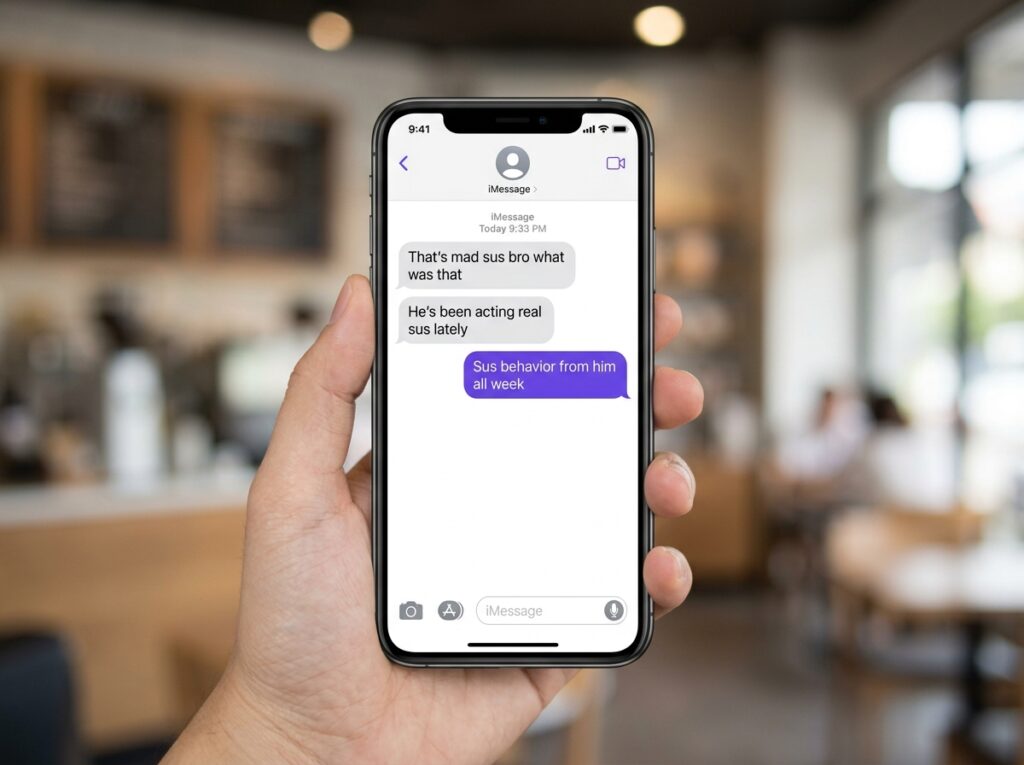
[EXAMPLE CHAT SCREENSHOT MOCKUP — fake phone chat bubbles, iMessage or WhatsApp style]
Variations and Related Slang
Sus stays pretty consistent in spelling. You’ll see “suss” sometimes, especially from British users. “Sussy” adds a playful twist. “Sussy baka” combines sus with the Japanese word for fool — this version exploded as a meme and became its own inside joke.
Some people write “sussed” as past tense. “I sussed him out” means “I figured out what he was really up to.”
Related slang fills similar roles. When someone’s capping, they’re lying — which makes them sus. Calling something mid means it’s underwhelming, not suspicious. Being down bad describes desperate behavior that might look sus to others.
| Term | Meaning | Similar/Different? |
|---|---|---|
| Sus | Suspicious, shady | — |
| Cap | Lying, fake | Similar — both call out dishonesty |
| Sketch | Sketchy, questionable | Similar — older version of sus |
| Shady | Untrustworthy behavior | Similar — more traditional slang |
| Sussy baka | Playful sus + foolish | Related — meme version of sus |
| Fishy | Something seems off | Similar — less common now |
Is “Sus” Safe for Kids?
Yes, sus is safe. It carries no inappropriate meaning on its own.
The word simply means suspicious. Kids use it constantly in casual conversation. Teachers hear it in classrooms. Parents see it in texts. Nothing about the word itself is offensive.
Context can change things slightly. Sometimes people use sus to question someone’s sexuality. This usage exists but isn’t the primary meaning. Most of the time, sus just means sketchy or untrustworthy.
Parents don’t need to worry about this word. It’s far tamer than most slang floating around. If your kid says something is sus, they’re just saying it seems off or weird.
Schools wouldn’t flag this term. It’s not profanity. It’s not aggressive. It’s the equivalent of calling something “fishy” — just updated for a new generation.
If you’re curious about slang with more edge, checking whether terms like zesty carry hidden meanings makes sense. But sus itself is genuinely harmless.
[PARENT SAFETY ICON — shield/safety graphic, 300x200px, “Parent Guide” label]
When to Use (and Avoid) “Sus”
USE IT WHEN:
- Joking with friends about something that seems off
- Reacting to a story that sounds exaggerated or fake
- Playfully calling out someone’s excuse
- Commenting on something weird online
AVOID IT WHEN:
- Making a serious accusation (use clearer language)
- Talking to people unfamiliar with current slang
- Writing professional emails or work messages
- The situation requires actual concern, not jokes
Conclusion
Sus means suspicious. That’s the core. Everything else — the gaming origins, the memes, the variations — just adds flavor.
Slang like this catches on because it’s efficient. One syllable replaces four. It’s punchy. It fits a text message perfectly. Language evolves this way constantly.
Understanding what sus means helps you read the room online. You won’t freeze when someone drops it in conversation. And honestly? Now that you know, you’ll probably start noticing it everywhere. Just like learning what based means suddenly makes half of Twitter make sense.
Sus isn’t going anywhere soon. Use it when it fits. Skip it when it doesn’t.
FAQ
What does sus mean when texting?
Sus means suspicious or suspect in texts. Someone’s calling out behavior that seems shady, dishonest, or weird. It’s usually playful teasing between friends rather than a serious accusation. The tone depends on context and your relationship with the person texting.
Is sus from Among Us?
Among Us popularized sus globally but didn’t create it. The word existed as British slang for decades before the game launched. The game’s 2020 viral success made sus mainstream. Now most people associate the word with that game even though it has older roots.
What does sussy baka mean?
Sussy baka combines sus with the Japanese word “baka” meaning fool or idiot. It started as a meme mixing Among Us culture with anime references. People use it sarcastically or to tease someone acting both suspicious and silly. It’s not meant as a real insult.
Can sus be offensive?
Sus itself isn’t offensive. It just means suspicious. However, some people use sus to question someone’s sexuality, which can be hurtful depending on intent and context. The vast majority of sus usage is harmless teasing about sketchy behavior, not identity-based commentary.
Why do people say sus instead of suspicious?
Sus is faster, catchier, and feels more casual than suspicious. Slang often shortens longer words for convenience. Among Us made sus trendy, and it stuck because it’s efficient. Saying or typing three letters beats typing ten, especially in fast-moving chats and comment sections.