Your coworker just called you their “Moneypenny” in a work email. You’re not sure if you should laugh, say thanks, or quietly report them to HR.
This term floats around offices, group chats, and even TikTok comments. It sounds fancy. Maybe a bit flirty? But what does it actually mean when someone uses it?
Here’s the thing. “Moneypenny” carries a specific energy. It’s not random. The name comes from a famous character. But today, people use it way beyond James Bond references.
Some use it as a compliment. Others use it sarcastically. The vibe shifts based on who’s saying it and where. You might hear it in a workplace, a relationship, or even in memes about NPCs who follow someone around.
Understanding this term helps you know if someone’s being sweet or slightly condescending. Context matters a lot here. Let’s break down exactly what “Moneypenny” means in 2025–2026 and when people actually use it.
What Does Moneypenny Mean?
QUICK ANSWER: “Moneypenny” refers to a loyal assistant or someone who handles everything behind the scenes. It comes from the James Bond character Miss Moneypenny. Today, people use it to describe a reliable helper—sometimes affectionately, sometimes sarcastically.
The term carries a mix of admiration and mild teasing. When someone calls you their Moneypenny, they’re saying you keep things running smoothly. You’re dependable, organized, and always there when needed.
But here’s where tone matters. In a loving relationship, calling someone “my Moneypenny” feels warm. It’s like saying “you’ve got my back.” Between friends, it often sounds playful and appreciative.
At work, though? It can feel a bit loaded. Calling a coworker Moneypenny might sound like you’re ranking them below you. Like they exist just to serve your needs. That’s why some people find it condescending.
The emotional tone really depends on who says it. A boss calling their assistant “Moneypenny” reads differently than a partner saying it. One feels hierarchical. The other feels intimate. You might see someone text “thanks Moneypenny 💕” after a friend reminds them about an appointment. That’s affectionate. But “where’s my Moneypenny when I need her?” in a work Slack? That’s pushing it.
Origin and History of “Moneypenny”
Miss Moneypenny first appeared in Ian Fleming’s James Bond novels in 1953. She worked as M’s secretary and shared flirty banter with Bond. She was smart, capable, and always professional.
In the films, she became iconic. Actresses like Lois Maxwell and Naomie Harris brought her to life. Moneypenny was the gatekeeper. She knew everything but never got the spotlight.
Over time, her name became shorthand for a certain type of person. Someone competent who works in support roles. Someone loyal but often overlooked. The term leaked into everyday language during the 1970s and 1980s.
By the 2000s, “Moneypenny” became casual slang. People used it to describe assistants, organized friends, or reliable partners. Gen Z picked it up more recently. Now it shows up in texts, captions, and TikToks—often with a knowing wink.
The meaning has stayed pretty stable. But the contexts keep expanding.
How “Moneypenny” Is Used on Different Platforms
TikTok
Creators use “Moneypenny” in skits about work culture or relationship dynamics. You’ll see videos captioned “POV: you’re everyone’s Moneypenny” showing someone juggling tasks. The tone is usually self-deprecating or ironic.
“Being the group’s Moneypenny is exhausting but someone’s gotta do it 😮💨”
On IG, it appears in Stories and captions. People tag friends as their “Moneypenny” when thanking them. Couples sometimes use it in anniversary posts. The soft launch meaning vibe applies here—subtle but intentional.
“She’s my Moneypenny, my ride or die, my everything 🤍”
Twitter/X
Here it’s more commentary. People tweet about being the “Moneypenny” at work—doing tons of invisible labor. Others joke about needing a Moneypenny in their life to handle chaos.
“I need a Moneypenny because I’m losing my mind keeping track of everything”
Discord/Gaming Chats
Gamers call the friend who organizes raids or remembers schedules “the Moneypenny.” It’s affectionate teasing. That person keeps the group functional.
Discussion threads use it when talking about workplace dynamics. Redditors debate whether calling someone “Moneypenny” is a compliment or lowkey disrespectful.
| Platform | Common Use | Tone | Example |
|---|---|---|---|
| TikTok | Skits about being the helper | Ironic, relatable | “POV: you’re the group Moneypenny” |
| Tagging loyal friends | Affectionate | “My forever Moneypenny 💕” | |
| Twitter/X | Commentary on labor | Frustrated, humorous | “Who else is the Moneypenny at work?” |
| Discord | Group organizer nickname | Playful teasing | “Thanks Moneypenny for setting this up” |
| Workplace discussions | Analytical, critical | “Is ‘Moneypenny’ a compliment or nah?” |
Moneypenny in Texting vs. Real Life
In texts, “Moneypenny” flows naturally. People drop it casually after a friend helps out. “Thanks Moneypenny” takes less effort than typing a longer message.
Out loud, it’s a bit different. Saying “you’re such a Moneypenny” feels theatrical. Most people only say it in person when joking around. It sounds too formal otherwise.
The meaning doesn’t really shift between typed and spoken. But speaking it adds dramatic flair. You’d probably hear it at parties with a playful tone. Or in offices where people reference Bond ironically.
Most Gen Z users keep it in text form.
Examples of “Moneypenny” in Sentences
GROUP 1 — Friendly/Casual
“You remembered my dentist appointment? Okay Moneypenny I see you 😂”
“She’s literally the Moneypenny of our friend group.”
“Thanks for handling all that, you’re the best Moneypenny ever.”
GROUP 2 — Romantic/Flirty
“Come be my Moneypenny and I’ll be your Bond 😏”
“He calls me his Moneypenny and honestly I kinda love it.”
GROUP 3 — Sarcastic/Humorous
“Oh sure, I’ll just be everyone’s Moneypenny while y’all do nothing.”
“Apparently being responsible makes me the office Moneypenny. Cool cool cool.”
GROUP 4 — Online/Caption Use
“That friend who handles everything >>> appreciation post for my Moneypenny”
“Feeling very Moneypenny today, organizing everyone’s chaos ✨”
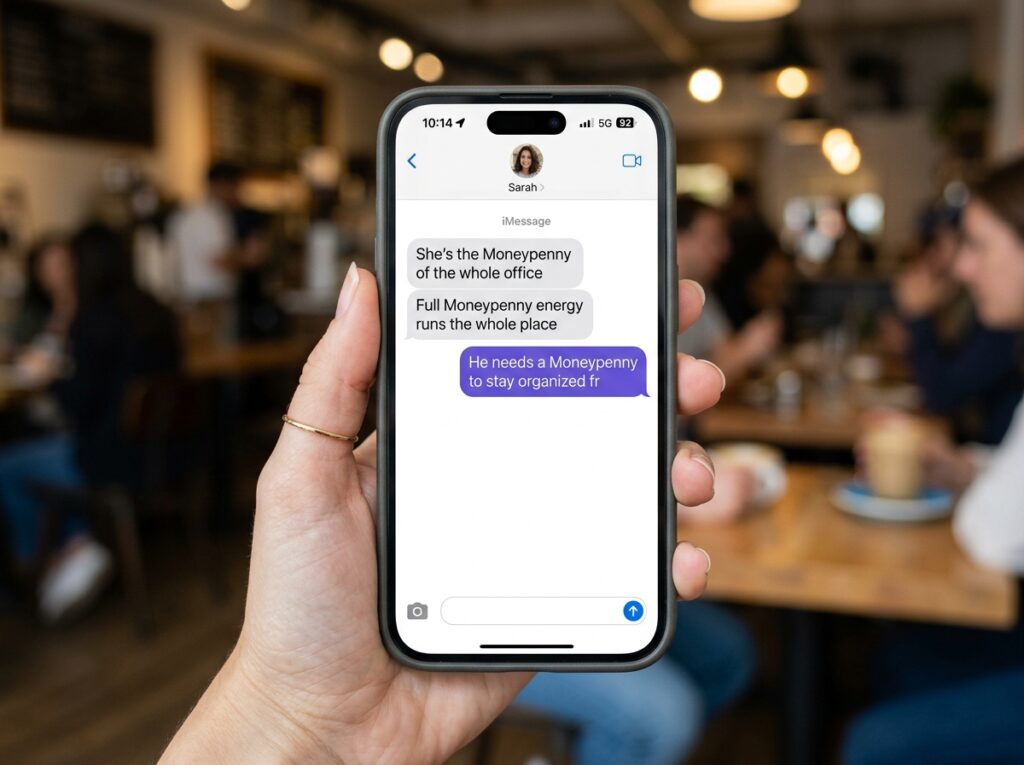
[EXAMPLE CHAT SCREENSHOT MOCKUP — fake phone chat bubbles, iMessage or WhatsApp style]
Variations and Related Slang
People don’t really spell “Moneypenny” differently. It’s always written the same way. Some shorten it to “MP” in texts but that’s rare.
Related slang captures similar vibes. If someone’s your Moneypenny, they might also be your pookie—that reliable comfort person. The terms overlap when describing someone loyal.
A “right hand” means the same thing—your go-to person. “Ride or die” adds more intensity. That person would literally stick by you through anything.
“Wingman” is similar but usually for dating contexts. And “work wife/husband” describes office relationships with Moneypenny energy.
| Term | Meaning | Similar/Different? |
|---|---|---|
| Moneypenny | Loyal helper, reliable assistant | — |
| Right hand | Trusted closest ally | Very similar, more neutral |
| Ride or die | Intensely loyal friend | Similar but more extreme |
| Work wife/husband | Close platonic office relationship | Similar vibe, workplace specific |
| Habibi | Term of endearment | Different—more romantic/cultural |
Is “Moneypenny” Safe for Kids?
Yes, this term is completely safe for kids. There’s nothing offensive about it.
The name comes from a movie character. Kids might not understand the reference but it won’t confuse or harm them. Teachers wouldn’t flag this word at all.
The only thing parents should know: in some contexts, “Moneypenny” can sound condescending. If an adult calls a child their “Moneypenny” often, check the dynamic. It should feel appreciative, not like they’re treating the kid as a servant.
Overall, this is one of the safest slang terms out there. No hidden meanings. No adult undertones. Just a cultural reference that’s entered everyday language.
[PARENT SAFETY ICON — shield/safety graphic, 300x200px, “Parent Guide” label]
When to Use (and Avoid) “Moneypenny”
USE IT WHEN:
- Thanking a friend who helped organize something
- Playfully complimenting a partner’s reliability
- Joking with close coworkers you trust
- Posting appreciation content on social media
AVOID IT WHEN:
- Addressing someone you have authority over at work
- The person hasn’t consented to the nickname
- You barely know the person
- The tone could sound dismissive or sexist
Conclusion
“Moneypenny” means a loyal, reliable person who handles things behind the scenes. It’s affectionate when used between equals. It’s tricky when power dynamics exist.
Slang like this shows how pop culture seeps into our daily language. A 1950s spy character now lives in your group chat. That’s pretty cool.
Next time someone calls you Moneypenny, you’ll know exactly what they mean. If you’re curious about other terms your friends are using, check out what “based” means to stay in the loop.
FAQ
What does it mean when someone calls you Moneypenny?
They’re saying you’re reliable, organized, and handle important things behind the scenes. It’s usually a compliment comparing you to the capable James Bond character. The tone can be affectionate or slightly teasing depending on your relationship.
Is calling someone Moneypenny flirty?
It can be. The original character had flirty banter with James Bond. Couples sometimes use it romantically. But between friends or coworkers, it’s more about appreciating reliability than romance.
Is “Moneypenny” offensive to say at work?
It depends on context. Calling a peer your Moneypenny might feel fine. But a boss calling an assistant Moneypenny can sound condescending. Consider power dynamics before using it professionally.
Where does the term Moneypenny come from?
It comes from Miss Moneypenny, a character in Ian Fleming’s James Bond novels from 1953. She was M’s secretary and appeared in most Bond films. Her name became slang for a competent, loyal assistant.
Can guys be called Moneypenny?
Absolutely. While the original character was female, the term now applies to anyone who fits the “reliable helper” role. Gender doesn’t limit who gets called Moneypenny today.