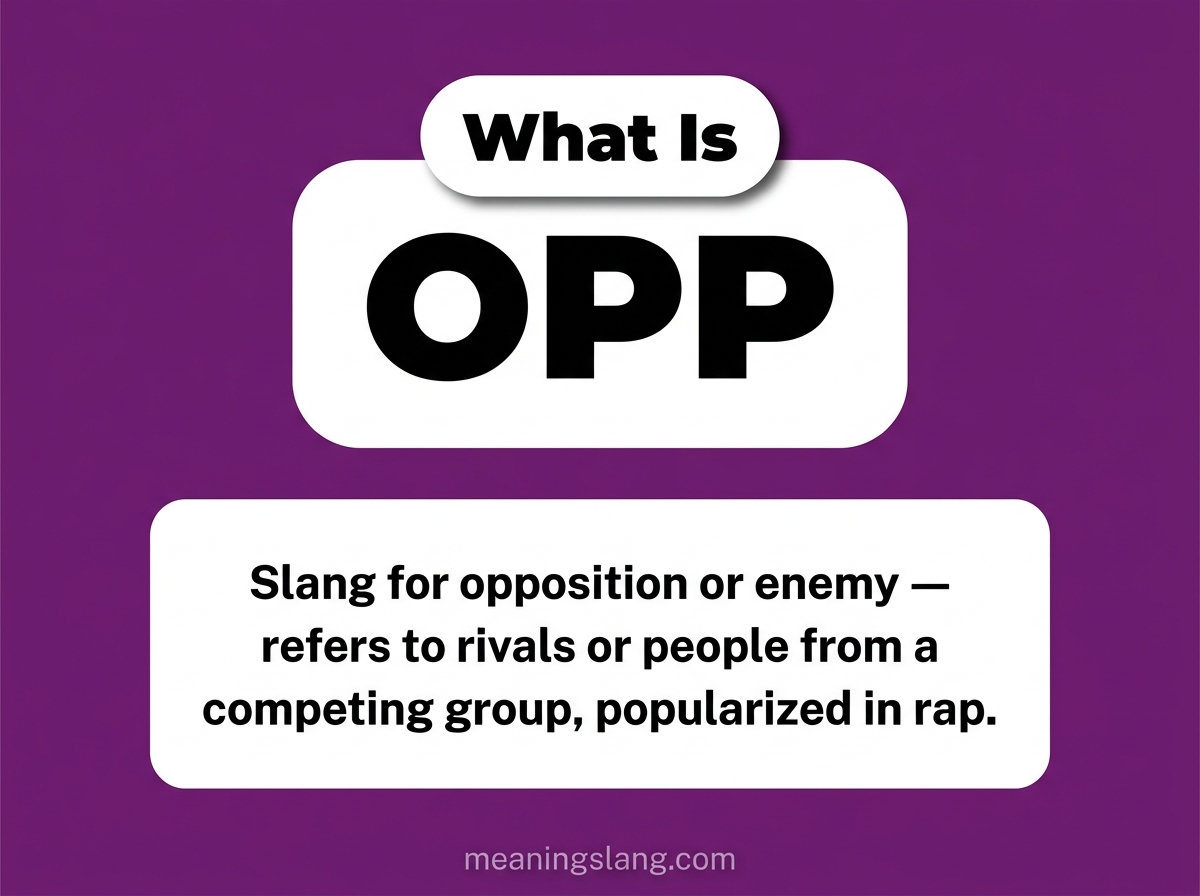
You’re scrolling through comments on a rap video. Someone drops “Watch out for the opps.” Three people reply with fire emojis. You have no clue what just happened.
Or maybe your friend texted you about someone being “OPP.” Now you’re wondering if they’re talking about enemies, cheating, or something else entirely.
Here’s the thing: OPP has multiple meanings. The one people use depends on context. In street slang, it’s about opposition. In 90s hip-hop, it’s about sneaking around with someone else’s partner. Both meanings are still alive today.
This word pops up everywhere. Rap lyrics. TikTok comments. Group chat drama. If you’ve been nodding along pretending to understand, you’re not alone. Most people mix up the meanings or miss the reference completely.
The confusion makes sense. OPP carries different weight depending on who says it and where. Understanding both meanings helps you catch what people actually mean—whether it’s a diss track or relationship drama. Similar to how NGL softens statements in texts, OPP adds a specific tone to conversations.
What Does OPP Mean?
QUICK ANSWER:
OPP most commonly means “opposition” or “enemy” in modern slang. It can also mean “other people’s property” — a reference to hooking up with someone who’s already taken. Which meaning applies depends entirely on context.
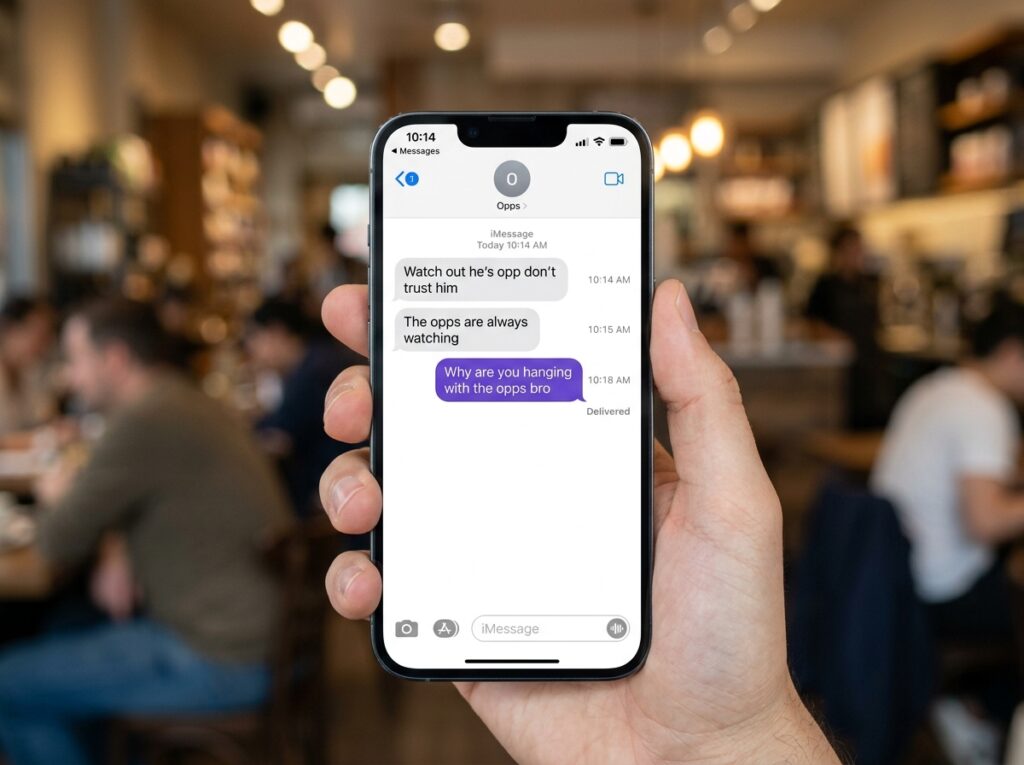
The first meaning dominates street slang and rap music. When someone talks about “the opps,” they mean rivals, enemies, or people working against them. This could be literal gang rivals or just people you don’t get along with. “My opps are watching” means your enemies are paying attention.
The tone here is serious. Sometimes threatening. Always confrontational.
The second meaning comes from the 1991 Naughty by Nature song “O.P.P.” In that context, it stands for “other people’s property” — specifically, someone else’s romantic partner. “He’s down with OPP” means he’s willing to mess around with someone who’s already in a relationship.
This version has a playful, mischievous tone. It’s cheeky rather than aggressive.
You’ll also see OPP used simply as shorthand for “opportunity” in some business or casual contexts. “Got a new opp at work” is straightforward and unrelated to either slang meaning.
The emotional tone shifts dramatically. Saying “the opps pulled up” carries weight and tension. Saying “she’s OPP” is gossip territory.
[DEFINITION GRAPHIC HERE — term on left, arrow, plain definition on right, white card background]
Origin and History of “OPP”
The “opposition” meaning grew from street culture and hip-hop in American cities. It started as a way to reference rival crews or gangs without naming them directly. Over time, it spread beyond its origins into mainstream rap and then everyday internet slang.
Drill music accelerated this. Chicago drill artists in the early 2010s used “opp” constantly. Chief Keef, Lil Durk, and others made the term a staple. From there, it traveled across the country and eventually online.
The “other people’s property” meaning has a clearer origin story. Naughty by Nature dropped “O.P.P.” in 1991. The song was a massive hit. It reached number six on the Billboard Hot 100 and became a cultural touchstone.
The hook was catchy and the meaning was scandalous for radio. Everyone knew what they were really singing about. That song burned the acronym into pop culture memory.
Today, younger people mostly know the “opposition” meaning. But bring up the song around anyone over 35, and they’ll probably start singing the hook.
How “OPP” Is Used on Different Platforms
TikTok
OPP shows up in rap-related content and drama videos. Creators use it when telling stories about conflict or rivalry. It fits the fast-paced, emotionally charged style of the platform.
“My opps tried to slide into my girl’s DMs 💀”
On Instagram, you’ll catch OPP in captions, comments, and DMs. It often appears in posts about loyalty, betrayal, or staying vigilant. Stories might feature it with tough-guy energy.
“Can’t trust nobody. Opps everywhere.”
Twitter/X
Twitter users drop OPP in hot takes, reactions to rap beefs, and commentary on drama. The abbreviated style of the platform makes slang like this thrive. You might see it when people react to celebrity feuds, similar to how they’d use SMH for disappointment.
“The opps really thought they did something 😂”
Snapchat
Snapchat usage mirrors texting. OPP pops up in casual conversations between friends. Sometimes it’s serious. Sometimes it’s exaggerated for humor.
“Just saw my opp at the mall lmao”
Discord/Gaming Chats
Gamers use OPP to reference enemy players or rival teams. The meaning stays the same — opposition — but the stakes are virtual. Trash talk often includes it.
“The opps are camping our spawn again.”
Reddit discussions about rap music, street culture, or slang often include OPP. You’ll find threads explaining both meanings and debating which one applies in specific contexts.
| Platform | Common Use | Tone | Example |
|---|---|---|---|
| TikTok | Conflict stories, rap content | Dramatic, intense | “The opps caught me lacking” |
| Captions about loyalty/enemies | Tough, confident | “No opps in my circle” | |
| Twitter/X | Reactions, beef commentary | Quick, reactionary | “His opps are winning rn” |
| Snapchat | Casual conflict references | Playful to serious | “My opp just walked in” |
| Discord | Enemy players/teams | Competitive, joking | “Opps are sweating hard tonight” |
OPP in Texting vs. Real Life
In texts, OPP flows naturally. People type it casually without a second thought. “The opps” reads smooth in a message. It’s quick and adds attitude.
Out loud? It works too, but differently. Saying “opp” or “opps” is common in certain communities. Rappers say it constantly. People in urban areas use it in regular speech.
For people outside those circles, saying OPP aloud might feel forced. It can come across like you’re trying too hard. Typing it feels safer because text removes the performance element.
The Naughty by Nature meaning rarely gets spoken today. People mostly reference it by singing the hook, not by saying “she’s OPP” in conversation.
Examples of “OPP” in Sentences
GROUP 1 — Friendly/Casual
“My opps from high school still talk trash online.”
“Bro really called himself my opp over a video game.”
“Keep that same energy when the opps are around.”
GROUP 2 — Sarcastic/Humorous
“My cat is my biggest opp. She knocks everything off the counter.”
“Called my coworker an opp after she stole my parking spot 😂”
GROUP 3 — Serious/Confrontational
“The opps are real quiet after last night.”
“Can’t let my guard down. Opps never sleep.”
“Watch who you trust. Some friends become opps.”
GROUP 4 — Online/Caption Use
“No new friends, just new opps 🐍”
“Down bad but never down with OPP”
[EXAMPLE CHAT SCREENSHOT MOCKUP — fake phone chat bubbles, iMessage or WhatsApp style]
Variations and Related Slang
OPP stays fairly consistent in spelling. You might see “opp” (singular) or “opps” (plural). Some people capitalize it, others don’t. The meaning stays the same either way.
Related terms connect to the same themes of rivalry and conflict. Understanding these helps you navigate similar conversations.
Ops — Alternate spelling of opps. Exact same meaning.
Lacking — Being caught off guard or unprepared. Often used with opps: “Caught him lacking.”
Sliding — Going to confront or attack enemies. “We sliding on the opps.”
Pack — Sometimes refers to someone who was killed. Dark usage in drill music. This connects to what OP means in different online contexts.
Dissing — Publicly disrespecting someone. Often done to opps in songs.
| Term | Meaning | Similar/Different? |
|---|---|---|
| OPP | Opposition/enemy | — |
| Ops | Same as opps, alternate spelling | Identical meaning |
| Lacking | Caught unprepared | Used alongside OPP |
| Sliding | Going to confront enemies | Action toward opps |
| Pack | Reference to killed enemy | Darker extension |
Is “OPP” Safe for Kids?
Short answer: Context matters a lot here.
The word itself isn’t profanity. But its associations can be serious. In street and drill contexts, OPP connects to violence, gang activity, and real conflict. Kids might not understand those implications.
If your child uses OPP casually about school drama, that’s usually harmless. “My opp from math class” is typical teen exaggeration. They’re calling someone a rival, not threatening anyone.
However, if they’re deep into drill music culture and using OPP with related terms like “sliding” or “lacking,” pay attention. The language can normalize serious concepts.
The Naughty by Nature meaning involves infidelity. That’s a separate concern — more about relationship ethics than danger.
Teachers probably wouldn’t flag casual OPP usage. It’s too common in music and memes. But repeated use alongside violent imagery might raise questions.
Talk to your kids about context. Ask what they mean when they use it. Most of the time, it’s just slang they picked up from songs. Similar to learning what cap means, it’s usually harmless once you understand it.
[PARENT SAFETY ICON — shield/safety graphic, 300x200px, “Parent Guide” label]
When to Use (and Avoid) “OPP”
USE IT WHEN:
- Joking with friends about minor rivalries
- Commenting on rap music or drill culture content
- Playing games and referencing enemy teams
- Adding attitude to casual complaints about annoying people
AVOID IT WHEN:
- You don’t know the listener’s background with the term
- Professional or formal settings (work emails, school presentations)
- Talking to older adults who might only know the 90s meaning
- Situations where it could sound like an actual threat
Conclusion
OPP carries two main meanings: opposition (your enemies) and other people’s property (someone else’s partner). The first dominates modern usage, especially in rap and online culture. The second lives on as a nostalgic 90s reference.
Understanding slang like this helps you connect with how people actually talk. Language evolves through music, memes, and group chats. OPP has survived decades because it fills a need — a quick way to reference conflict or taboo situations.
Next time you hear someone mention “the opps,” you’ll catch the meaning instantly. And if someone randomly starts singing that Naughty by Nature hook, you’ll know exactly why. For more slang that pops up in your feed, check out what ISTG means — another term that adds intensity to messages.
FAQ
What does OPP mean in texting?
In texting, OPP usually means “opposition” or enemy. Someone might say “my opps” when referring to people they’re in conflict with. It’s casual shorthand for rivals, whether serious enemies or just people they find annoying.
Is OPP a bad word?
OPP isn’t profanity or a slur. However, it often appears in contexts involving conflict, rivalry, or infidelity. The word itself is neutral, but its associations can be serious depending on how someone uses it.
Where did OPP come from?
The “opposition” meaning grew from street and hip-hop culture. The “other people’s property” meaning comes from Naughty by Nature’s 1991 hit song “O.P.P.” Both meanings remain in use today.
What does “down with OPP” mean?
This phrase comes from the Naughty by Nature song. Being “down with OPP” means you’re willing to pursue someone who’s already in a relationship. It’s about being open to hooking up with someone else’s partner.
Can I use OPP at school or work?
You can use it casually with friends who understand the context. Avoid it in formal settings, presentations, or emails. Most people won’t be offended, but it might seem unprofessional or confusing to some audiences.