Someone just texted you “you’re my solace” and you froze.
Is that romantic? Friendly? Are they okay? The word feels heavy. It sounds like something from a poem, not a group chat.
You’ve probably seen it more lately. TikTok captions. Song lyrics. Deep late-night texts. “Solace” keeps showing up where casual slang usually lives.
Here’s the thing. This isn’t new slang. It’s an old word making a comeback. Gen Z grabbed it because it says something that “comfort” doesn’t quite capture. It’s deeper. More personal.
The word carries weight. When someone calls you their solace, they’re saying you bring them peace during hard times. That’s not a small thing.
But context matters. A friend might use it casually. A crush might mean something more. And sometimes people just think it sounds poetic.
Understanding solace helps you read between the lines. It’s similar to knowing what ennui means — both words carry emotional depth that casual slang often misses.
Let’s break down exactly what solace means and how to use it right.
[FEATURED IMAGE HERE — 1200x630px, slang term in bold stylized text, soft gradient background]
What Does Solace Mean?
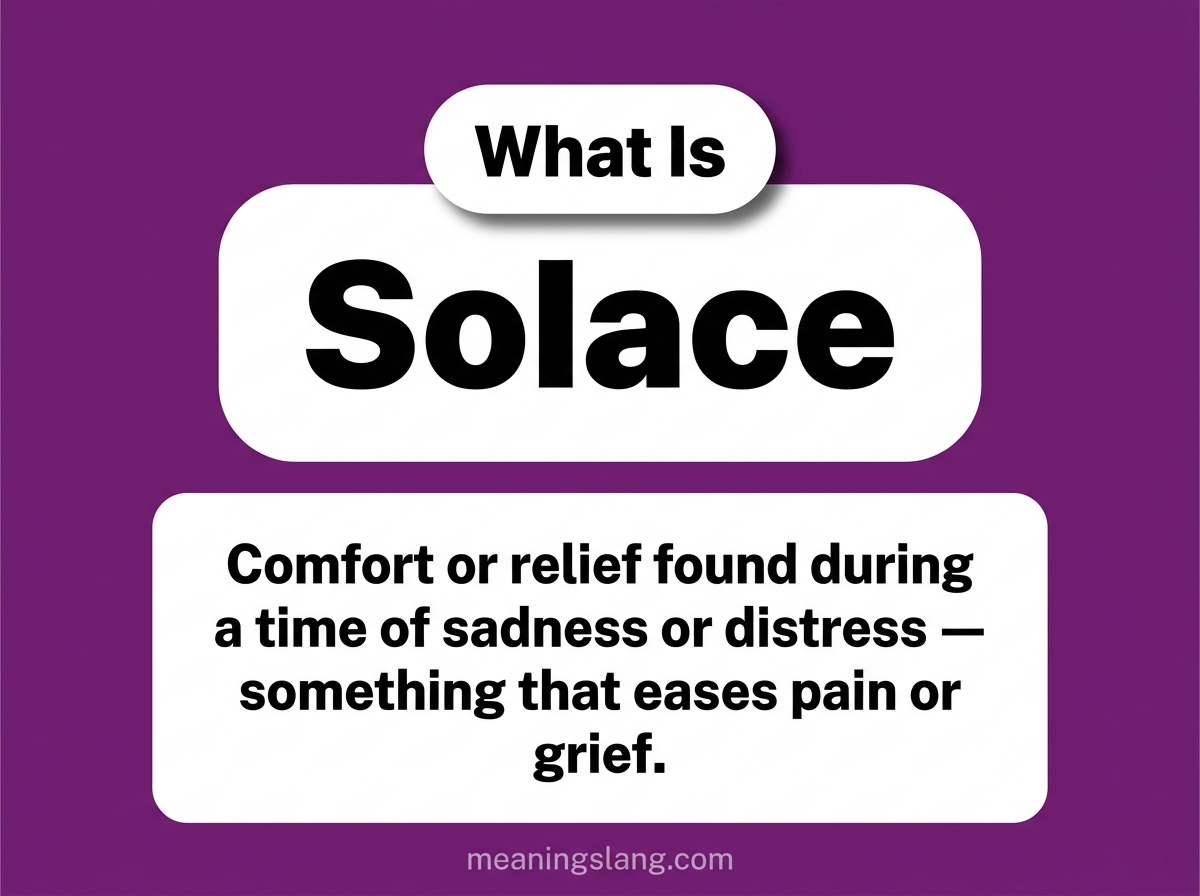
QUICK ANSWER: Solace means comfort or relief during a difficult time. When someone says “you’re my solace,” they mean you bring them peace when things feel hard. It’s an emotional word that signals deep appreciation.
Now let’s go deeper.
Solace describes the feeling of being comforted when you’re struggling. It’s not just “feeling better.” It’s finding genuine peace in something or someone during pain, stress, or sadness.
The emotional tone is always sincere. Nobody uses solace sarcastically. When you see this word, the person means it.
Think of it this way. Your friend says “Music is my solace.” They’re telling you that music helps them cope when life gets rough. If someone says “I find solace in being alone,” they mean quiet time genuinely heals them.
Who says it changes nothing here. Unlike slang that shifts meaning between groups, solace stays consistent. A teenager, a therapist, and your grandmother all mean the same thing.
You might hear “you bring me solace” in a relationship. That’s a deep compliment. It means your presence creates peace during their hardest moments. It’s heavier than “you make me happy.”
The word works as both a noun and something you “find” or “take.” Someone might “seek solace” or “find solace in” something specific.
[DEFINITION GRAPHIC HERE — term on left, arrow, plain definition on right, white card background]
Origin and History of “Solace”
Solace isn’t slang at all. It’s been around for centuries.
The word comes from Latin. “Solacium” meant comfort or consolation. It traveled through Old French before landing in English around the 1200s.
For hundreds of years, solace lived mostly in literature and formal writing. You’d see it in poetry, religious texts, and classic novels. Shakespeare used it. So did countless writers after him.
So why is it everywhere now?
Gen Z rediscovered emotional vocabulary. Words like solace, ennui, and melancholy started appearing in song lyrics, TikTok captions, and aesthetic posts. They sound more intentional than saying “this makes me feel better.”
There’s no single viral moment. Instead, solace crept back through music and mental health conversations. Artists use it in lyrics. People discussing anxiety and coping found it useful.
The word fits the current mood. Gen Z talks openly about struggles. Solace describes exactly what they’re seeking — not just distraction, but real peace.
How “Solace” Is Used on Different Platforms
Each platform gives solace a slightly different flavor. Here’s how it shows up.
TikTok
Solace appears in aesthetic videos about comfort activities. Cozy room tours, rain sounds, journaling content. Captions like “This is my solace” overlay peaceful footage. It signals that something brings genuine peace, not just entertainment.
“3am walks are my solace and I won’t apologize”
Stories and captions use solace for emotional depth. It shows up on moody posts, sunset photos, and reflections about relationships. DMs might include it when someone’s being vulnerable.
“Find solace in the small things 🌙”
Twitter/X
Shorter posts use solace in honest admissions. Mental health threads, late-night thoughts, and relationship reflections. The word carries weight even in brief posts.
“Books have always been my solace”
Discord/Gaming Chats
Less common here, but you’ll see it when conversations turn serious. Friends might mention games or communities as their solace during hard times.
“Honestly this server has been my solace lately”
Advice threads and personal stories use solace frequently. Mental health subreddits, relationship discussions, and grief support communities all use this word naturally.
| Platform | Common Use | Tone | Example |
|---|---|---|---|
| TikTok | Aesthetic captions, comfort content | Peaceful, reflective | “Rainy days are my solace” |
| Emotional captions, vulnerable DMs | Deep, personal | “You’ve been my solace through all of this” | |
| Twitter/X | Honest admissions, mental health | Raw, sincere | “Art is my only solace some days” |
| Discord | Serious conversations | Grateful, vulnerable | “This community is my solace fr” |
| Personal stories, advice | Thoughtful, honest | “I found solace in therapy finally” |
Solace in Texting vs. Real Life
People absolutely say solace out loud. It doesn’t sound weird spoken.
In texts, solace often appears during emotional conversations. Late-night chats. Relationship talks. Messages about mental health. You’d type “you’re my solace” when being vulnerable with someone close.
Spoken out loud, solace sounds intentional. You probably wouldn’t say it casually at lunch. But in a serious conversation? Absolutely. “Music has always been my solace” sounds natural when you’re really talking about what helps you cope.
The meaning stays identical either way. Written or spoken, solace means comfort during difficulty.
One difference: texts give you time to choose this word carefully. In conversation, you might reach for it when the moment feels significant enough.
Examples of “Solace” in Sentences
GROUP 1 — Friendly/Casual
“Honestly, baking has become my solace lately.”
“I find solace in long drives with no destination.”
“Gaming with you guys is my solace after work.”
GROUP 2 — Romantic/Relationship
“Being with you is the only solace I need.”
“You’ve been my solace through this whole breakup.”
GROUP 3 — Reflective/Emotional
“Some people find solace in crowds. I find it in silence.”
“There’s a strange solace in knowing everyone struggles.”
GROUP 4 — Online/Caption Use
“2am playlists and solace ✨”
“Find your solace. Protect it. That’s the whole lesson.”
[EXAMPLE CHAT SCREENSHOT MOCKUP — fake phone chat bubbles, iMessage or WhatsApp style]
Variations and Related Slang
Solace doesn’t have spelling variations. People spell it correctly because it’s a real dictionary word, not internet slang.
But several related words capture similar feelings.
Comfort is the most common alternative. It’s simpler and works everywhere solace does. Solace just sounds deeper and more intentional.
Refuge means a safe place or escape. You might find refuge in a person or activity the same way you’d find solace.
Peace overlaps with solace but focuses on calm rather than relief from pain.
Sanctuary describes a protected space. Similar energy to solace but more about location than feeling. Understanding words like poignant also helps when you’re navigating emotional vocabulary online.
Respite means a brief break from something difficult. Temporary relief rather than ongoing comfort.
| Term | Meaning | Similar/Different? |
|---|---|---|
| Solace | Comfort during difficulty | — |
| Comfort | General feeling of ease | Broader, less emotional weight |
| Refuge | Safe escape from problems | More about escape than peace |
| Peace | State of calm | Less tied to struggle |
| Respite | Temporary break from hardship | Short-term, not ongoing |
Is “Solace” Safe for Kids?
Yes. Solace is completely safe for kids.
There’s nothing inappropriate about this word. It simply means comfort during hard times. No hidden meanings. No adult contexts. No offensive uses.
Kids might see it in books, song lyrics, or their friends’ social media captions. It’s actually a useful word for discussing emotions.
Teachers would never flag this word. It might even impress them. Using solace shows vocabulary range and emotional awareness.
Parents don’t need to worry here. If your child uses solace, they’re expressing something about comfort and coping. That’s healthy communication.
The only context worth noting: if a child frequently talks about needing solace, check in about what’s stressing them. The word itself is fine. But it might signal they’re going through something difficult.
[PARENT SAFETY ICON — shield/safety graphic, 300x200px, “Parent Guide” label]
When to Use (and Avoid) “Solace”
USE IT WHEN:
- Expressing deep appreciation for something that helps you cope
- Having a serious emotional conversation with someone close
- Writing captions or posts about meaningful comfort
- Describing what genuinely helps during hard times
AVOID IT WHEN:
- The situation calls for casual language
- You’re being sarcastic or joking around
- The conversation isn’t emotionally significant
- You’d feel awkward saying something this sincere out loud
Conclusion
Solace means comfort and peace during difficult times. It’s a word that carries emotional weight.
This isn’t new slang. It’s an old word finding new life because people want vocabulary that matches how they actually feel. Sometimes “this makes me feel better” doesn’t capture it. Solace does.
Words like this matter because they help us communicate real emotions. When someone tells you that you’re their solace, they’re giving you a genuine compliment about your impact on their life.
If emotional vocabulary interests you, understanding what surreal means adds another useful word to your collection.
Language grows when we reach for words that fit. Solace is one of the good ones.
FAQ
What does it mean when someone says “you’re my solace”?
They’re saying you bring them peace during hard times. It’s a deep compliment meaning your presence genuinely comforts them when life feels difficult. This is sincere, not casual.
Is solace the same as comfort?
They’re similar but solace carries more emotional weight. Comfort is general ease. Solace specifically means relief during pain or struggle. Solace feels more intentional and poetic.
Can I use solace casually in texts?
You can, but it might feel heavy for casual conversation. Solace works best in emotional or sincere moments. Using it casually might confuse people or seem overly dramatic.
Is solace a Gen Z word?
No, solace has existed for centuries. Gen Z just brought it back into everyday use. They’re drawn to emotional vocabulary that sounds meaningful and intentional.
How do you pronounce solace correctly?
Say “SOL-iss” with emphasis on the first syllable. It rhymes with “Wallace.” The word sounds the same whether you’re reading it or hearing someone say it out loud.