Someone just ended their Instagram caption with “Namaste” and a peace sign emoji. They weren’t at yoga. They weren’t even being spiritual. They just posted a beach selfie.
You’ve probably seen this word everywhere lately. Yoga studios, sure. But also TikTok bios, text messages, and memes about “staying unbothered.”
Namaste started as an ancient Sanskrit greeting. Now it pops up when someone wants to seem calm, zen, or spiritually above drama. Sometimes people mean it seriously. Other times, it’s pure sarcasm.
The word sits in a weird spot between genuine respect and internet irony. Kind of like how people use the word “touché” — it can be sincere or a little playful depending on context.
Understanding namaste means knowing when someone’s being peaceful and when they’re basically saying “I’m too enlightened to deal with this.” Let’s break down what this greeting actually means in 2026.
What Does Namaste Mean?
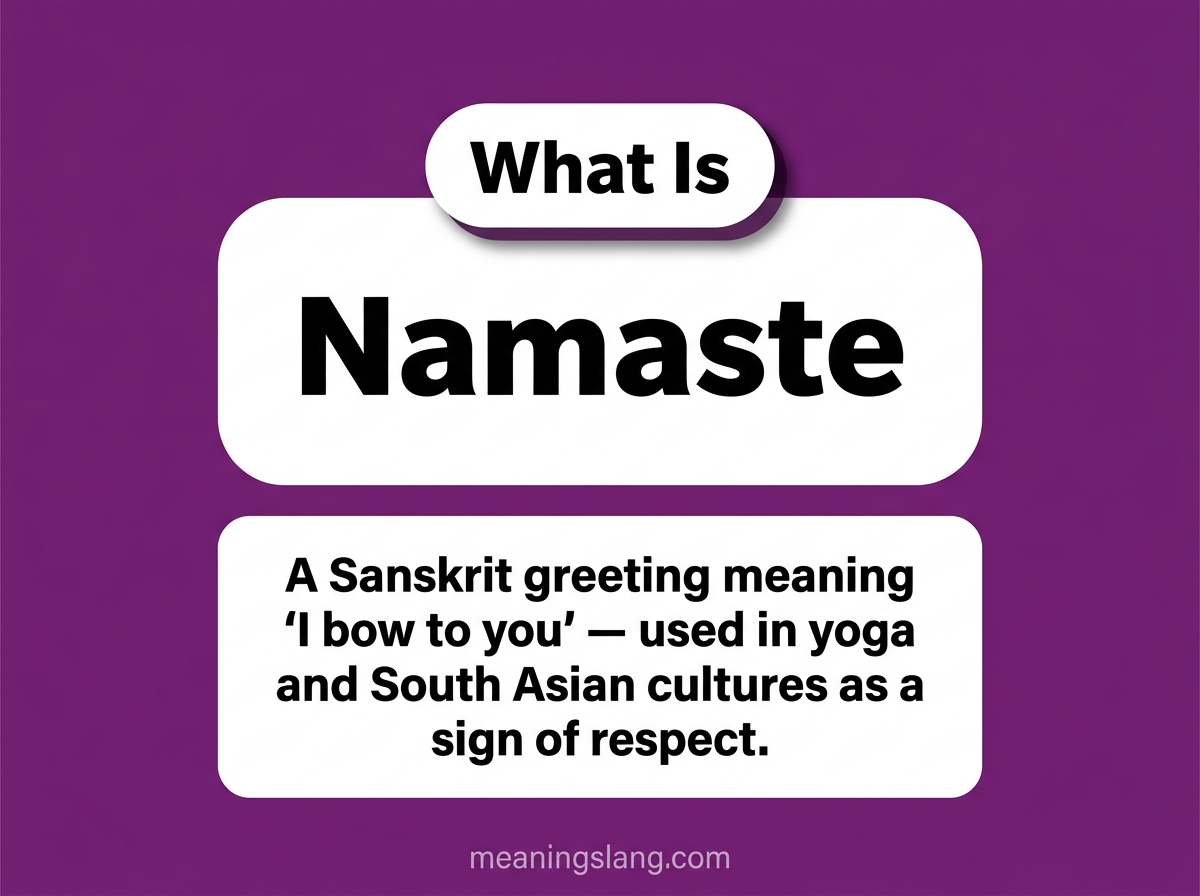
QUICK ANSWER: Namaste is a Sanskrit greeting that literally means “I bow to you.” It’s a respectful hello or goodbye. Online, people also use it to express peace, calmness, or sometimes sarcastic detachment from drama.
The word comes from Sanskrit, an ancient Indian language. “Namas” means bow or respect. “Te” means to you. Put together, namaste shows respect between two people.
In traditional use, you say namaste while pressing your palms together at chest level. You might give a small bow. It’s common in India, Nepal, and other South Asian countries as an everyday greeting.
In Western culture, namaste became huge through yoga. Teachers say it at the end of class. Students repeat it back. This connection made the word feel “spiritual” to many Americans.
The emotional tone shifts based on context. At yoga class, it feels genuine and peaceful. In a text after someone tries to start drama, “namaste” can mean “I’m choosing peace over your nonsense.” The word carries a calm, above-it-all vibe either way.
Someone might text “Namaste, I’m logging off” after a stressful day. Or comment “namaste” on a chaotic post to signal they’re staying unbothered.
Origin and History of “Namaste”
Namaste is thousands of years old. It originated in ancient India as part of Sanskrit, one of the oldest languages in human history. The greeting appears in Hindu scriptures and Buddhist texts.
The gesture paired with namaste is called Añjali Mudrā. Palms pressed together, fingers pointing up. This pose represents respect and gratitude across many Asian cultures.
Namaste entered American vocabulary through yoga’s rise in the 1960s and 70s. Hippie culture embraced Eastern spirituality. Yoga studios spread across the country. The word came along for the ride.
By the 2000s, namaste was mainstream. You’d see it on bumper stickers, t-shirts, and coffee mugs. The phrase “Namaste in bed” became a popular pun for people who wanted to skip morning yoga.
Gen Z picked up the word through meme culture and wellness trends. Now it appears in contexts that have nothing to do with yoga. The meaning stretched from sacred greeting to internet shorthand for “I’m at peace.”
How “Namaste” Is Used on Different Platforms
TikTok
TikTok users drop namaste in videos about self-care, meditation, or choosing peace. It’s also common in sarcastic content where someone pretends to be unbothered by chaos. “Drama at work? Namaste, not my problem.”
Instagram captions use namaste for wellness content, travel photos, or aesthetic posts. It signals a calm, curated vibe. DMs might include it as a peaceful goodbye. “Thanks for the chat, namaste!”
Twitter/X
On Twitter, namaste often appears sarcastically. Someone might tweet “Namaste” after blocking a troll. It means they’re rising above negativity. The word packs dry humor into six letters.
Snapchat
Snapchat uses stay casual. Friends might send “namaste” after a vent session, meaning “I’m choosing calm now.” It’s quick and fits the platform’s informal tone.
Discord/Gaming Chats
Gamers use namaste ironically. After someone rages in chat, typing “namaste” pokes fun at their anger. It’s the digital equivalent of staying zen while others lose their cool.
Reddit communities focused on wellness use namaste genuinely. But sarcastic subreddits treat it as a meme about performative spirituality.
| Platform | Common Use | Tone | Example |
|---|---|---|---|
| TikTok | Self-care/sarcasm | Calm or ironic | “Choosing peace today. Namaste.” |
| Captions, wellness | Aesthetic, genuine | “Morning yoga, namaste 🧘” | |
| Twitter/X | Post-drama peace | Sarcastic, dry | “Blocked and namaste.” |
| Snapchat | Casual goodbye | Friendly, light | “Gotta go, namaste!” |
| Discord | After rage moments | Ironic, playful | “He’s so mad lol namaste” |
Namaste in Texting vs. Real Life
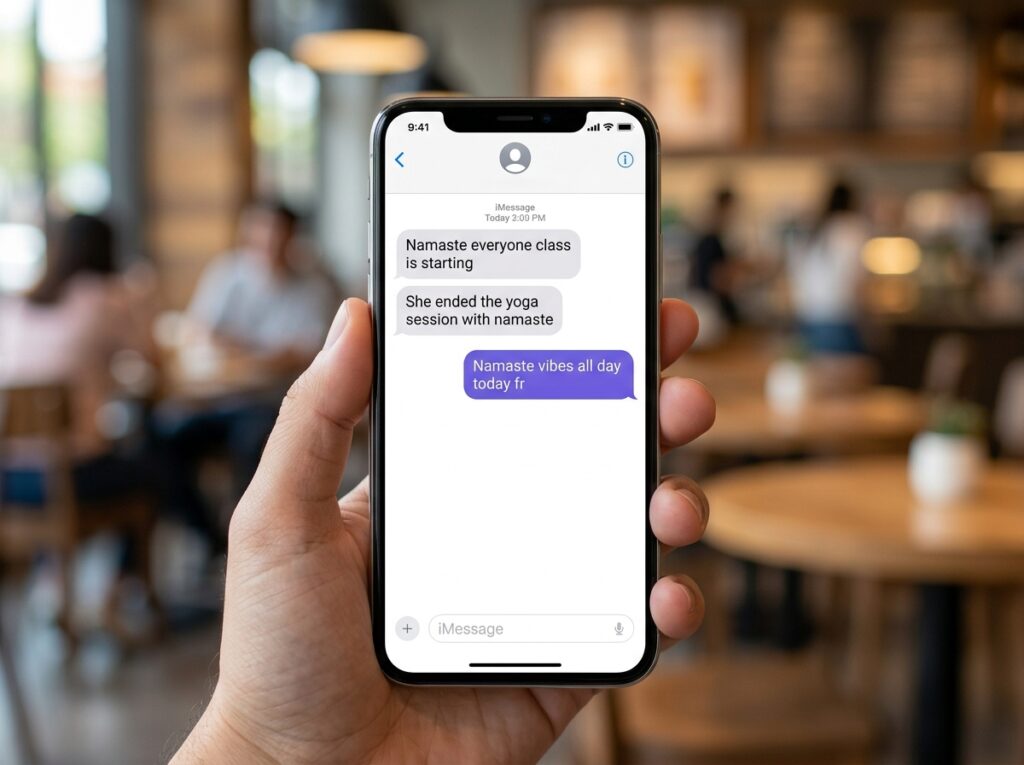
In texts, namaste works as a quick sign-off or vibe check. It’s easy to type and gets the point across. People understand you’re feeling peaceful or choosing to disengage from stress.
Spoken out loud, namaste sounds different. At yoga, it feels natural because everyone expects it. In regular conversation, saying “namaste” can come off as pretentious or overly spiritual.
Most people only say it aloud in yoga settings. The rest of the time, it stays typed. Saying “namaste” after a work argument would get you weird looks. Texting it? Totally fine.
The word has more flexibility in written form. Text gives you room for irony that speech doesn’t always allow.
Examples of “Namaste” in Sentences
GROUP 1 — Friendly/Casual
“Had a great yoga session this morning, namaste everyone!”
“I’m logging off social media for the weekend. Namaste, see you Monday.”
“Thanks for the advice, truly. Namaste.”
GROUP 2 — Sarcastic/Humorous
“My ex texted me again. Blocked and namaste.”
“Someone cut me off in traffic but I’m choosing peace. Namaste, I guess.”
GROUP 3 — Peaceful/Wellness
“Feeling grateful for today. Namaste.”
“Started meditating every morning. Life feels calmer now, namaste.”
GROUP 4 — Online/Caption Use
“Beach day ☀️ Namaste vibes only”
“New chapter, new energy. Namaste 🙏”
“When the drama unfolds but you’re unbothered: namaste”
[EXAMPLE CHAT SCREENSHOT MOCKUP — fake phone chat bubbles, iMessage or WhatsApp style]
Variations and Related Slang
Namaste doesn’t have many spelling variations. You might see “namasté” with the accent for a more authentic look. Some people write “namastay” as a pun, like “namastay in bed.”
Related terms carry similar peaceful or spiritual vibes. If you know what “demure” means in internet culture, you’ll notice a similar energy. Both suggest calm, composed behavior.
Other words in this space include “zen” and “unbothered.” These communicate the same detached peace that namaste represents online.
The expression “SMH” — which you can learn about in this breakdown of SMH — works as an opposite. SMH shows frustration while namaste shows calm acceptance.
| Term | Meaning | Similar/Different? |
|---|---|---|
| Namaste | Respectful greeting meaning “I bow to you” | — |
| Zen | Calm, peaceful state of mind | Similar vibe, less formal |
| Unbothered | Not affected by drama or negativity | Similar energy, more casual |
| Peace out | Casual goodbye | Similar function, less spiritual |
| Namaslay | Pun mixing namaste with “slay” | Playful variation |
Is “Namaste” Safe for Kids?
Yes, namaste is completely safe for kids.
The word itself contains no offensive meaning. It’s a respectful greeting from an ancient culture. Kids might learn it at yoga classes, meditation apps, or from watching parents.
The only slight concern is cultural sensitivity. Some people feel the Western use of namaste removes it from its sacred Hindu context. Teaching kids to use it respectfully matters.
Schools wouldn’t flag this word. Teachers might even use it in mindfulness programs.
For parents: namaste is one of the least concerning words your kid could pick up online. If anything, it shows interest in wellness or calm communication.
Just explain that it comes from another culture and deserves respect. That small context helps kids use it appropriately.
[PARENT SAFETY ICON — shield/safety graphic, 300x200px, “Parent Guide” label]
When to Use (and Avoid) “Namaste”
USE IT WHEN:
- Ending a yoga class or meditation session
- Signing off a conversation peacefully
- Showing you’re choosing calm over drama
- Adding a zen vibe to captions or bios
AVOID IT WHEN:
- Mocking someone’s genuine spiritual practice
- Using it to seem superior or dismissive in a mean way
- Speaking to someone who might find it culturally insensitive
- Formal or professional settings where it could seem out of place
Conclusion
Namaste means “I bow to you” — a greeting that crosses thousands of years and now lives on our phones. It works as hello, goodbye, and “I’m too peaceful for this drama.”
Words like namaste show how language travels across cultures and generations. What starts sacred becomes shared. What starts formal becomes casual. That’s not always bad. It’s how language stays alive.
The next time you see namaste in a caption, you’ll know exactly what vibe someone’s going for. And if you want to explore more words that crossed into internet culture, check out what habibi means — another term that made the jump.
FAQ
What does namaste mean in yoga?
In yoga, namaste is a respectful closing phrase. Teachers and students say it at the end of class to honor each other and the practice. It acknowledges the light or divine in both people.
Is it offensive to say namaste?
Generally, no. But using it mockingly or without understanding its Hindu origins can feel disrespectful. Most people in casual contexts use it without offense. Just approach it with basic respect.
What does namaste mean when texting?
In texts, namaste usually signals peace or calm energy. It can mean “goodbye,” “I’m choosing not to engage with drama,” or “I’m feeling zen.” Context tells you if it’s sincere or sarcastic.
Do people say namaste outside of yoga?
Yes, especially online. People use namaste in captions, memes, and texts. It’s become shorthand for any peaceful or unbothered vibe. The yoga connection remains strong but isn’t required anymore.
What’s the difference between namaste and namaskar?
Both are Sanskrit greetings meaning respect. Namaskar is slightly more formal and often used for multiple people or elders. Namaste is more common in everyday use and Western yoga contexts.