You’re scrolling through comments on a moving short film. Someone writes, “This is so poignant it broke me.” You stop. You kind of know what it means. But also… do you?
“Poignant” is one of those words people use when they want to say something hit them hard. It’s not exactly “sad.” It’s not exactly “beautiful.” It’s both at once, somehow.
The word keeps showing up everywhere right now — TikTok captions, book reviews, therapy-coded Twitter threads, Instagram posts about nostalgia. People are reaching for it because regular words like “sad” or “touching” don’t quite cover the feeling.
If you’ve ever felt something that was painful and meaningful at the same time, you already understand what poignant means. You just didn’t have the word for it yet. This is that word. Just like ennui captures that empty, restless feeling you can’t explain, poignant captures something that’s hard to name but deeply real.
What Does Poignant Mean?
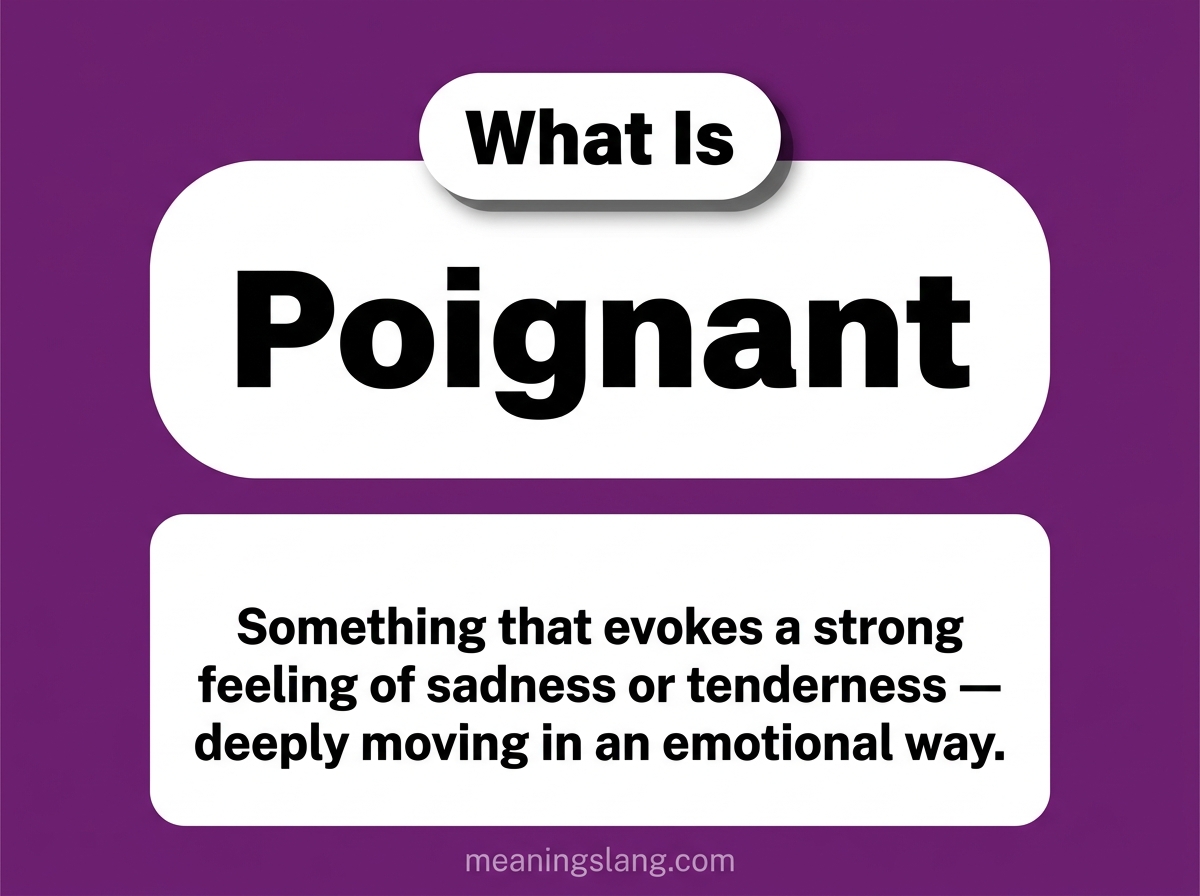
Quick Answer: Poignant means something that makes you feel a deep, sharp mix of sadness and beauty at the same time. It’s that bittersweet emotional punch — like watching an old home video or hearing a song that brings back a memory. It’s not just “sad.” It’s meaningful sadness.
Poignant describes a moment, story, image, or experience that hits you emotionally in a precise, lasting way. Think of it like an emotional arrow — it goes straight through you.
The feeling is usually bittersweet. There’s something beautiful about the moment, but it also aches. A grandmother’s old handwriting. A photo of a childhood home. A song playing at the end of a long trip. All of those can be poignant.
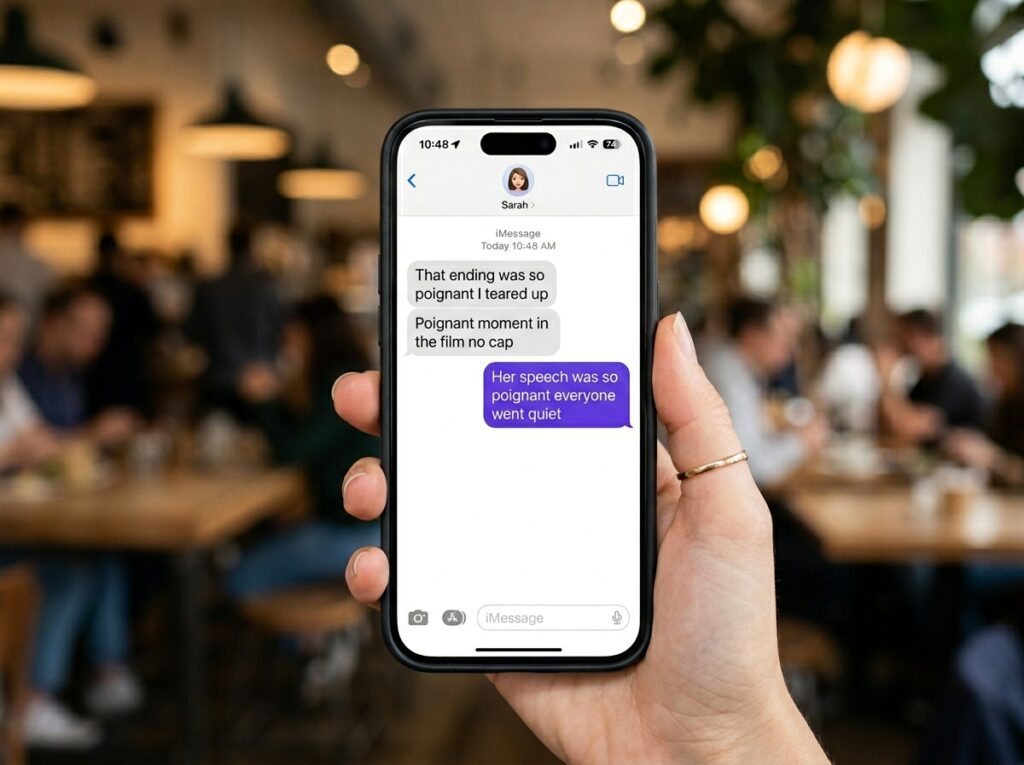
The tone is never sarcastic. It’s always sincere. You’d say, “That scene in the movie was so poignant” — and everyone in the room would know exactly what you mean. Or someone might text, “Reading her letter again was poignant in a way I can’t explain.” The word holds weight.
It doesn’t change meaning based on who says it. A teenager can use it the same way a novelist does. What matters is that the emotion is genuine.
Origin and History of “Poignant”
“Poignant” is an old word — and it has a sharp history.
It comes from the Old French word poignant, meaning “pricking” or “stinging.” That French word came from Latin pungere, which means “to pierce.” So literally, the original meaning was about something sharp poking you.
By the 14th century, English speakers borrowed it. At first it described actual sharp tastes or physical sensations. A spice could be “poignant.” A blade could be “poignant.”
Over time, the meaning shifted inward. By the 17th and 18th centuries, writers were using it for emotions. A speech could be poignant. A poem could be poignant. The “piercing” became emotional, not physical.
That shift stuck. Today, the physical meaning is basically gone. What remains is the emotional version — that sharp, deep feeling that goes right through you.
The word hasn’t changed much in modern use. But it’s having a moment online. Gen Z has been reclaiming emotional vocabulary — words that feel precise and layered rather than basic. “Poignant” fits that perfectly. It’s the kind of word that sounds elevated but describes something everyone has felt.
How “Poignant” Is Used on Different Platforms
TikTok is where “poignant” shows up most visibly right now. Creators use it in captions on emotional storytimes, memorial videos, or nostalgic edits. Comments sections are full of it. Example: “This video is genuinely poignant. I needed to cry today apparently.”
Instagram uses it in photo captions — especially for travel content, black-and-white photos, or tribute posts. It adds a literary feel to a caption. Example: “This place holds a poignant kind of beauty. Hard to leave.”
Twitter/X users drop it in film and book commentary. It’s popular in threads about media that made people cry. Example: “The final episode was poignant in a way I wasn’t prepared for at all.”
Reddit uses it heavily in movie, book, and music subreddits. People write full paragraphs explaining why something felt poignant. Example: “The ending hit me as incredibly poignant — not sad exactly, but deeply meaningful.”
Discord uses it less. But in creative writing servers or film discussion channels, you’ll see it pop up. Example: “That line in chapter 9 was so poignant it stopped me cold.”
| Platform | Common Use | Tone | Example |
|---|---|---|---|
| TikTok | Emotional video captions | Sincere, reflective | “This is genuinely poignant.” |
| Photo captions, tributes | Literary, soft | “A poignant kind of beauty.” | |
| Twitter/X | Media commentary | Thoughtful, serious | “Poignant in a way I wasn’t ready for.” |
| Film/book reviews | Analytical, emotional | “The ending felt deeply poignant.” | |
| Discord | Creative writing chats | Precise, sincere | “That line stopped me cold — so poignant.” |
Poignant in Texting vs. Real Life
People do say “poignant” out loud — but it’s more common in writing. In a text or caption, it reads as thoughtful and specific. Spoken out loud, it can feel slightly formal, depending on your crowd.
That said, it doesn’t sound weird out loud. In a real conversation about a film or a memory, saying “that was poignant” works naturally. It doesn’t feel stiff if the moment calls for it.
The meaning stays the same either way. What changes is the energy around it. Written, it reads as reflective. Spoken, it can feel more intentional — like you really mean it. Both work fine.
Examples of “Poignant” in Sentences
GROUP 1 — Friendly/Casual
- “That documentary about the veterans was so poignant. I watched it twice.”
- “She wrote this poignant little note in my yearbook and I still think about it.”
- “The last scene was quiet and simple but honestly the most poignant part of the whole film.”
GROUP 2 — Romantic/Flirty
- “There’s something poignant about falling for someone you know you’ll eventually have to miss.”
- “Reading your old texts is poignant in a way I didn’t expect.”
GROUP 3 — Sarcastic/Humorous
- “Very poignant of you to eat the last slice of pizza and leave the box. Truly moving.”
- “Oh wow, a Monday morning traffic jam. Poignant. Really poignant.”
GROUP 4 — Online/Caption Use
- “Old photos of this place. Poignant doesn’t even cover it. 🤍”
- “This show ended two years ago and I still feel the loss. Genuinely poignant television.”
[EXAMPLE CHAT SCREENSHOT MOCKUP — fake phone chat bubbles, iMessage or WhatsApp style]
Variations and Related Slang
“Poignant” doesn’t really have slang spellings or abbreviations. You won’t see “poignt” or “pgnnt” in the wild. People spell it out or skip it entirely.
But there are words people use interchangeably — or almost interchangeably. The differences matter.
“Bittersweet” is the closest everyday cousin. It means something that’s both good and sad at once. Poignant goes a little deeper — it has that sharp, cutting quality bittersweet doesn’t always carry.
“Moving” is more general. Something moving stirs emotion. Something poignant stirs a specific, piercing kind of emotion.
“Touching” is gentler. It warms you. Poignant can also hurt a little. Similar to how solace describes comfort after pain, poignant often lives right next to that comfort — in the painful part just before it.
“Nostalgic” is about memory and the past specifically. Poignant can be nostalgic, but it doesn’t have to be.
| Term | Meaning | Similar/Different? |
|---|---|---|
| Poignant | Sharp, deep emotional impact — beautiful and painful | — |
| Bittersweet | Happy and sad at the same time | Very similar, slightly less intense |
| Moving | Emotionally stirring in general | Broader, less specific |
| Touching | Warm, gentle emotional response | Gentler — less of the “sting” |
| Nostalgic | Longing for the past | Related, but narrower |
Is “Poignant” Safe for Kids?
Yes — completely.
“Poignant” is one of the most family-friendly words in the English language. There’s nothing edgy, inappropriate, or hidden about it. It’s a formal-ish word for a deep emotional feeling.
Kids might hear it in books, films, school lessons, or from a teacher describing a story. It’s the kind of vocabulary word teachers actually encourage. You’d have no reason to worry about a child using or hearing it.
The only “issue” — if you can call it that — is that younger kids might use it without fully understanding the nuance. A seven-year-old might call a funny movie “poignant” because someone told them it meant “special.” That’s not a problem. It’s just normal vocabulary learning.
For parents: if your kid is using this word, they’ve probably been reading or watching thoughtful content. That’s a good sign. No flags here at all.
Schools don’t just allow it — they’d likely praise a student for using it correctly in an essay. It’s the kind of word that shows emotional intelligence and strong writing.
[PARENT SAFETY ICON — shield/safety graphic, 300x200px, “Parent Guide” label]
When to Use (and Avoid) “Poignant”
Use it when the emotion is real and you want to be precise. Here’s when it fits:
USE IT WHEN:
- Describing a film, book, or song that made you feel a deep mix of sadness and meaning
- Writing a caption or review about something emotionally significant
- Talking about a memory, moment, or place that aches beautifully
- You want to go beyond just saying “sad” or “beautiful”
AVOID IT WHEN:
- You’re describing something that’s just plain sad — not meaningful or bittersweet
- You’re in a casual, low-effort conversation and the word feels out of place
- You’re trying to sound smart rather than actually meaning it — people can tell
- The moment is clearly funny and you’re not being ironic
Conclusion
Poignant means that sharp, bittersweet emotional hit — the kind that’s both painful and meaningful at the same time. It’s more specific than “sad” and more intense than “touching.” When something genuinely moves you in a lasting way, that’s the word you need.
Slang and vocabulary like this matter because they give you a way to name experiences that would otherwise slip away. When you have the right word, the feeling becomes real and shareable. Language builds connection.
If you like words that carry real emotional weight, you might also appreciate what surreal means — another layered word people are rediscovering for feelings that are hard to pin down.
Some feelings deserve better than “it was kind of sad.” Poignant is one of the words that earns it.
FAQ
FAQ #1: Is poignant a positive or negative word?
It’s both at once. Poignant describes something that’s emotionally piercing in a way that’s painful but also meaningful or beautiful. Think of it as bittersweet but more intense. It’s not a negative word — it’s a layered one that honors the complexity of the feeling.
FAQ #2: What’s the difference between poignant and bittersweet?
Bittersweet means something has both happy and sad elements. Poignant goes a step further — it has a sharpness, a sting to it. Something bittersweet might make you smile through tears. Something poignant might stop you completely and sit with you long after.
FAQ #3: Can you use poignant to describe a person?
Yes, but it’s less common. You might say someone gave a “poignant speech” or wrote a “poignant letter.” Calling a person themselves poignant is rare. It’s more naturally used to describe moments, stories, images, or creative works rather than people directly.
FAQ #4: Why are people using “poignant” more on social media lately?
People are searching for more precise emotional vocabulary. Words like “sad” or “beautiful” feel too basic for complex feelings. Poignant fills that gap — it’s specific, it sounds thoughtful, and it accurately captures that mix of pain and meaning that a lot of content creators want to express.
FAQ #5: How do you pronounce poignant correctly?
It’s pronounced POIN-yunt. The “g” is silent. Many people see it written before they hear it, so they mispronounce it as “poy-ig-nant.” The correct two-syllable version — POIN-yunt — is what you’ll hear in formal speech and most media.