Someone just told you that you’ve got “a lot of presumption” in a comment section. You freeze. Is that… bad? Good? Are they impressed or annoyed?
You scroll back through what you said. It seemed normal to you. But now you’re second-guessing everything.
Here’s the thing. Presumption isn’t new internet slang. It’s an older word that’s having a moment online. People use it to call out behavior that feels too bold or too confident. Think of someone who assumes they’re welcome at your party without asking. That’s presumption.
The word pops up in debates, relationship drama, and workplace gossip. It’s what people say when someone acts like they already have permission they never asked for.
Similar to how people use SMH to express disappointment, presumption carries a specific emotional weight. It signals that someone crossed an invisible line.
This word sits between confidence and arrogance. Understanding it helps you read the room online. It also helps you avoid being the person everyone’s side-eyeing.
What Does Presumption Mean?
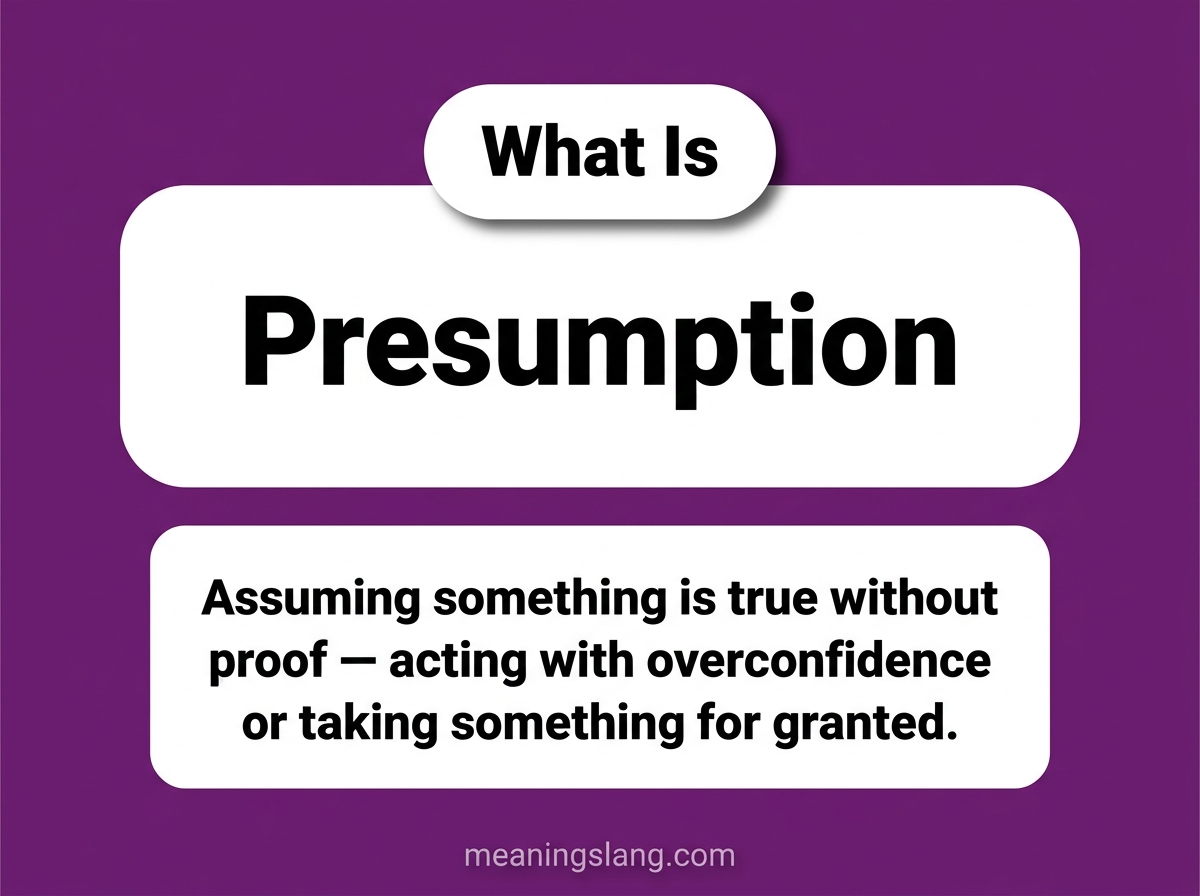
QUICK ANSWER: Presumption means assuming something is true or acting like you have rights you were never given. When someone says you have presumption, they’re saying you’re being too bold or taking liberties you shouldn’t take.
The word carries a specific emotional punch. It’s not neutral. When someone accuses you of presumption, they’re mildly offended. You stepped over a line. You assumed familiarity, permission, or agreement that wasn’t there.
Think of it this way. Your coworker signs you up for extra work without asking. That’s presumption. Someone you barely know asks to crash at your place for a week. That’s presumption too.
Online, the word shows up when people feel someone is acting entitled. “The presumption of showing up to my birthday after what you did” reads like a callout. It’s saying: how dare you assume you’re welcome?
The tone matters here. Presumption can be playful between close friends. “The presumption of eating my fries!” feels light. But in serious conversations, it signals genuine frustration.
Context shifts everything. A boss calling out presumption is serious. A best friend saying it while laughing is teasing. Read the room before reacting.
Origin and History of “Presumption”
Presumption has been around for centuries. It comes from the Latin word “praesumptio,” meaning to take beforehand. The English version dates back to the 1200s.
Originally, it had legal weight. In courts, presumption meant assuming something was true until proven otherwise. “Presumption of innocence” is still a legal standard today.
The social meaning came later. By the 1600s, people used presumption to describe arrogant behavior. If a servant spoke too casually to a noble, that was presumption. It meant forgetting your place.
Today, the legal use still exists. But online, the social meaning dominates. It’s evolved from class-based snobbery to a more general callout. Now it means anyone overstepping boundaries.
The word gained traction on social media around 2020-2023. Relationship advice accounts and Twitter threads started using it regularly. It became a sophisticated way to say “how dare you assume.”
Unlike newer slang, presumption doesn’t have one viral moment. It grew through repeated use in drama-heavy conversations about boundaries and respect.
How “Presumption” Is Used on Different Platforms
TikTok
On TikTok, presumption appears in storytime videos and relationship content. Creators use it when describing bold behavior from exes, coworkers, or family members. “The presumption of my ex showing up at my job” is a typical caption. The word adds dramatic flair to boundary violations.
Instagram users drop presumption into captions and DMs. Story call-outs sometimes feature it. “The presumption of some people” appears on posts about disappointing interactions. In DMs, it’s often semi-playful. “The presumption of sliding in without a hello first.”
Twitter/X
This is where presumption thrives. Twitter users love it for its slightly formal, slightly sassy energy. It fits perfectly into tweets about workplace drama, dating fails, and family chaos. “My coworker had the presumption to critique my work after calling in sick all week” is classic Twitter.
Snapchat
Less common here. When it appears, it’s usually in direct messages between friends discussing someone else’s behavior. “The presumption of her texting him” works in that gossip context.
Discord/Gaming
Rare in gaming spaces. When used, it’s often ironic or joking. “The presumption of killing me when I called dibs” shows up in casual voice chat banter.
Reddit relationship advice threads feature presumption regularly. Users describe partners or family members “having the presumption” to make decisions without consulting them.
| Platform | Common Use | Tone | Example |
|---|---|---|---|
| TikTok | Storytime videos | Dramatic | “The presumption of showing up uninvited” |
| Captions, DMs | Sarcastic | “The presumption of some people lately” | |
| Twitter/X | Drama tweets | Sharp | “He had the presumption to ask for a favor” |
| Snapchat | Private gossip | Casual | “Can you believe her presumption?” |
| Relationship posts | Serious | “The presumption to spend my savings” |
Presumption in Texting vs. Real Life
In texts, presumption hits harder. It looks deliberate. When you type it out, you’re choosing a formal word on purpose. That signals you’re genuinely bothered.
Spoken out loud, presumption sounds more casual. People say it with raised eyebrows and a half-smile. “The presumption!” as an exclamation works in conversations. It doesn’t sound weird when spoken naturally.
The meaning stays the same either way. But texted presumption feels more serious. Spoken presumption can be playful. The difference is in delivery and tone of voice.
Some people only use it in writing. It feels too formal to say out loud for them. Others drop it into conversation regularly. It depends on your vocabulary habits and social circle.
Examples of “Presumption” in Sentences
GROUP 1 — Friendly/Casual
“The presumption of eating the last slice when you didn’t chip in.”
“She had the presumption to borrow my charger without asking again.”
“The absolute presumption of assuming I’d cover your shift.”
GROUP 2 — Relationship/Dating
“He had the presumption to text me ‘wyd’ after ghosting for three months.”
“The presumption of asking me out after liking her pictures all week.”
GROUP 3 — Sarcastic/Humorous
“My cat has the presumption to wake me up at 5 AM demanding food.”
“The presumption of my alarm thinking I’ll actually get up the first time.”
GROUP 4 — Online/Caption Use
“When people have the presumption to give unsolicited advice 🙄”
“The presumption of some comments on this app.”
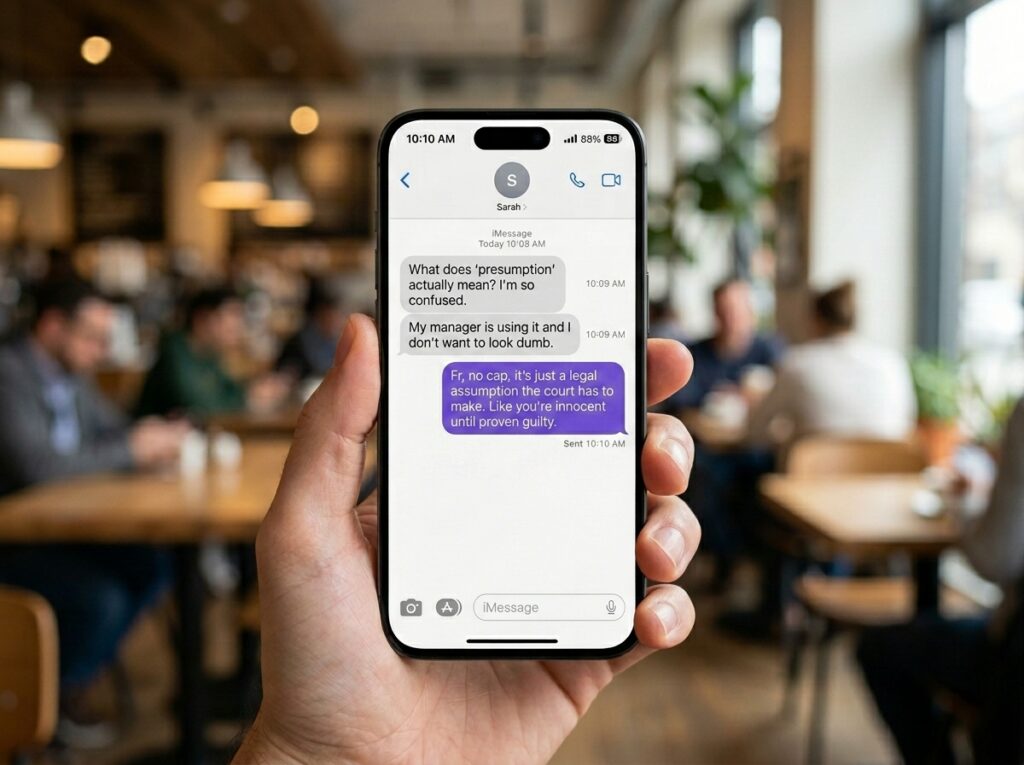
[EXAMPLE CHAT SCREENSHOT MOCKUP — fake phone chat bubbles, iMessage or WhatsApp style]
Variations and Related Slang
Presumption doesn’t have many spelling variations. People occasionally write “the presumptuousness” for extra emphasis. “Presumptuous” works as the adjective form. “Being presumptuous” and “having presumption” mean the same thing.
Related slang fills similar emotional territory. Based sits at the opposite end. It praises bold behavior rather than criticizing it. Whether something is presumption or based depends on who’s watching.
Audacity often pairs with presumption. “The audacity and presumption” appears together in rants. Both describe shocking overconfidence.
Other related terms include “nerve,” “gall,” and “entitlement.” Each has slightly different energy. Nerve sounds older. Gall feels very formal. Entitlement carries political weight now.
| Term | Meaning | Similar/Different? |
|---|---|---|
| Presumption | Assuming permission not given | — |
| Audacity | Shocking boldness | Very similar, often paired together |
| Nerve | Boldness or courage | Similar but less formal |
| Entitlement | Believing you deserve special treatment | Related but more political |
| Presumptuousness | State of being presumptuous | Same word, longer form |
Is “Presumption” Safe for Kids?
Yes, presumption is completely safe for kids. It’s a standard English vocabulary word with no offensive meaning.
Parents might actually appreciate kids learning this word. It helps children articulate boundary violations. “That felt like presumption” is a mature way to express discomfort.
No hidden meanings exist here. Unlike many slang terms, presumption doesn’t have a secret inappropriate definition. What you see is what you get.
Schools use this word in vocabulary lessons. Teachers wouldn’t flag it. In fact, using presumption in essays shows sophisticated writing skills.
The only thing to watch is tone. Kids might overuse it dramatically once they learn it. “The PRESUMPTION of giving me homework” might become a common complaint. That’s annoying but not harmful.
[PARENT SAFETY ICON — shield/safety graphic, 300x200px, “Parent Guide” label]
When to Use (and Avoid) “Presumption”
USE IT WHEN:
- Someone assumes permission without asking
- You want to call out entitled behavior politely
- You’re venting about boundary violations
- You want to sound articulate while expressing frustration
AVOID IT WHEN:
- The situation is actually serious (use clearer language)
- You’re talking to someone who might not know the word
- You want to be direct instead of slightly formal
- The person genuinely made an innocent mistake
Conclusion
Presumption means taking liberties or assuming things you have no right to assume. It’s the sophisticated way to call someone out for overstepping.
This word bridges old-school vocabulary and modern online communication. Using it shows you value boundaries. It also signals that you notice when others don’t respect them.
Language like this helps people express frustration without cursing or being crude. It’s why words like touché and presumption keep circulating online. They say exactly what we mean with style.
Next time someone crosses a line, you’ve got the perfect word ready.
FAQ
What does presumption mean when someone says it to you?
They’re saying you assumed something you shouldn’t have. Maybe you acted too familiar or made decisions without permission. It’s a callout for overstepping boundaries. The tone ranges from playful teasing to genuine frustration depending on context.
Is presumption an insult?
It can be. When said seriously, it criticizes your behavior as entitled or arrogant. But between friends, it’s often playful. Context and tone determine whether it’s harsh criticism or light teasing about minor boundary crossing.
What’s the difference between presumption and assumption?
Assumption is neutral. It just means you believe something without proof. Presumption adds judgment. It implies arrogance or entitlement. Saying someone made an assumption is factual. Saying they have presumption is criticism.
Can presumption be a good thing?
Rarely. In most uses, presumption has negative connotations. However, “presumption of innocence” is positive legally. Socially, some bold moves get called presumption but still work out. Success doesn’t erase the presumption though.
Why do people use presumption instead of just saying “that’s rude”?
Presumption sounds more sophisticated and specific. It describes a particular type of rudeness. It’s about assuming rights you don’t have. Using it makes your complaint feel articulate rather than just emotional.